Facts
The appellant was accused of assaulting the complainant (PW-1) with a billhook (M.O.1) on 24.08.2017 following a land dispute involving the complainant’s family
Source reference: p. 2The prosecution alleged the appellant used obscene language and caste-based slurs during the incident
Source reference: p. 2The Trial Court convicted the appellant under Sections 294(b), 326, and 506(ii) of the IPC, and the SC/ST Act
Source reference: p. 3On appeal, the High Court of Madras acquitted the appellant of the SC/ST Act charges but confirmed the IPC convictions, though it reduced the sentences
Source reference: p. 3-4The appellant moved the Supreme Court challenging the remaining IPC convictions
Source reference: p. 4-5Issues
1. Whether the use of abusive or vulgar language during an altercation constitutes "obscenity" under Section 294(b) of the IPC
Source reference: para. 112. Whether mere threatening words uttered during a quarrel satisfy the requirements for "criminal intimidation" under Section 506(ii) of the IPC
Source reference: para. 183. Whether a nasal bone fracture caused by a billhook meets the criteria for "grievous hurt" by dangerous weapons under Section 326 of the IPC
Source reference: para. 20Law Applied
Section 294(b) IPC, noting it requires an "obscene act" causing "annoyance to others"
Source reference: para. 11"Community Standard Test" from Aveek Sarkar v. State of W.B. to define obscenity as material that is lascivious or appeals to prurient interests
Source reference: para. 12.2distinguished "vulgarity" from "obscenity" based on Samaresh Bose v. Amal Mitra, holding that slang and profanity do not necessarily deprave or corrupt morals
Source reference: para. 15.1Regarding Section 506 IPC, the court followed Naresh Aneja v. State of U.P., requiring proof of intent to cause alarm
Source reference: para. 18For Section 326 IPC, it applied the definition of "grievous hurt" under Section 320 (Seventhly) IPC, which includes a "fracture or dislocation of a bone"
Source reference: para. 20Reasoning
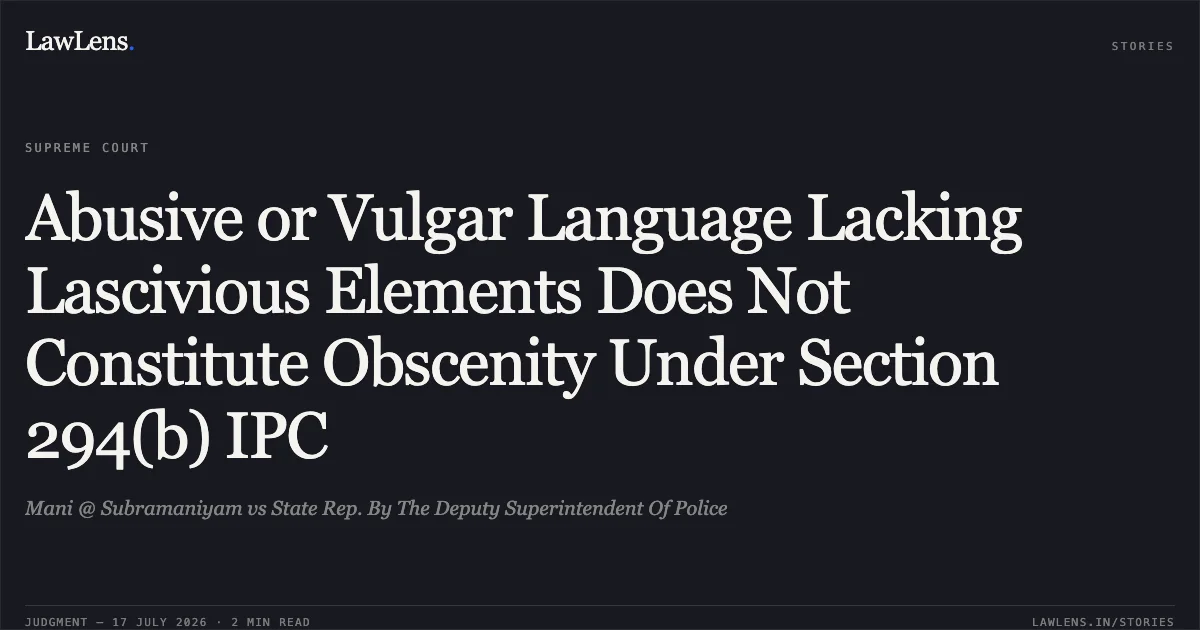
The Court found that the appellant’s utterances ("Motherfucker," etc.), while abusive and vulgar, lacked a lascivious or prurient character intended to deprave the mind, and thus did not meet the legal threshold for "obscenity" under Section 294(b)
Source reference: para. 16-17Regarding Section 506(ii), the Court reasoned that threatening words used during a heated altercation do not constitute criminal intimidation unless there is specific evidence of intent to cause alarm or compel action, which was absent here
Source reference: para. 19Conversely, the Court upheld the conviction under Section 326 IPC because medical evidence (PW-2) and a CT scan confirmed a nasal bone fracture—a "grievous hurt" under Section 320—caused by a dangerous weapon (billhook), corroborated by eyewitness testimony
Source reference: para. 21Holding
The Supreme Court partly allowed the appeal. It set aside the convictions under Sections 294(b) and 506(ii) IPC
It affirmed the conviction under Section 326 IPC but, citing the appellant’s age (70 years) and the nature of the dispute, modified the sentence to "imprisonment till the rising of the Court" and a fine of Rs. 50,000 to be paid within two months
Source reference: para. 21-22Acts & Sections Cited
8 provisions across 3 statutes referred to in this judgment. Each provision opens on LawLens.
Indian Penal Code, 18606
Scheduled Castes and the Scheduled Tribes (Prevention of Atrocities) Act, 19891
Information Technology Act, 20001
Original Court PDF
Mani @ SubramaniyamvsState Rep. By The Deputy Superintendent Of Police
Click to open original judgment
Original judgment, available to read, download and summarize on LawLens.in


![Subsequent exoneration does not retrospectively invalidate a finalized promotion select list.. UNNIKRISHNAN M vs M/o Environment And Forests. CAT - ['Ernakulam']. LawLens](/stories/thumbnails/subsequent-exoneration-does-not-retrospectively-invalidate-a-finalized-promotion-select-li-ce80a0e84f2f4887857271e8b4341c42.webp)