Facts
The appellant, the victim’s father, challenged the acquittal of Respondent No. 2 of charges under Sections 363, 366A and 376 IPC and Sections 4 and 6 of the POCSO Act.
Source reference: para. 3–5, 23The prosecution alleged that the victim and another girl had been taken away by the accused and another person.
Source reference: para. 3–5, 23The victim’s father reported the incident on 5 July 2022, three days after the alleged occurrence; the written report did not allege sexual assault.
Source reference: para. 3–5, 23At trial, the victim testified that the accused had raped her, but the evidence raised disputes about her age, where she had been living and how she came to be missing.
Source reference: paras. 12–16The trial court acquitted Respondent No. 2, finding the prosecution case doubtful.
Source reference: paras. 12–16The father appealed against that acquittal.
Source reference: no citationIssues
1. Whether the trial court’s acquittal was perverse or otherwise warranted appellate interference
Source reference: paras. 17–20, 292. Whether the prosecution evidence established Respondent No. 2’s guilt on the charged offences beyond reasonable doubt
Source reference: paras. 23–28Law Applied
The charges concerned Sections 363, 366A and 376 of the IPC and Sections 4 and 6 of the POCSO Act.
Source reference: paras. 2, 8The judgment also referred to the victim’s statement under Section 164 CrPC and the accused’s examination under Section 313 CrPC.
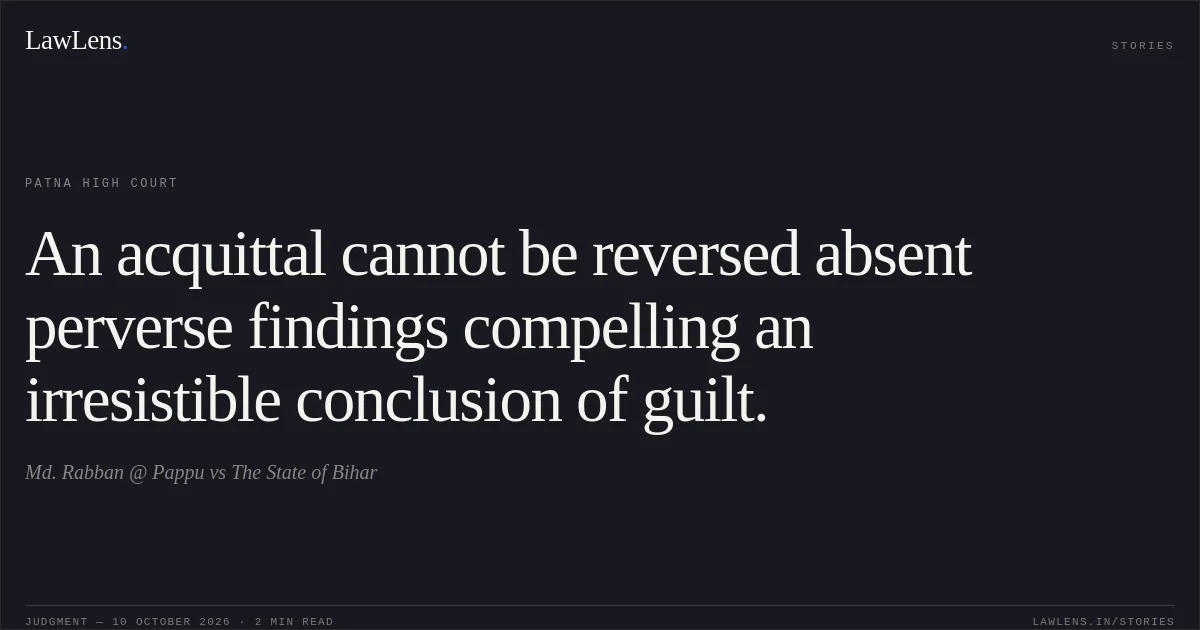
Source reference: paras. 9–10Applying the settled principles governing appeals against acquittal, the Court stated that an appellate court should not interfere unless the trial court’s findings are perverse and the evidence leads to an irresistible conclusion that the accused is guilty.
Source reference: para. 29No specific precedent is identified in the judgment.
Source reference: no citationReasoning
The Court found material weaknesses in the prosecution evidence.
Source reference: paras. 23–28The initial report contained no allegation of sexual violence, and the medical examination disclosed no injury or sign of sexual assault; the doctor assessed the victim’s bone age at 18–20 years.
Source reference: paras. 23–24The birth certificate relied on by the prosecution did not disclose the basis for the recorded date of birth, and the prosecution did not prove the victim’s date of birth through school records.
Source reference: paras. 25–27The Court also noted inconsistencies in the victim’s and her father’s accounts about the victim’s movements, residence and the circumstances in which she went missing.
Source reference: para. 28In light of these evidentiary deficiencies, the Court found no perversity in the trial court’s assessment and no basis to disturb the acquittal.
Source reference: para. 29Holding
The Court held that the trial court’s acquittal was not perverse and that the evidence did not justify appellate interference.
Finding no merit in the appeal, it dismissed the appeal and directed that a copy of the judgment and the trial court records be sent to the trial court.
Source reference: paras. 29–31Acts & Sections Cited
9 provisions across 3 statutes referred to in this judgment. Each provision opens on LawLens.
Indian Penal Code, 18605
Code of Criminal Procedure, 19732
Original Court PDF
Md. Rabban @ PappuvsThe State of Bihar
Click to open original judgment
Original judgment, available to read, download and summarize on LawLens.in