Facts
The State appealed under Section 378(1)(3) of the Code of Criminal Procedure, 1973, against the acquittal of the respondents in Sessions Case No. 107 of 2013.
Source reference: paras. 1–6; pp. 1–3The prosecution alleged that, during a late-night police patrol on 25 October 2012, the accused and a crowd attacked police personnel after officers asked organisers to switch off loudspeakers at a Garba event in Limkheda.
Source reference: paras. 1–6; pp. 1–3The accused were charged under Sections 143, 147, 148, 149, 342, 186, 189, 332, 333, 336, 353, 504 and 506(2) of the IPC and Section 135 of the Bombay Police Act.
Source reference: paras. 1–6; pp. 1–3The trial court acquitted them; the State challenged that decision.
Source reference: paras. 1–6; pp. 1–3Issues
Whether the trial court’s acquittal was unsupported by the evidence or otherwise manifestly erroneous, warranting appellate interference
Source reference: paras. 15–18; pp. 9–11Whether the prosecution proved beyond reasonable doubt the respondents’ presence, identification and participation in the alleged offences
Source reference: paras. 10–14, 20–21; pp. 5–9, 13Law Applied
Section 378 of the Code of Criminal Procedure empowers an appellate court to review, reappreciate and reconsider the evidence in an appeal against acquittal.
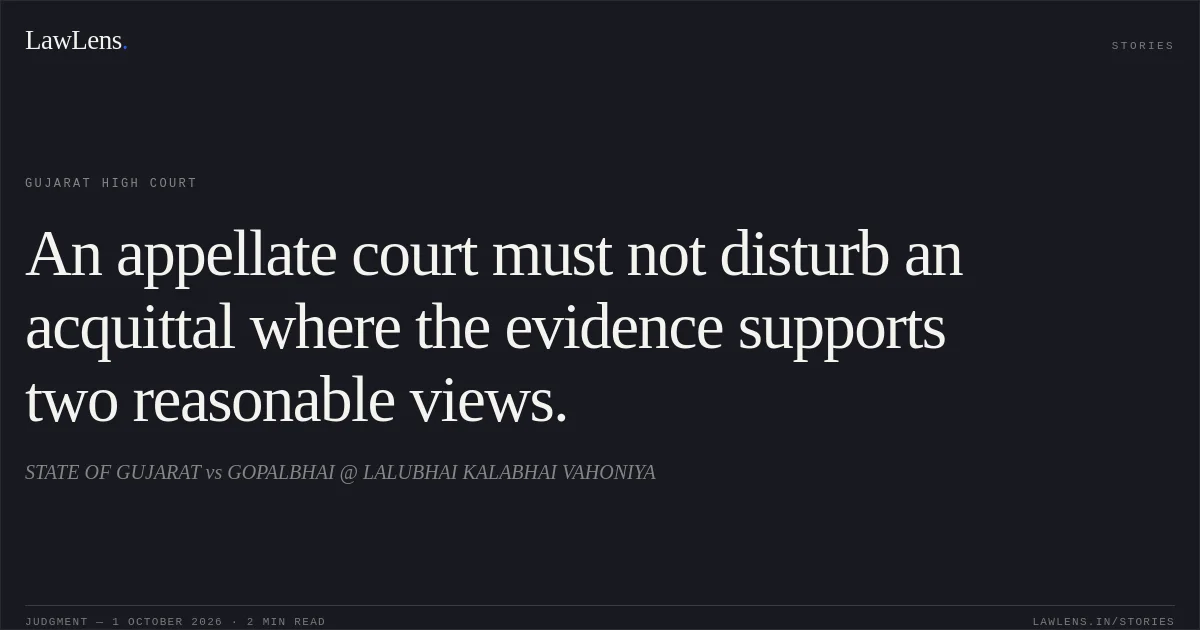
Source reference: paras. 16–19; pp. 10–12However, the accused benefit from a double presumption of innocence, and where two reasonable views are possible, the appellate court should not disturb the acquittal.
Source reference: paras. 16–19; pp. 10–12The Court relied on Chandrappa v. State of Karnataka, (2007) 4 SCC 415; Rajesh Prasad v. State of Bihar, (2022) 3 SCC 471; Babu Sahebagouda Rudragoudar v. State of Karnataka, AIR 2024 SC 2252; and Ramesh v. State of Karnataka, (2024) 9 SCC 169, for these principles.
Source reference: paras. 16–19; pp. 10–12Reasoning
The Court found material weaknesses in the prosecution case: the medical evidence described only simple injuries and did not support the alleged manner of assault; witnesses differed on the use of weapons and stone-pelting; and the prosecution did not satisfactorily establish how the respondents were identified among a large crowd.
Source reference: paras. 10–15, 20–21; pp. 5–9, 13The FIR was lodged after a delay that the prosecution did not explain, no independent witnesses supported the case, and the evidence concerning the firearm and recovered cartridges was inconsistent.
Source reference: paras. 10–15, 20–21; pp. 5–9, 13The Court concluded that these deficiencies created reasonable doubt and that the trial court’s assessment was a reasonable view of the evidence, not a manifestly erroneous or perverse one.
Source reference: paras. 10–15, 20–21; pp. 5–9, 13Holding
The Court held that the prosecution had not proved the respondents’ guilt beyond reasonable doubt and found no error of fact or law warranting interference with the acquittal.
The appeal was dismissed, the trial court’s acquittal was confirmed, and the bail bonds were cancelled.
Source reference: paras. 20–22; p. 13Acts & Sections Cited
15 provisions across 2 statutes referred to in this judgment. Each provision opens on LawLens.
Code of Criminal Procedure, 19732
Original Court PDF
STATE OF GUJARATvsGOPALBHAI @ LALUBHAI KALABHAI VAHONIYA
Click to open original judgment
Original judgment, available to read, download and summarize on LawLens.in