Facts
Zydus Healthcare challenged reassessment proceedings for assessment years 2015–16, 2017–18 and 2018–19.
Source reference: paras. 4(i)–4(ix), 8(i)–8(x), 9(i)–9(xviii)The original assessments had been completed under Section 143(3).
Source reference: paras. 4(i)–4(ix), 8(i)–8(x), 9(i)–9(xviii)In each case, the reassessment was initiated more than three years after the relevant assessment, principally on the basis of audit objections concerning, among other matters, excise-duty refunds and depreciation claimed on goodwill.
Source reference: paras. 4(i)–4(ix), 8(i)–8(x), 9(i)–9(xviii)The Assessing Officer issued notices under Section 148A(b), passed orders under Section 148A(d), and issued notices under Section 148.
Source reference: paras. 4(i)–4(ix), 8(i)–8(x), 9(i)–9(xviii)In W.P. (C) No. 39 of 2022, a reassessment order was also made while the writ petition was pending; the petitioner challenged the jurisdiction to initiate reassessment.
Source reference: paras. 4(i)–4(ix), 8(i)–8(x), 9(i)–9(xviii)Issues
1. Whether, where a notice under Section 148 was issued more than three years after the end of the relevant assessment year, the Assessing Officer satisfied Section 149(1)(b) by possessing books of account, other documents or evidence revealing escaped income of at least ₹50 lakh.
Source reference: paras. 5(ix)–5(xi), 10, 13(iii)–13(v)2. Whether an audit objection, though recognised as “information” under Explanation 1 to Section 148, could by itself constitute the material required by Section 149(1)(b) and justify reassessment.
Source reference: paras. 5(xii)(c)–(k), 13(vi)–13(vii)3. Whether reassessment could be initiated on the same material considered or available during the original assessment, including on the basis of a changed view about excise-duty refunds or goodwill depreciation.
Source reference: paras. 5(xii)(f)–(j), 5(xxx), 11(iii), 13(ii)4. Whether the availability of an alternative statutory remedy, completion of reassessment, or the scope of the original scrutiny prevented the Court from deciding the jurisdictional challenge.
Source reference: paras. 5(i)–(v), 13(i), 13(viii)Law Applied
Sections 147, 148, 148A and 149 of the Income Tax Act, 1961 governed the reassessment process.
Source reference: paras. 5, 13Section 148 requires information suggesting escaped income, while Section 148A prescribes the pre-notice procedure.
Source reference: paras. 5, 13Under Section 149(1)(b), where more than three but not more than ten years have elapsed, a Section 148 notice may issue only if the Assessing Officer possesses books of account, other documents or evidence revealing escaped income represented in the specified forms and amounting, or likely to amount, to at least ₹50 lakh.
Source reference: paras. 5, 13Explanation 1 to Section 148 recognises an audit objection as “information”; the Court held, however, that this does not make an audit objection, by itself, the material required by Section 149(1)(b), nor does it compel reassessment.
Source reference: paras. 5, 13The Assessing Officer must independently consider the information and the assessee’s response; reassessment cannot be used to review a concluded assessment or effect a mere change of opinion.
Source reference: paras. 5, 13The Court relied on *CIT v. Kelvinator of India Ltd.* on change of opinion; *Deputy Commissioner of Income Tax v. Songwon Speciality Chemicals India (P.) Ltd.* and *Sapphire Foods India Ltd. v. ACIT* on audit objections and reassessment of issues already examined; and *Shree Balaji Alloys* on the capital nature of qualifying excise-duty incentives.
Source reference: para. 5(xii)(g), paras. 5(xii)(l)–(n), paras. 5(xxiii)–(xxv)It also applied *Union of India v. Rajiv Bansal* to determine the governing law by reference to the date of notice.
Source reference: para. 5(vi)Reasoning
The notices were issued after the three-year period, so the Revenue had to meet Section 149(1)(b).
Source reference: paras. 5(xi)–5(xii)(k), 13(v)–(vii)The audit objections identified the Revenue’s view of errors in the earlier assessments but did not disclose new evidence or material satisfying that statutory condition.
Source reference: paras. 5(xi)–5(xii)(k), 13(v)–(vii)The Court held that describing an audit objection as “information” under Section 148 did not convert it into the documents or evidence required by Section 149(1)(b); nor did it authorise the Assessing Officer to revisit the same material and reach a different conclusion.
Source reference: paras. 5(xi)–5(xii)(k), 13(v)–(vii)The Court rejected the contention that limited scrutiny in the 2015–16 assessment, or the asserted scope of scrutiny in the other cases, displaced the statutory requirement for reassessment after three years.
Source reference: paras. 5(xxx)–(xxxi), 13(viii)It also noted that the claims concerning excise-duty refunds and goodwill depreciation were supported by the authorities cited, and that the reassessment proposals rested on audit objections rather than new material.
Source reference: paras. 5(xx)–(xxix), 11(ii)–(iii)The jurisdictional nature of the challenge justified writ review notwithstanding an alternative remedy or subsequent assessment proceedings.
Source reference: paras. 5(i)–(v)Holding
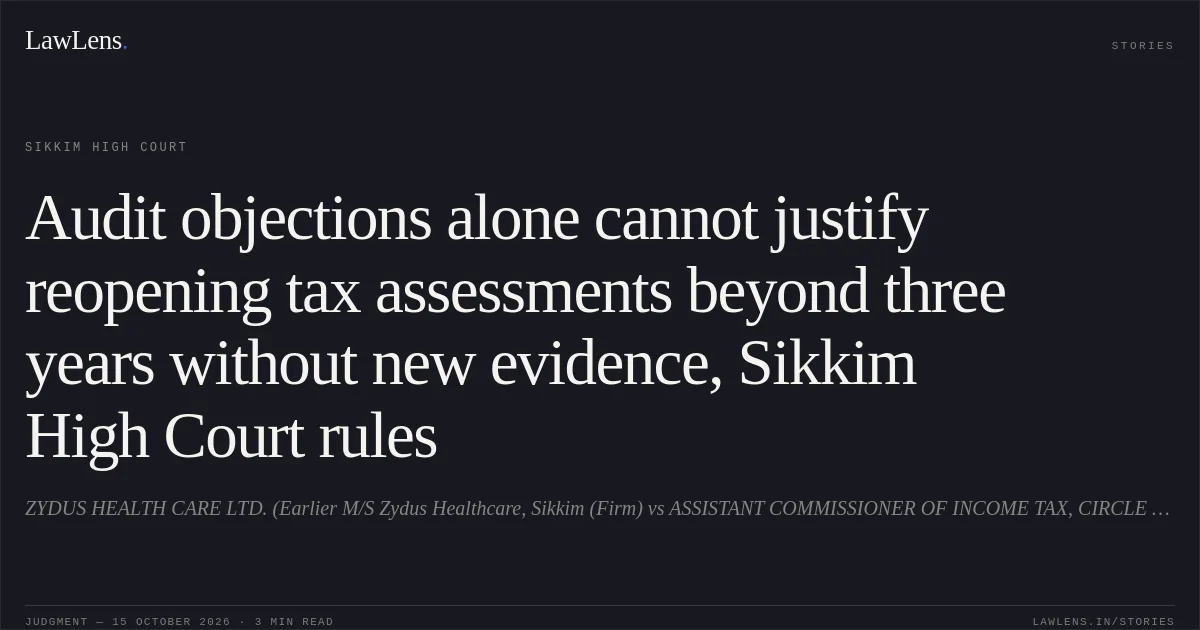
The Court held that the reassessment proceedings were without jurisdiction and barred by the extended limitation requirements because the Assessing Officer had not shown possession of the material required by Section 149(1)(b); an audit objection alone was insufficient.
It allowed all three writ petitions and quashed the impugned notices under Section 148, the orders under Section 148A(d), and the consequential proceedings and orders.
Source reference: paras. 5(xvii)–(xviii), 6, 13(vii), 14(i)–(ii), 15Acts & Sections Cited
29 provisions across 1 statute referred to in this judgment. Linked provisions open on LawLens.
Income Tax Act, 1961
Original Court PDF
ZYDUS HEALTH CARE LTD. (Earlier M/S Zydus Healthcare, Sikkim (Firm)vsASSISTANT COMMISSIONER OF INCOME TAX, CIRCLE 3(2) GANGTOK
Click to open original judgment
Original judgment, available to read, download and summarize on LawLens.in


