Facts
The complainant, proprietor of M/s Raju Battery and Electronics, alleged that on 10 March 2015 the then Branch Manager of Oriental Bank of Commerce, Ara Branch, obtained blank cheques from him and, in conspiracy with other persons and bank officials, transferred approximately ₹58 lakhs from the complainant’s and his brother’s accounts without authorization.
Source reference: paras. 4–5A complaint was filed under Section 156(3) Cr.P.C., resulting in registration of Nawada P.S. Case No. 292 of 2015 for offences under Sections 406, 420 and 120-B IPC.
Source reference: paras. 4–5The petitioners were senior bank officers. Petitioner no. 1 was posted at Rajkot on the date of the alleged transactions and joined the Regional Office, Patna only on 7 May 2015. Petitioner no. 2 was posted at Chapra and joined the relevant office only on 17 August 2015.
Source reference: paras. 6–7, 17Although investigation and a subsequent report were undertaken to ascertain the petitioners’ specific roles, no specific overt act or material connecting them with the alleged transfers was disclosed. The Chief Judicial Magistrate nevertheless took cognizance against them, leading to the present petition under Section 482 Cr.P.C.
Source reference: paras. 10–11, 42Issues
Whether the allegations and materials disclosed the essential ingredients of offences under Sections 406 and 420 IPC against the petitioners, despite the absence of any specific allegation that they participated in or authorized the disputed transactions?
Source reference: paras. 16, 29, 34–35Whether the petitioners could be prosecuted for criminal conspiracy under Section 120-B IPC merely because they subsequently held senior positions in the bank?
Source reference: paras. 19, 30, 36Whether continuation of the criminal proceedings against the petitioners amounted to an abuse of process warranting exercise of the High Court’s inherent jurisdiction under Section 482 Cr.P.C.?
Source reference: paras. 43–46Law Applied
The Court applied Sections 406, 420 and 120-B IPC and Section 482 Cr.P.C.
Source reference: paras. 28–30, 34–36Section 406 requires entrustment or dominion over property followed by dishonest misappropriation, conversion, use or disposal; Section 420 requires deception, fraudulent or dishonest inducement, and dishonest intention at the time of inducement; and Section 120-B requires material indicating an agreement or meeting of minds.
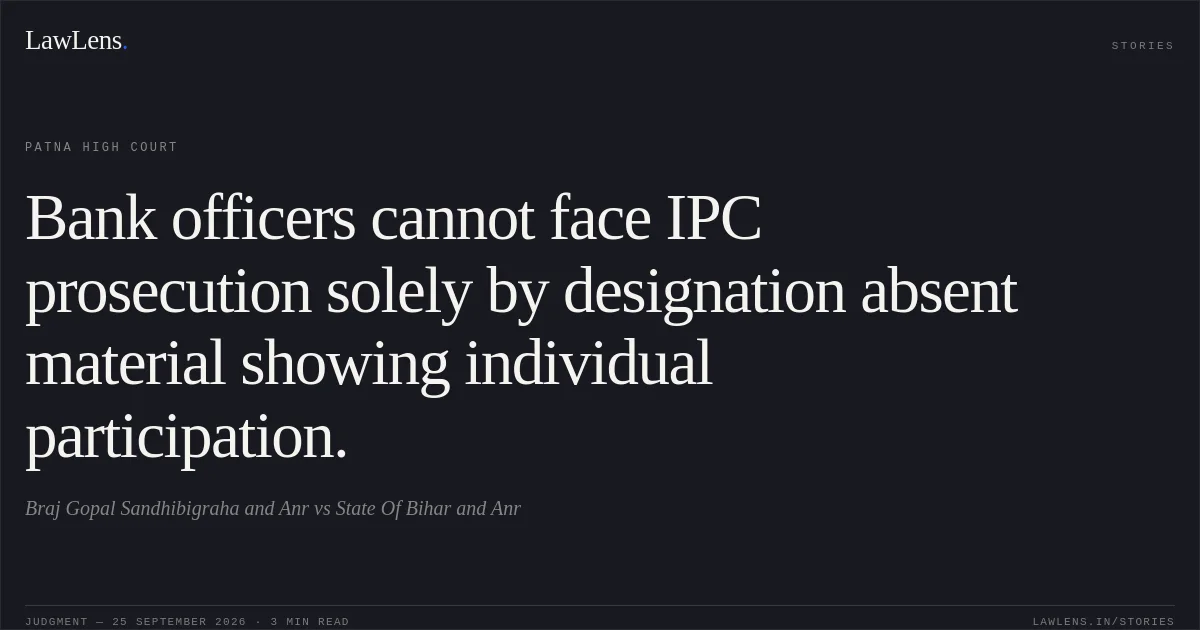
Source reference: paras. 28–30, 34–36The Court relied on Dr. Anil Khandelwal v. Phoenix India, holding that bank officers cannot be prosecuted under the IPC merely because of their designation and that concrete material showing their precise individual role is necessary.
Source reference: paras. 24–26The principles in State of Haryana v. Bhajan Lal were applied, particularly where the allegations and uncontroverted material, even if accepted in full, do not disclose an offence against the accused.
Source reference: para. 27Reasoning
The Court found that the alleged transactions occurred on 10 March 2015, before either petitioner was posted at the Ara Branch.
Source reference: paras. 17, 38–39The complaint did not allege that the petitioners were present at the branch, prepared or issued the cheques, authorized the transfers, received any proceeds, or derived any personal benefit.
Source reference: para. 18Consequently, the necessary elements of entrustment and dishonest misappropriation under Section 406 IPC, and deception or dishonest inducement under Section 420 IPC, were absent qua the petitioners.
Source reference: paras. 29, 34–35Likewise, conspiracy could not be inferred merely from their subsequent official designations, without material showing an agreement or meeting of minds.
Source reference: paras. 19, 30, 36Since the investigation also failed to identify any specific role and the allegations did not disclose the statutory ingredients of the offences, continuation of the prosecution fell within the recognised categories for exercise of Section 482 jurisdiction.
Source reference: paras. 42–49Holding
The Court held that the allegations and materials, even if accepted at face value, did not establish the ingredients of Sections 406 or 420 IPC against either petitioner, nor did they disclose any foundational material for a charge of conspiracy under Section 120-B IPC.
Their subsequent official positions could not create criminal liability retrospectively, particularly when both joined after the alleged occurrence and no individual overt act was attributed to them.
Source reference: paras. 48–49Accordingly, the order taking cognizance dated 14 February 2017 and all consequential proceedings were quashed qua both petitioners.
Source reference: paras. 50–52The application under Section 482 Cr.P.C. was allowed.
Source reference: paras. 50–52Acts & Sections Cited
5 provisions across 2 statutes referred to in this judgment. Each provision opens on LawLens.
Indian Penal Code, 18602
Code of Criminal Procedure, 19733
Original Court PDF
Braj Gopal Sandhibigraha and AnrvsState Of Bihar and Anr
Click to open original judgment
Original judgment, available to read, download and summarize on LawLens.in