Facts
The respondent, a CRPF Constable appointed in 2004, faced disciplinary proceedings after verification raised suspicion that the educational certificate used to obtain his appointment was fake.
Source reference: para. 3–11The Enquiry Officer found the charges unproved.
Source reference: para. 3–11The respondent later submitted a Board certificate supporting the original certificate’s genuineness, but the Disciplinary Authority sought a further opinion from the Board and relied on it to disagree with the Enquiry Officer and dismiss the respondent.
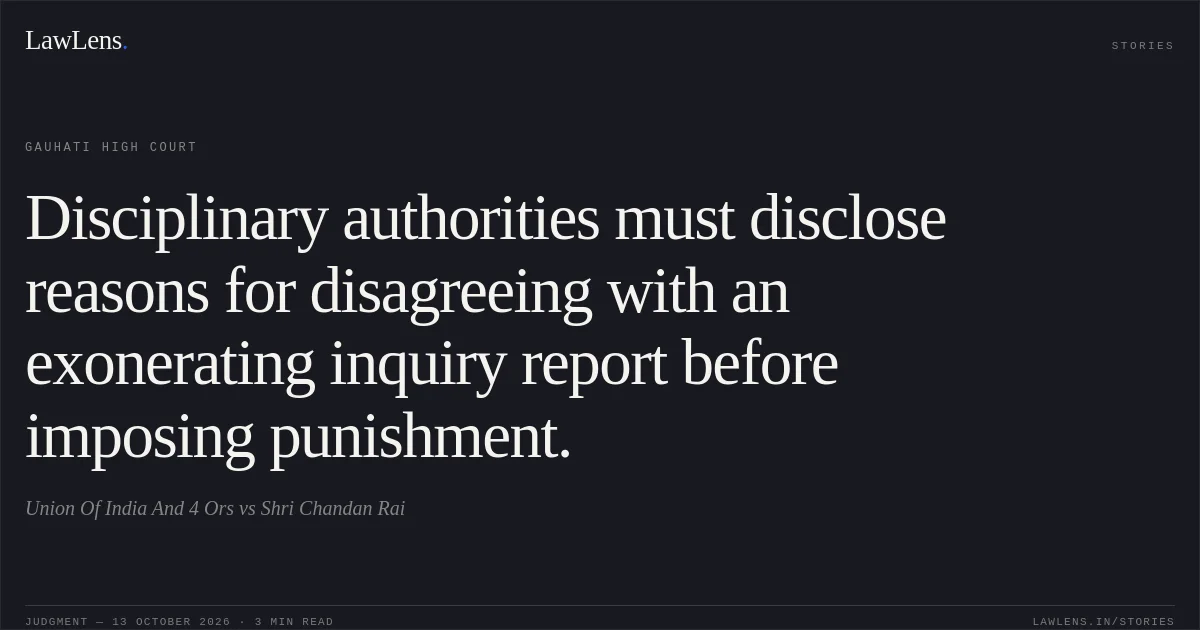
Source reference: para. 3–11The respondent was not given the Disciplinary Authority’s reasons for disagreement or an opportunity to respond to the further verification.
Source reference: para. 3–11A Single Judge set aside the dismissal and appellate orders, directed reinstatement, and permitted a fresh proceeding. The Union of India appealed.
Source reference: para. 3–11Issues
1. Whether the disciplinary proceedings and dismissal were vitiated because the respondent was not informed of the Disciplinary Authority’s reasons for disagreeing with the Enquiry Officer or given an opportunity to respond.
Source reference: para. 9–10, 15–192. Whether proceedings against the respondent could be conducted under Section 11(1) of the CRPF Act, 1949, read with Rule 27 of the CRPF Rules, 1955.
Source reference: para. 10–13, 19–223. Whether the proper relief was to set aside the dismissal and remit the matter to the Disciplinary Authority from the stage at which the procedural defect arose.
Source reference: para. 26–28Law Applied
Section 11(1) of the CRPF Act, 1949 empowers the competent authority to award specified punishments in lieu of, or in addition to, suspension or dismissal for misconduct by a Force member.
Source reference: para. 20–22Rule 27 of the CRPF Rules, 1955 prescribes the authorities and procedures for punishments, including formal departmental inquiry for dismissal or removal.
Source reference: para. 20Under Managing Director, ECIL v. B. Karunakar, (1993) 4 SCC 727, and Punjab National Bank v. Kunj Behari Misra, (1998) 7 SCC 84, where the Disciplinary Authority disagrees with the Enquiry Officer, it must disclose its reasons and provide the employee a meaningful opportunity to respond before reaching its conclusion.
Source reference: para. 15, 25Ram Saran v. IG of Police, CRPF, (2006) 2 SCC 541, recognises that judicial review in disciplinary matters concerns defects in the decision-making process and that a proven use of a false certificate to secure appointment is serious misconduct.
Source reference: para. 23Reasoning
The Disciplinary Authority relied on a further Board opinion without disclosing it or its tentative reasons for disagreement to the respondent.
Source reference: para. 15–19, 25–26Because the Enquiry Officer had found the charges unproved, the respondent had no effective opportunity to address the material on which the Disciplinary Authority ultimately relied.
Source reference: para. 15–19, 25–26This procedural failure breached natural justice and vitiated the dismissal and departmental appeal.
Source reference: para. 15–19, 25–26The Court, however, disagreed with the Single Judge’s view that Section 11(1) read with Rule 27 was inapplicable; it held that those provisions could govern the proceedings.
Source reference: para. 19–22Given the seriousness of the allegation if established, the Court considered it appropriate to resume the inquiry at the point where the respondent should have received the reasons for disagreement, rather than foreclose further proceedings.
Source reference: para. 24, 26–27Holding
The appeal was disposed of by modifying the Single Judge’s judgment.
The dismissal and appellate orders remained set aside, but the matter was remitted to the Disciplinary Authority to provide the respondent with its reasons for disagreement along with the Enquiry Officer’s report, allow him to make a representation, and then conclude the proceedings in accordance with law.
Source reference: para. 26–30The respondent was to be reinstated for the limited purpose of continuing and concluding the inquiry, which was to be completed within three months.
Source reference: para. 27–28Acts & Sections Cited
3 provisions across 1 statute referred to in this judgment. Each provision opens on LawLens.
Central Reserve Police Force Act, 19493
Original Court PDF
Union Of India And 4 OrsvsShri Chandan Rai
Click to open original judgment
Original judgment, available to read, download and summarize on LawLens.in