Facts
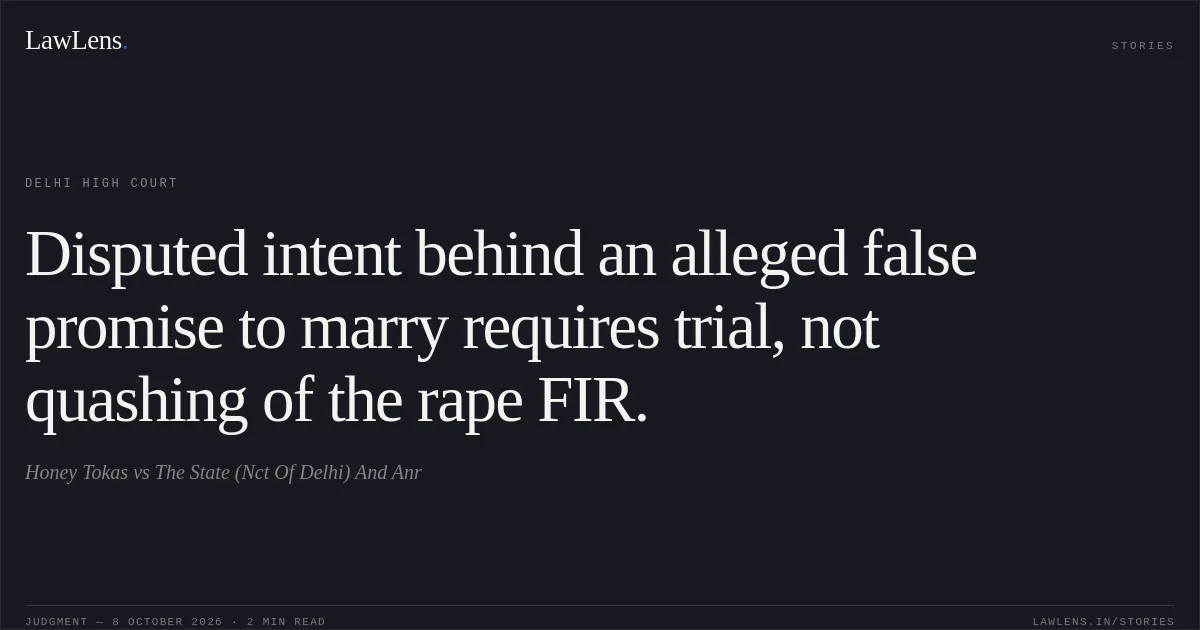
The petitioner sought quashing under Section 528 of the Bharatiya Nagarik Suraksha Sanhita, 2023, of an FIR registered under Section 376 IPC.
Source reference: paras. 1–3, p. 1After the charge-sheet was filed, the trial court framed charges under Sections 376(2)(n), 420, 506 and 509 IPC; the complainant’s testimony was being recorded and cross-examination was scheduled.
Source reference: paras. 1–3, p. 1The petitioner contended that the relationship was consensual and that the marriage did not take place because of family and other unforeseen circumstances.
Source reference: paras. 4–5, 9, 16, pp. 2, 4–5He denied making a false promise and alleged that the FIR was lodged over an unpaid loan.
Source reference: paras. 4–5, 9, 16, pp. 2, 4–5The FIR alleged that the petitioner promised to marry the complainant, that she relied on the promise in entering into physical relations, and that he had a dishonest intention.
Source reference: para. 14, p. 6Issues
Whether the FIR’s allegations, taken at face value, disclosed a prima facie offence under Section 376 IPC based on a false promise of marriage.
Source reference: paras. 8, 13–15, pp. 3, 6–7Whether the petitioner established grounds to quash the FIR, including that it was maliciously instituted or that continuing the trial would be an abuse of process.
Source reference: paras. 16–20, pp. 7–9Law Applied
Section 376 IPC, read with Sections 90 and 375 IPC, may apply where a promise to marry was false from its inception, made in bad faith with no intention of being fulfilled, and had a direct nexus to the complainant’s decision to engage in sexual relations; mere subsequent failure to marry is insufficient (Pramod Suryabhan Pawar v. State of Maharashtra and Anurag Soni v. State of Chhattisgarh).
Source reference: paras. 6–8, pp. 2–4Under State of Haryana v. Bhajan Lal, quashing may be appropriate, among other cases, where the allegations even if accepted do not disclose an offence, are inherently improbable, or the proceeding is manifestly malicious; R.P. Kapur v. State of Punjab confirms that this may be assessed from the complaint without appreciating evidence.
Source reference: paras. 11–12, pp. 4–6Under Pardeep Kumar Kesarwani v. State of Uttar Pradesh, an accused relying on material to establish abuse of process must show, among other things, that the material is sterling and impeccable, rules out the allegations, is unrefuted or unrefutable, and that continuing the trial would not serve the ends of justice.
Source reference: paras. 17–18, pp. 7–8Reasoning
The Court found that the FIR specifically alleged both a dishonest promise to marry and reliance on that promise for the complainant’s consent to sexual relations, prima facie satisfying the relevant ingredients of the offence.
Source reference: paras. 14–15, pp. 6–7The petitioner’s competing account—that the relationship was consensual and the marriage failed for other reasons—raised factual questions about his intention, the circumstances of the assurances, and their effect on the complainant’s consent.
Source reference: paras. 10, 19–20, pp. 4, 8–9Those questions required assessment of communications, conduct and other evidence at trial, not resolution in the quashing petition.
Source reference: paras. 10, 19–20, pp. 4, 8–9The petitioner also produced no sterling and impeccable material to establish that the FIR was lodged for vengeance over the alleged loan; the ulterior-motive allegation therefore did not justify quashing.
Source reference: paras. 16–18, pp. 7–8Holding
The Court declined to quash the FIR and dismissed the petition, holding that the allegations disclosed a prima facie case and that the disputed factual issues required trial.
The petitioner remained at liberty to raise all permissible contentions before the trial court.
Source reference: para. 26, p. 10Acts & Sections Cited
9 provisions across 3 statutes referred to in this judgment. Each provision opens on LawLens.
Bharatiya Nagarik Suraksha Sanhita, 20231
Indian Penal Code, 18606
Code of Criminal Procedure, 19732
Original Court PDF
Honey TokasvsThe State (Nct Of Delhi) And Anr
Click to open original judgment
Original judgment, available to read, download and summarize on LawLens.in