Facts
On April 7, 1987, at approximately 6:30 PM, four accused persons (Ram Lal, Bateshwar, Ram Naresh, and Phulla) attacked the complainant (PW-1) and his family members due to property disputes.
Source reference: para. 4, 10, 42Bateshwar, Ram Lal, and Ram Naresh used firearms, while Phulla used a lathi.
Source reference: para. 4, 11One victim, Subedar, sustained a gunshot wound to the abdomen and died on July 8, 1987, after his dying declaration was recorded.
Source reference: para. 5, 12, 13The Trial Court convicted the appellants under Sections 302/149, 324/149, 148, 323, and 147 of the IPC.
Source reference: para. 2During the appeal, Ram Lal and Phulla died, leading to the abatement of the appeal against them; it proceeded only for Bateshwar and Ram Naresh.
Source reference: para. 3Issues
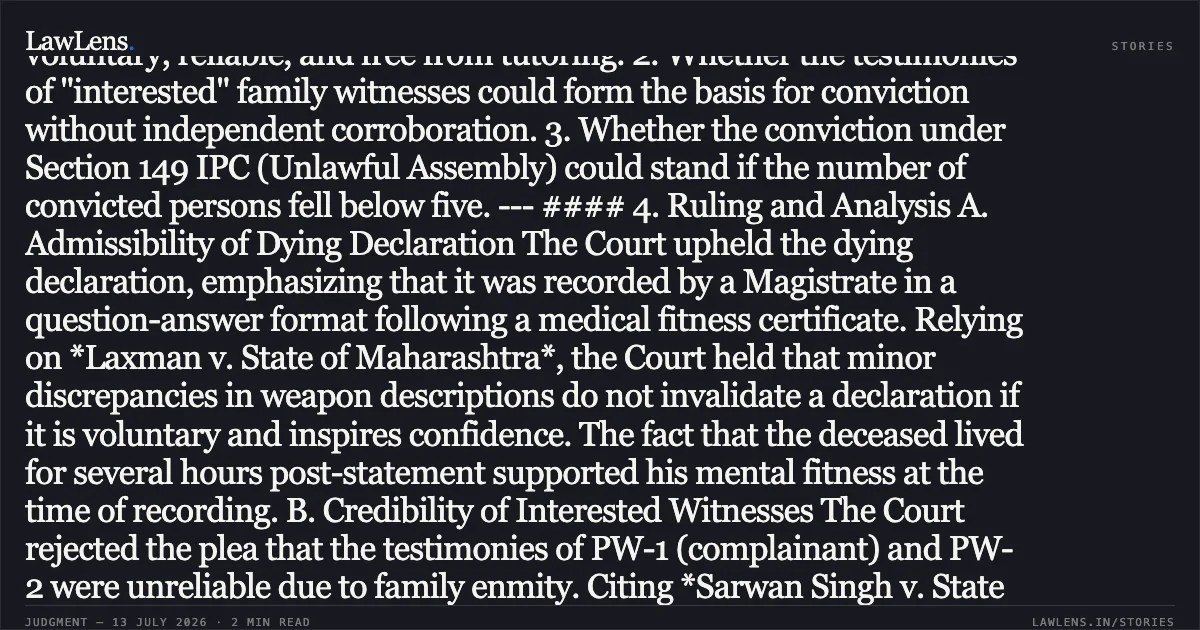
1. Whether the dying declaration of the deceased was voluntary, truthful, and free from tutoring.
Source reference: para. 25, 27-372. Whether the testimony of interested/partisan eye-witnesses (PW-1 and PW-2) was reliable in the absence of independent witnesses.
Source reference: para. 25, 38-573. Whether the conviction under Sections 147 and 148 IPC was sustainable following the acquittal of one co-accused, reducing the number of assailants below five.
Source reference: para. 62Law Applied
Section 32(1) of the Indian Evidence Act (now Section 26(a) of the Bharatiya Sakshya Adhiniyam, 2023) regarding dying declarations.
Source reference: para. 29Laxman v. State of Maharashtra (2002) to establish that a certificate of fitness by a doctor is a rule of caution, but the magistrate’s satisfaction of the declarant’s fit state of mind is primary.
Source reference: para. 32Thoti Manohar v. State of Andhra Pradesh (2012), holding that partisanship alone does not discredit a witness if the testimony is intrinsically reliable.
Source reference: para. 51Section 141 of the IPC, which requires a minimum of five persons to constitute an unlawful assembly.
Source reference: para. 62Reasoning
The court scrutinized the dying declaration and found it reliable because it was recorded by a Magistrate (PW-5) in a question-answer format after a medical fitness certification by Dr. Thiryani (PW-3).
Source reference: para. 34-36Minor discrepancies regarding weapon descriptions were dismissed due to the declarant's severe physical condition.
Source reference: para. 37PW-1 (an injured witness) and PW-2 provided consistent accounts that matched the medical evidence (firearm and lathi wounds).
Source reference: para. 55-57, 60The proximity of the parties (cousins/uncle) ensured identification was possible even in twilight.
Source reference: para. 59, 61The court found a legal error in the conviction under Sections 147 and 148 IPC; since one of the five accused (Ram Ratan) was acquitted, the group fell below the five-person threshold required to constitute an "unlawful assembly" under Section 141.
Source reference: para. 62Holding
The High Court set aside the convictions under Sections 147 and 148 IPC because the legal requirement for an unlawful assembly (five or more persons) was not met.
The court upheld the convictions for the substantive offenses by substituting Section 149 (unlawful assembly) with Section 34 (common intention), holding Bateshwar and Ram Naresh guilty under Sections 302/34, 307/34, and 323/34 IPC.
Source reference: para. 63-64Acts & Sections Cited
11 provisions across 3 statutes referred to in this judgment. Each provision opens on LawLens.
Indian Penal Code, 1860
Code of Criminal Procedure, 19731
Bharatiya Sakshya Adhiniyam, 20231
Original Court PDF
Ram Lal And 3 OthersvsState
Click to open original judgment
Original judgment, available to read, download and summarize on LawLens.in


![Subsequent exoneration does not retrospectively invalidate a finalized promotion select list.. UNNIKRISHNAN M vs M/o Environment And Forests. CAT - ['Ernakulam']. LawLens](/stories/thumbnails/subsequent-exoneration-does-not-retrospectively-invalidate-a-finalized-promotion-select-li-ce80a0e84f2f4887857271e8b4341c42.webp)