Facts
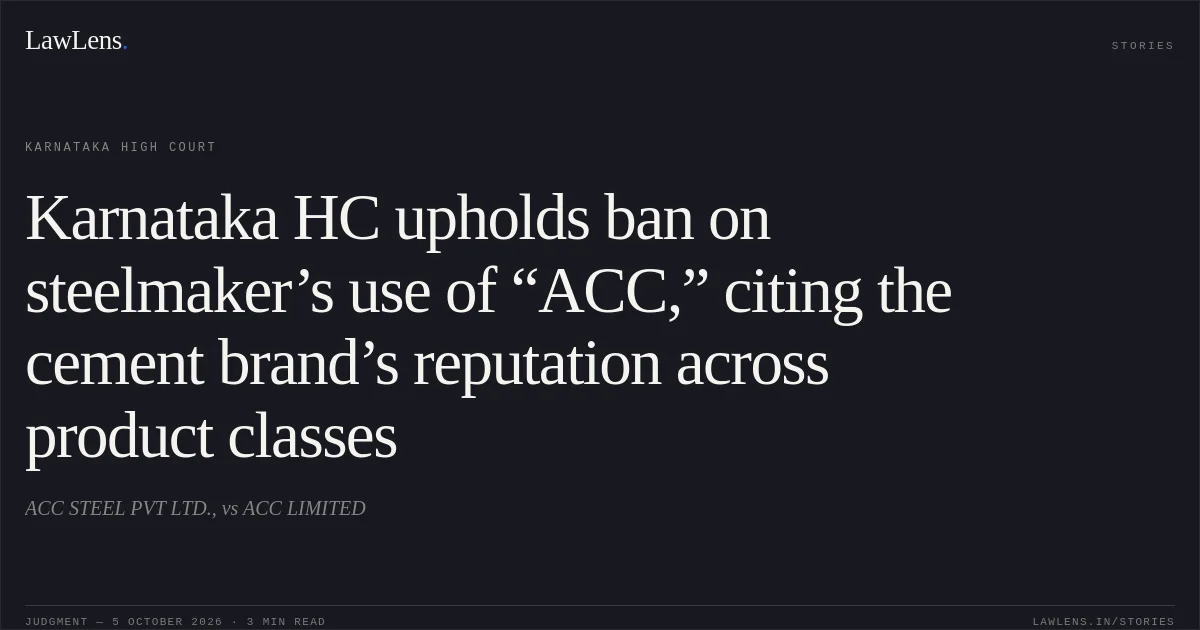
ACC Limited sued ACC Steel Pvt. Ltd., alleging infringement of its “ACC” trade mark and logo, passing off, and copyright infringement. ACC Steel used “ACC” in “ACC TMT 500” and as part of its corporate name.
Source reference: para. 3–15, 25–28It claimed the mark had been independently adopted by its predecessors and relied on its registration in Class 6; ACC Limited relied on its earlier use and registrations, goodwill, and well-known-mark status.
Source reference: para. 3–15, 25–28The Commercial Court decreed the suit in part, granting injunctions, directing a change to the defendant’s corporate name, delivery of infringing material, and rendition of accounts, but declining the claimed ₹10 lakh damages.
Source reference: para. 21–23ACC Steel appealed under Section 13(1-A) of the Commercial Courts Act, 2015.
Source reference: para. 1, 24Issues
1. Whether the Commercial Court’s judgment and decree warranted appellate interference, particularly in light of the parties’ different classes of goods and the defendant’s registration.
Source reference: para. 30; para. 31–362. Whether the defendant’s use of “ACC” in its mark and corporate name amounted to trade mark infringement and passing off, and whether the findings of copyright infringement were sustainable.
Source reference: para. 18–20, 39–403. Whether the consequential reliefs granted by the Commercial Court, including injunction, corporate-name amendment, delivery of infringing material, and rendition of accounts, should stand.
Source reference: para. 21–23, 26, 44Law Applied
Under Sections 28 and 31 of the Trade Marks Act, 1999, a registration confers rights subject to the Act, and is prima facie evidence of validity; registration does not, by itself, determine competing prior rights.
Source reference: para. 31–39Sections 11(6) and 11(7) identify factors relevant to well-known status, including public recognition, duration and extent of use and promotion, registrations, enforcement, and relevant consumer and trade groups; Section 11(2) permits protection of a well-known mark against later marks used for dissimilar goods in specified circumstances.
Source reference: para. 31–39Section 29(4) addresses use of an identical or similar registered mark for dissimilar goods where the registered mark has a reputation in India and the later use, without due cause, takes unfair advantage of or is detrimental to its distinctive character or repute; Section 29(5) concerns use of a registered mark as part of a trade name.
Source reference: para. 31–39Section 135 provides for injunction and, at the plaintiff’s option, damages or an account of profits, as well as other appropriate relief.
Source reference: para. 44The Court also relied on the well-known-mark procedure under Rule 124 of the Trade Marks Rules, 2017, and cited Societe Des Produits Nestle, S.A. v. Montu Sadhu on the copyright claim.
Source reference: para. 19, 31–39, 44It held that Sections 51 and 122 did not create a substantive right to use another proprietor’s mark.
Source reference: para. 37Reasoning
The Court held that the dispute could not be resolved merely by comparing the parties’ classifications or relying on the defendant’s registration.
Source reference: para. 31–33, 36, 38ACC Limited had established substantially earlier and extensive use, reputation, and recognition of “ACC” as a well-known mark; the defendant’s registration had also been stayed in rectification proceedings.
Source reference: para. 31–33, 36, 38The Court considered the common construction-related context, evidence of market inquiries and confusion, the defendant’s use of “ACC” as the principal element of “ACC TMT 500” and its corporate name, and the similarity in presentation and get-up.
Source reference: para. 34–35, 39–40It found that the defendant had not satisfactorily substantiated its asserted independent origin for the mark.
Source reference: para. 35, 40–43These circumstances supported the Commercial Court’s findings on infringement, passing off, and the associated copyright claim; the defendant’s arguments did not establish grounds for appellate interference.
Source reference: para. 35, 40–43Holding
The High Court answered the appellate challenge against the defendant and dismissed the appeal, finding no ground to interfere with the Commercial Court’s decree.
The injunctions and directions concerning amendment of the defendant’s corporate name, delivery of infringing material, and rendition of accounts therefore remained in place; the ₹10 lakh damages claim had been declined by the Commercial Court.
Source reference: para. 21–23, 44There was no order as to costs, and pending interlocutory applications were disposed of.
Source reference: para. 44Acts & Sections Cited
8 provisions across 2 statutes referred to in this judgment. Each provision opens on LawLens.
Commercial Courts Act, 20151
Trade Marks Act, 19997
Original Court PDF
ACC STEEL PVT LTD.,vsACC LIMITED
Click to open original judgment
Original judgment, available to read, download and summarize on LawLens.in