Facts
The CIRP of Syska E-Retails LLP commenced on 17 June 2025.
Source reference: no citationIn the CoC’s 7th meeting, neither the proposal to extend the CIRP by 90 days nor the proposal for liquidation obtained the required 66% voting share; no compliant resolution plan had been received, and the CIRP period expired on 14 December 2025.
Source reference: pp. 2–4, 23–24 / paras. 2–5, 61After expiry, the Appellant, a suspended partner of the Corporate Debtor, and another prospective applicant expressed interest in submitting plans. At its 8th meeting on 29 December 2025, the CoC authorised the Resolution Professional to seek directions from the NCLT on the way forward.
Source reference: pp. 4–5, 24 / paras. 6–9, 62The NCLT declined to condone the delay and ordered liquidation under Section 33(1) of the Insolvency and Bankruptcy Code, 2016 (“IBC”). The Appellant appealed, seeking to set aside that order and obtain an opportunity to continue the resolution process.
Source reference: pp. 5–7 / paras. 10–16Issues
1. Whether, after expiry of the CIRP period without receipt of a resolution plan under Section 30(6) and without a valid extension, the Adjudicating Authority could defer liquidation because the CoC had not approved liquidation by the requisite majority and later sought directions on the way forward.
Source reference: p. 23 / para. 602. Whether post-expiry expressions of interest, the CoC’s later resolution to seek directions, or the Appellant’s eligibility under Section 240A could revive or extend the expired CIRP.
Source reference: pp. 24–28 / paras. 62, 69–72Law Applied
Section 33(1)(a) of the IBC requires the Adjudicating Authority to order liquidation where, before expiry of the insolvency resolution process period or the maximum period permitted under Section 12, it has not received a resolution plan under Section 30(6).
Source reference: pp. 25–26 / paras. 63–65An extension must be obtained in accordance with the Code and its prescribed voting requirements; absent a valid extension, the CIRP cannot continue beyond the statutory period.
Source reference: pp. 26–27 / paras. 67–68Liquidation under Section 33(2), which follows a CoC decision to liquidate, is distinct from liquidation mandated by Section 33(1)(a); therefore, failure of a separate CoC liquidation resolution does not prevent the latter where its statutory conditions are met.
Source reference: pp. 25–26 / paras. 63–66Section 240A does not create an independent power to revive an expired CIRP, and the CoC’s commercial wisdom cannot override the Code’s statutory requirements.
Source reference: pp. 27–28 / paras. 68, 72The judgment did not rely on the precedents cited by the Appellant.
Source reference: no citationReasoning
The NCLAT held that, when the 180-day period expired on 14 December 2025, no resolution plan had been received within the prescribed period and no valid extension had been approved.
Source reference: pp. 24, 27–28 / paras. 62, 69–72The CoC’s later meeting and the expressions of interest received after expiry could not revive the CIRP or satisfy the statutory requirement for a timely plan.
Source reference: pp. 24, 27–28 / paras. 62, 69–72Nor did the failure of the separate liquidation proposal to obtain 66% support create a legal deadlock: the liquidation order was based on Section 33(1)(a), not on a CoC resolution under Section 33(2).
Source reference: pp. 25–27 / paras. 63–68The objective of resolution and value maximisation could not displace the consequence prescribed by the Code.
Source reference: p. 29 / paras. 73, 75–77Separately, the Tribunal observed that disclosure of the fair and liquidation values without the required confidentiality safeguards was non-compliant with Regulation 35 and criticised the Resolution Professional’s conduct, while stating that it was not determining alleged misconduct.
Source reference: pp. 28–29 / para. 71Holding
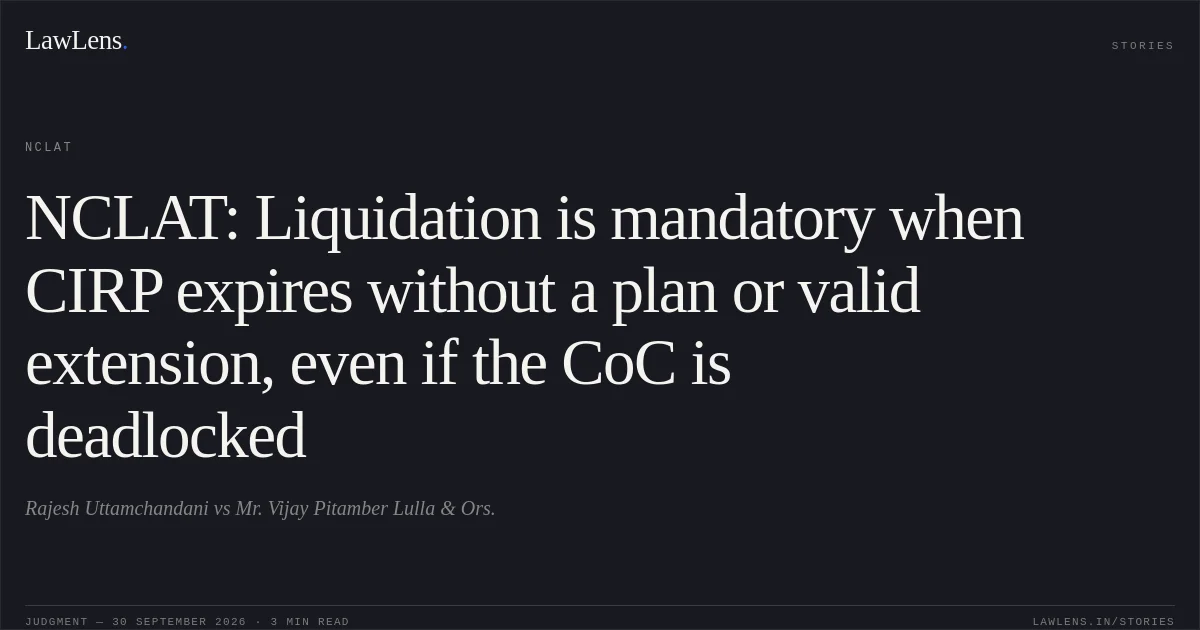
The NCLAT held that, once the CIRP period expired without a resolution plan under Section 30(6) and without a valid extension, liquidation under Section 33(1)(a) was mandatory; neither the failed CoC liquidation vote nor subsequent expressions of interest prevented that result.
It dismissed the appeal and affirmed the NCLT’s liquidation order, vacated any interim stay, and made no order as to costs.
Source reference: p. 32 / para. 81Acts & Sections Cited
10 provisions across 1 statute referred to in this judgment. Each provision opens on LawLens.
Insolvency and Bankruptcy Code, 2016.
Original Court PDF
Rajesh UttamchandanivsMr. Vijay Pitamber Lulla & Ors.
Click to open original judgment
Original judgment, available to read, download and summarize on LawLens.in