Facts
Petitioner No. 1 purchased land (Old Survey No. 137, New Survey No. 2) in Village Lear via a registered sale deed in 1982
Source reference: p. 2Mutation Entry No. 693 was certified in 2004
Source reference: p. 3Petitioner No. 1 then sold the land to Petitioner No. 2 via a registered deed in 2007, resulting in certified Entry No. 784
Source reference: p. 3Respondents 6 and 7 challenged these entries before the Deputy Collector in 2013—after a 31-year delay—claiming the land originally belonged to their forefathers and was illegally mortgaged
Source reference: p. 3, 5, 14The Deputy Collector dismissed the appeal
Source reference: p. 3On revision, the Collector also dismissed the appeal but concurrently issued suo motu directions to the Mamlatdar to conduct an inquiry and cancel all mutation entries made after the 1970 promulgation
Source reference: p. 3, 15The Special Secretary, Revenue Department (Appeals) [SSRD] confirmed this order
Source reference: p. 3Issues
Whether the Collector exceeded his jurisdiction under RTS (Record of Rights) proceedings by issuing directions for inquiry and cancellation of entries in the absence of a specific prayer and beyond the scope of the appeal
Source reference: p. 6, 21Whether revenue authorities are legally obligated to mutate entries based on registered sale deeds under Section 135-C of the Bombay Land Revenue Code
Source reference: p. 7, 17Whether the challenge to the revenue entries was barred by inordinate delay and laches
Source reference: p. 3, 21Law Applied
Section 135-C of the Bombay Land Revenue Code, which mandates that the revenue authority must record and certify entries based on registered documents
Source reference: p. 7, 17The principle that revenue entries have fiscal value and do not determine title—a principle affirmed in Evergreen Apartment Co-operative Housing Society Ltd. v. SSRD [1991 (1) GLR 113] and Nathubhai Meraman Darji
Source reference: p. 19-21The doctrine from State of Gujarat v. Patel Raghav Natha [AIR 1969 SC 1297], which holds that revenue authorities cannot adjudicate complex questions of title in RTS proceedings
Source reference: p. 19Reasoning
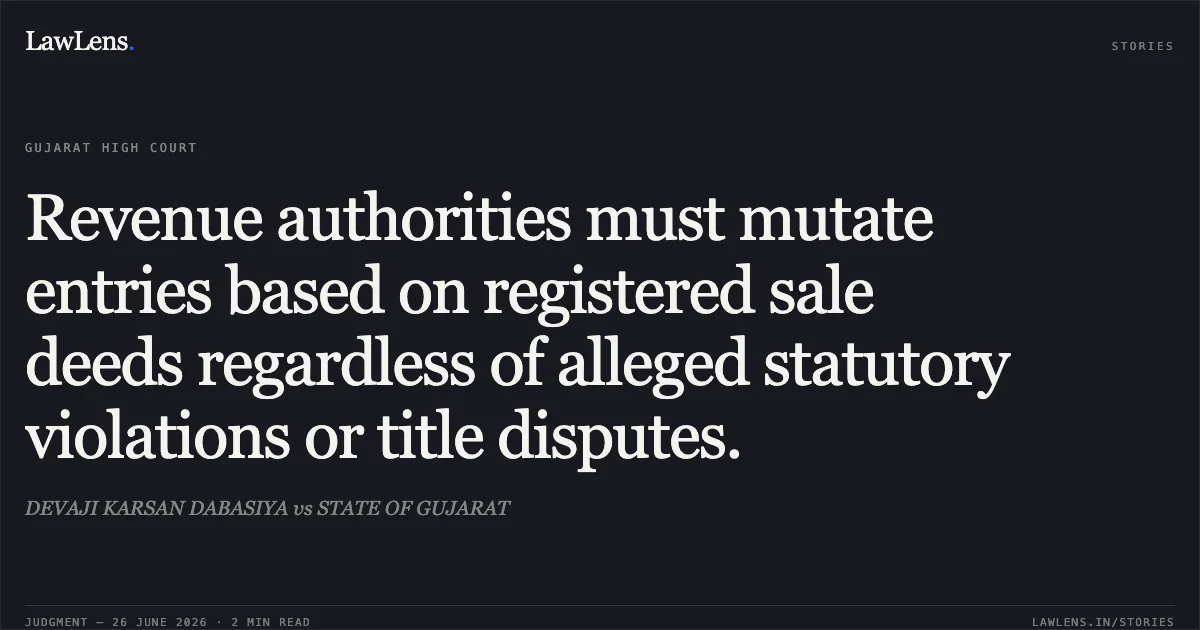
The Court reasoned that once a registered sale deed is executed, Section 135-C imposes a statutory duty on the revenue department to update the Record of Rights; the validity of such a deed can only be challenged in a competent Civil Court, not before revenue authorities
Source reference: p. 16, 18The Court found the Collector’s directions "dehors the statutory provisions" because he traveled beyond the scope of the specific litigation between the parties to order a sweeping inquiry into all entries since 1970 without a prayer from the litigants
Source reference: p. 3, 15, 21The Court emphasized that Petitioner No. 1’s 1982 deed remains valid and uncancelled by any court; thus, the revenue office was bound to give it effect
Source reference: p. 18Additionally, the 31-year delay in challenging the entries was deemed "gross and inordinate," further invalidating the intrusive directions issued by the lower authorities
Source reference: p. 21Holding
The Court held that the Collector exceeded his jurisdiction by issuing suo motu directions in an appeal proceeding that had already been dismissed on merits
The Court allowed the petitions and quashed the orders of the SSRD and the Collector insofar as they issued directions for inquiry and cancellation
Source reference: p. 22The Court directed the restoration of Revenue Entry Nos. 693 and 784 in favor of the petitioners
Source reference: p. 23Rule made absolute
Source reference: p. 23Acts & Sections Cited
2 provisions across 1 statute referred to in this judgment. Linked provisions open on LawLens.
Bombay Land Revenue Code2
Original Court PDF
DEVAJI KARSAN DABASIYAvsSTATE OF GUJARAT
Click to open original judgment
Original judgment, available to read, download and summarize on LawLens.in


![Subsequent exoneration does not retrospectively invalidate a finalized promotion select list.. UNNIKRISHNAN M vs M/o Environment And Forests. CAT - ['Ernakulam']. LawLens](/stories/thumbnails/subsequent-exoneration-does-not-retrospectively-invalidate-a-finalized-promotion-select-li-ce80a0e84f2f4887857271e8b4341c42.webp)