Facts
The appellants imported non-sterile medical latex examination gloves in bulk. In India, they sterilised the gloves, repacked and relabelled them for retail sale as sterilised surgical gloves in pairs, and paid central excise duty at the concessional rate under Notification No. 1/2011-CE.
Source reference: p. 3Their claims for refund of Special Additional Duty (SAD) under Notification No. 102/2007-Cus. were rejected, or previously granted refunds were demanded back, on the ground that the imported goods had not been sold in the condition imported. The Commissioner (Appeals) upheld the adverse decisions, leading to these 26 appeals.
Source reference: p. 3; pp. 7–8Issues
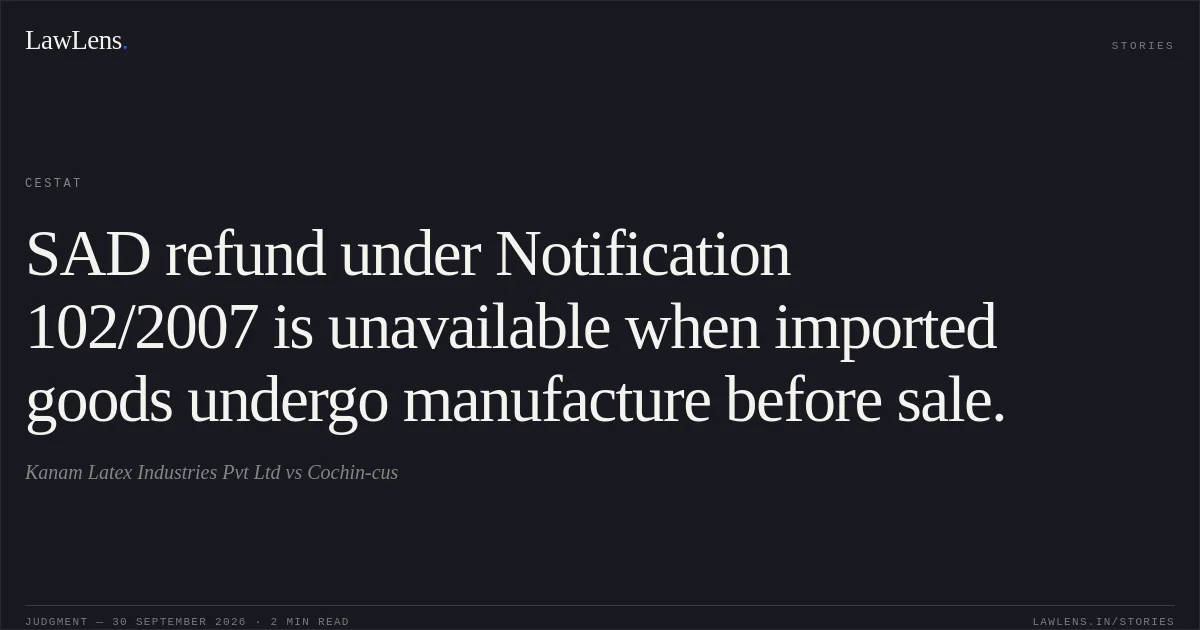
Whether the appellants were entitled to SAD refund under Notification No. 102/2007-Cus. when the imported gloves were sterilised, repacked and relabelled before sale.
Source reference: pp. 7–9Whether those processes amounted to manufacture for the purposes of the Central Excise Act and consequently meant that the appellants had not sold the imported goods contemplated by the notification.
Source reference: pp. 9–12Law Applied
Notification No. 102/2007-Cus. exempts SAD on imported goods intended for subsequent sale, subject to its conditions, including payment of sales tax or VAT on sale of the imported goods and submission of sale invoices and related evidence.
Source reference: pp. 8–9The Tribunal construed the references to “the said goods” and “such imported goods” as requiring sale of the imported goods, rather than goods resulting from further processing.
Source reference: pp. 8–9Under Section 2(f) of the Central Excise Act, 1944, read with applicable tariff notes and the Third Schedule, a process may be deemed manufacture even if it does not produce a new commodity or alter the goods’ original identity; S.D. Fine Chemicals Pvt. Ltd., Phil Corporation Ltd. and O.K. Play (India) Ltd. were cited for that principle.
Source reference: pp. 9–12Exemption notifications are to be construed strictly; the Tribunal also relied on Proflex Systems v. Commissioner of Customs, upheld by the Supreme Court, and on the Madras High Court’s decision setting aside the earlier Tribunal order in the appellants’ related case.
Source reference: pp. 13–16Reasoning
The Tribunal found it admitted that the imported gloves were sterilised, repacked and relabelled before retail sale, and that the appellants paid central excise duty on the processed goods under Notification No. 1/2011-CE.
Source reference: p. 7; pp. 11–13Applying the tariff-based deemed-manufacture principle, it held that the processes amounted to manufacture for central excise purposes, notwithstanding that the gloves retained their general identity.
Source reference: pp. 9–12The goods sold were therefore not the imported gloves in the condition imported, and payment of VAT on the processed retail goods did not satisfy Notification No. 102/2007-Cus.
Source reference: pp. 13–16; pp. 19–21The Tribunal distinguished decisions concerning processes that did not amount to manufacture and noted that its earlier decision in the appellants’ related case had been set aside by the Madras High Court.
Source reference: pp. 13–16; pp. 19–21Holding
The Tribunal held that the appellants had not fulfilled the conditions of Notification No. 102/2007-Cus. because the imported gloves were subjected to processes amounting to manufacture before sale.
It sustained the impugned orders and dismissed all 26 appeals.
Source reference: p. 21Acts & Sections Cited
5 provisions across 4 statutes referred to in this judgment. Each provision opens on LawLens.
Customs Act,19622
Customs Tariff Act, 19751
Central Excise Act, 19441
Central Sales Tax Act, 19561
Original Court PDF
Kanam Latex Industries Pvt LtdvsCochin-cus
Click to open original judgment
Original judgment, available to read, download and summarize on LawLens.in