Facts
The appellants, accused Nos. 1–5, sought anticipatory bail in Crime No. 140/2026, registered following a complaint alleging that, during a dispute over road widening, they formed an unlawful assembly, assaulted individuals and abused the complainant by reference to his caste.
Source reference: paras. 2–3, 6–7; pp. 3–7The complaint also alleged that the complainant sustained a head injury.
Source reference: paras. 2–3, 6–7; pp. 3–7The appellants contended that the dispute arose from the road-widening project and that the complaint lacked material showing an intention to insult or humiliate anyone on caste grounds; they also relied on an earlier complaint concerning the same incident.
Source reference: paras. 2–3, 6–7; pp. 3–7The Special Judge rejected their anticipatory-bail application, and the appellants appealed under Section 14A(2) of the SC/ST (Prevention of Atrocities) Act.
Source reference: paras. 2–3, 6–7; pp. 3–7Issues
Whether the allegations and material disclosed a prima facie case under the SC/ST (Prevention of Atrocities) Act sufficient to attract the bar on anticipatory bail under Section 18.
Source reference: paras. 4, 6–8; pp. 5–8Whether the appellants were otherwise entitled to anticipatory bail, subject to conditions addressing the prosecution’s concerns about investigation and witness interference.
Source reference: paras. 4–5, 11–14; pp. 5–6, 11–13Law Applied
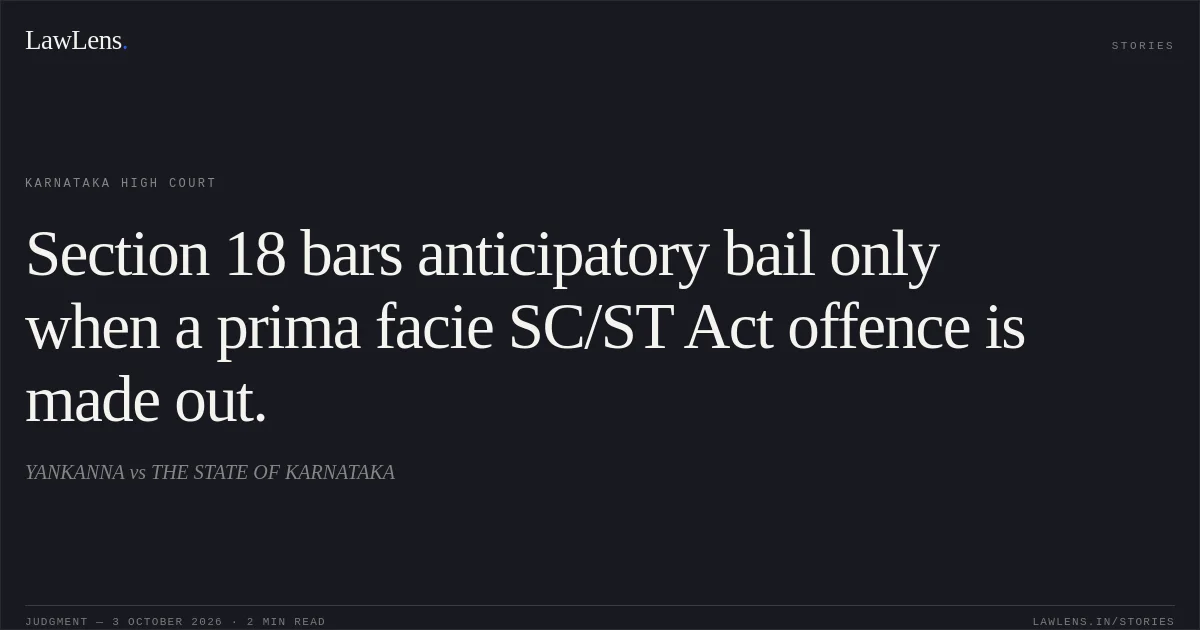
Section 18 of the SC/ST (Prevention of Atrocities) Act bars anticipatory bail where a prima facie case for an offence under that Act is made out; the bar does not apply merely because the FIR cites the Act if its offence ingredients are not prima facie disclosed.
Source reference: para. 9; pp. 8–10The Court referred to Prathvi Raj Chauhan v. Union of India and Hitesh Verma v. State of Uttarakhand, as well as coordinate-bench decisions, in considering the operation of the statutory bar.
Source reference: para. 9; pp. 8–10The appeal was brought under Section 14A(2) of the Act, and the Court considered whether anticipatory bail could be granted on the record, with appropriate conditions to secure cooperation with the investigation and prevent witness tampering.
Source reference: paras. 2, 13–14; pp. 3, 12–13Reasoning
The Court considered the road-widening dispute to be the apparent genesis of the incident and found no prima facie indication, on the material then available, that the appellants intended to insult or humiliate the complainant or other persons on caste grounds.
Source reference: para. 8; p. 8It therefore concluded that the Section 18 bar was not a sufficient reason to refuse anticipatory bail in this case.
Source reference: para. 8; p. 8The Court also noted that the injured persons had been discharged, that no antecedents were shown, and that the prosecution’s concerns arising from the ongoing investigation could be addressed by imposing conditions requiring the appellants to assist the Investigating Officer and refrain from tampering with witnesses.
Source reference: paras. 12–14; pp. 12–13Holding
The Court allowed the appeal and set aside the Special Judge’s order refusing anticipatory bail.
It directed that, in the event of arrest, the appellants be released on bail upon appearing before the Investigating Officer within 15 days and executing a personal bond of ₹2,00,000 each with two sureties for the like sum.
Source reference: para. 15; pp. 13–15The appellants must cooperate with the investigation, appear before the trial court when directed, and refrain from tampering with witnesses or committing further offences.
Source reference: para. 15; pp. 13–15The order preserves the possibility of custodial interrogation with prior permission of the Special Judge or trial court.
Source reference: para. 15; pp. 13–15Acts & Sections Cited
11 provisions across 3 statutes referred to in this judgment. Each provision opens on LawLens.
Scheduled Castes and the Scheduled Tribes (Prevention of Atrocities) Act, 19892
Bharatiya Nyaya Sanhita, 20238
Code of Criminal Procedure, 19731
Original Court PDF
YANKANNAvsTHE STATE OF KARNATAKA
Click to open original judgment
Original judgment, available to read, download and summarize on LawLens.in