Facts
The plaintiffs brought a suit seeking declarations that certain sale deeds concerning property at 53, Silver Park, Chander Nagar, Delhi, were void, together with injunctions and possession.
Source reference: paras. 8–14, pp. 4–10They alleged that, after the defendants 9 and 10 had sold portions of the property to defendants 1–8, defendants 5–8 made further sales to defendants 12–22, and defendants 14 and 21 later sold their respective interests to defendants 23 and 24.
Source reference: paras. 8–14, pp. 4–10The plaintiffs also discovered a possession notice issued by Punjab National Bank, which they said had advanced a loan to defendants 9 and 10. They applied to amend the plaint and implead defendants 12–25. The existing defendants opposed the application, citing delay, limitation, confusion in the proposed party sequence, and misjoinder of causes of action.
Source reference: paras. 8–14, pp. 4–10Issues
1. Whether the plaint should be amended and defendants 12–25 impleaded to address subsequent transfers and the Bank’s asserted interest in the suit property.
Source reference: paras. 8–11, 18–21, pp. 4–9, 14–152. Whether, under Section 21 of the Limitation Act, 1963, the suit against the newly added defendants could be deemed instituted on the date the original suit was filed.
Source reference: paras. 15–18, pp. 10–143. Whether the proposed claims and parties were impermissibly joined in a single suit.
Source reference: paras. 12–14, pp. 9–10Law Applied
Order VI Rule 17 CPC permits amendment of pleadings; Order I Rule 10 CPC permits addition of parties necessary for effective and complete adjudication; and Section 151 CPC preserves the court’s inherent powers.
Source reference: paras. 13, 15–17, pp. 9–14Article 59 of the Limitation Act, 1963 prescribes three years to seek cancellation or setting aside of an instrument, running from when the facts entitling the plaintiff to that relief first become known.
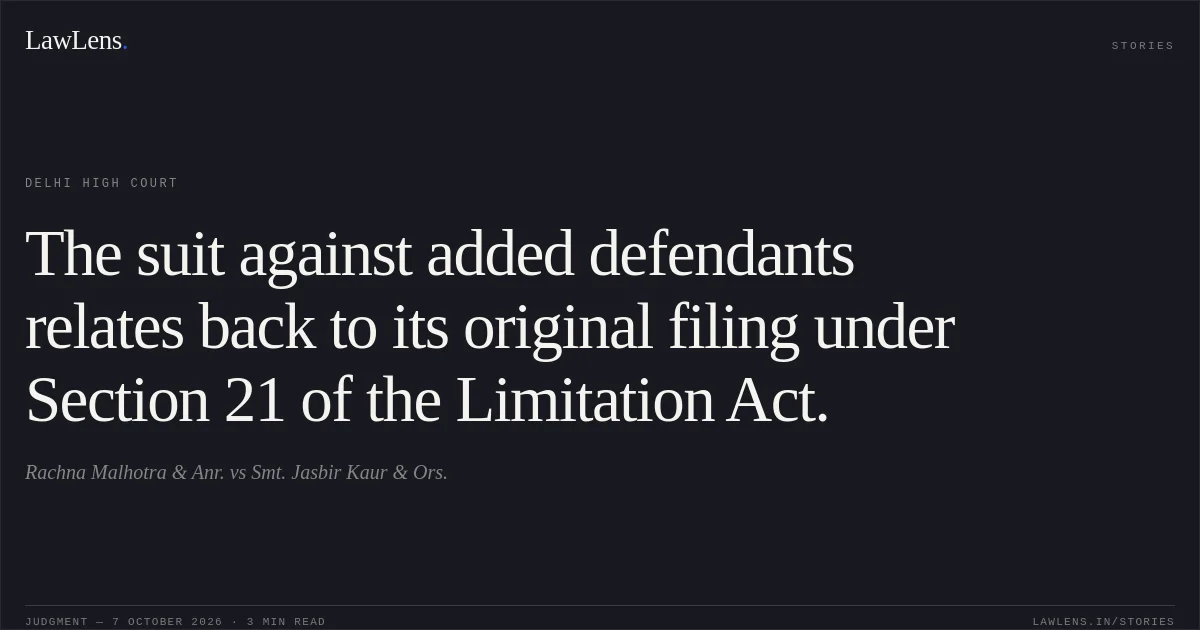
Source reference: paras. 15–17, pp. 10–14Under the proviso to Section 21(1), where omission to include a new party resulted from a mistake made in good faith, the court may direct that the suit against that party be deemed instituted on an earlier date.
Source reference: paras. 15–17, pp. 10–14Relying on Karuppaswamy v. C. Ramamurthy, (1993) 4 SCC 41, and Munshi Ram v. Narsi Ram, (1983) 2 SCC 8, the Court recognised that Section 21’s proviso can permit such retrospective treatment where the omission was made in good faith.
Source reference: paras. 15–17, pp. 10–14The defendants relied on Pahelwan Singh v. Leela Bai, AIR 1998 MP 152, concerning misjoinder of separate sale transactions.
Source reference: paras. 13, pp. 9–10Reasoning
The Court accepted that the plaintiffs learned of the later transfers after the suit had been filed and regarded the successive transactions as having occurred behind their backs.
Source reference: paras. 16, 18–20, pp. 10–15It held that the subsequent transferees were necessary and proper parties because a decision on the validity of the earlier sale deeds could affect the validity of the later transfers; the Bank was also to be joined because it allegedly had an interest in the property through a loan to defendants 9 and 10.
Source reference: paras. 18–20, pp. 14–15Applying Section 21 and the cited Supreme Court decisions, the Court permitted the newly added parties to be brought into the suit and directed that the suit against them be treated as instituted on the date of the original suit.
Source reference: paras. 16–18, 22, pp. 10–14, 15It did not accept the objection based on misjoinder; instead, it allowed the proposed amendments and impleadment.
Source reference: paras. 19–21, pp. 14–15Holding
The Court allowed I.A. 4361/2022, permitted amendment of the plaint and impleadment of defendants 12–25, and directed under Section 21 of the Limitation Act that the suit against the proposed defendants be deemed instituted on the original filing date.
It also allowed the plaintiffs to file a fresh amended plaint and memo of parties within two weeks, directed issuance of summons and notice to the defendants, and listed the matter before the Joint Registrar for completion of pleadings.
Source reference: paras. 24–28, pp. 15–16Acts & Sections Cited
9 provisions across 3 statutes referred to in this judgment. Each provision opens on LawLens.
Code of Civil Procedure, 19082
Indian Penal Code, 18602
Limitation Act, 19635
Original Court PDF
Rachna Malhotra & Anr.vsSmt. Jasbir Kaur & Ors.
Click to open original judgment
Original judgment, available to read, download and summarize on LawLens.in