Facts
Seafox Impex imported eight consignments of polyester knitted fabrics from China and declared transaction values ranging from USD 1.11 to USD 1.30 per kg.
Source reference: p. 2Customs enhanced the values, relying on contemporaneous import data; the importer alleged that it accepted the enhanced values under pressure to secure clearance and later sought speaking orders.
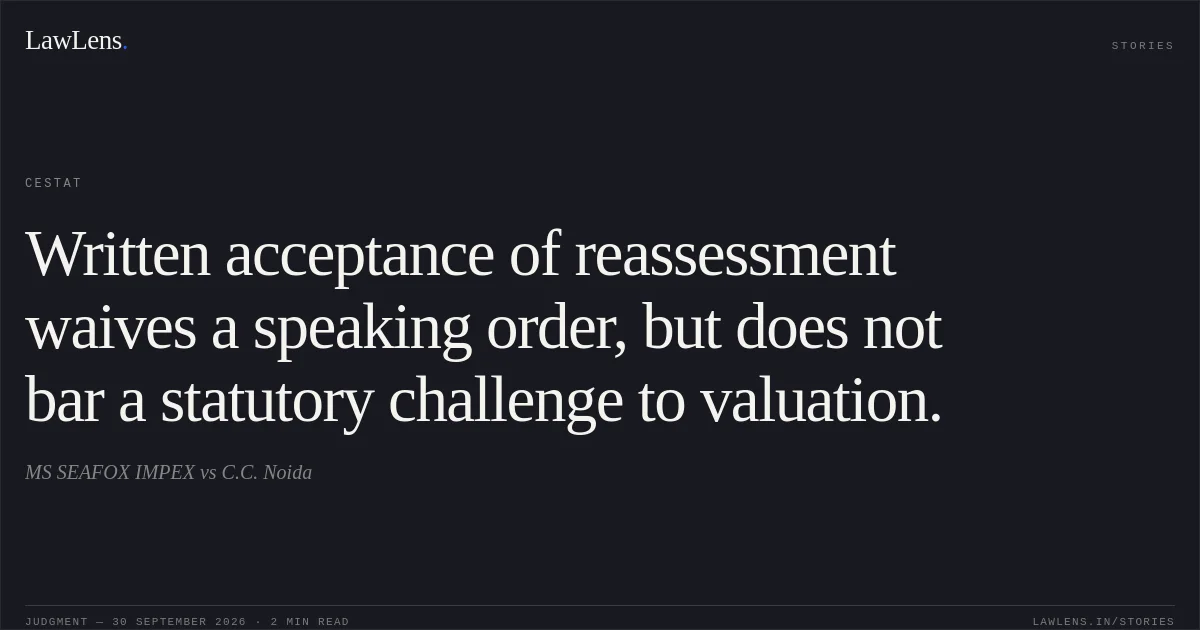
Source reference: pp. 2–5The Commissioner (Appeals) rejected its appeals, holding that written acceptance of reassessment obviated the need for speaking orders under Section 17(5) of the Customs Act, 1962.
Source reference: pp. 2–5Seafox appealed to the CESTAT, which heard the appeals together because they arose from a common Order-in-Appeal.
Source reference: p. 2Issues
1. Whether the importer’s written acceptance of reassessment, including a waiver of a show-cause notice or speaking order, prevented it from challenging the enhanced value in appeal.
Source reference: pp. 3–5, 10–122. Whether Customs could reject the declared transaction value and enhance it without complying with Rule 12(2) of the Customs Valuation Rules, 2007, and on the basis of contemporaneous import/NIDB data without adequate supporting material.
Source reference: pp. 5–6, 8–12Law Applied
Section 14 of the Customs Act, 1962 and Rule 3 of the Customs Valuation (Determination of Value of Imported Goods) Rules, 2007 require valuation in accordance with the transaction-value framework.
Source reference: pp. 8–9Rule 12(2) requires the proper officer, when requested, to communicate in writing the grounds for doubting the truth or accuracy of the declared value; under Century Metal Recycling Pvt. Ltd. v. Union of India, that requirement cannot be ignored or waived, and rejection of transaction value must be followed by valuation under the applicable sequential rules.
Source reference: pp. 8–9Section 17(5) permits written acceptance of reassessment to dispense with a speaking order, but, as held in Niraj Silk Mills v. Commissioner of Customs (ICD), Patparganj, that concession does not extinguish the importer’s statutory right to challenge the reassessment.
Source reference: pp. 10–12A value enhancement based solely on NIDB data requires independent, cogent supporting material.
Source reference: p. 12Reasoning
The Tribunal found that the Commissioner (Appeals) had treated the written acceptance as conclusive, without applying the full reasoning in Century Metal Recycling.
Source reference: pp. 8–10Although the letters stated that grounds and contemporaneous import details had been explained, the relevant import data were not set out in the letters, and the Tribunal considered the gap between that assertion and the disclosed material significant.
Source reference: pp. 8–10Applying Niraj Silk Mills, it held that any waiver under Section 17(5) concerned the obligation to issue a speaking order, not the importer’s right to challenge the reassessment.
Source reference: pp. 10–12The Tribunal also noted that the reassessment could not be sustained merely by reference to NIDB or contemporaneous data without adequate corroborative material.
Source reference: pp. 10–12Holding
The Tribunal held that the appeals were covered by Niraj Silk Mills and that the impugned Orders-in-Appeal were unsustainable.
It set them aside and allowed all eight appeals, with consequential relief, if any, as per law.
Source reference: p. 13Acts & Sections Cited
2 provisions across 1 statute referred to in this judgment. Each provision opens on LawLens.
Customs Act,19622
Original Court PDF
MS SEAFOX IMPEXvsC.C. Noida
Click to open original judgment
Original judgment, available to read, download and summarize on LawLens.in