Facts
Devotees complained of disorganised management, disputes over the Temple’s administration, and concerns about the use of its funds.
Source reference: para. 5–13Following preliminary proceedings, the Commissioner issued a show-cause notice under Section 43(1) of the Karnataka Hindu Religious Institutions and Charitable Endowments Act, 1997 (“the Act”).
Source reference: para. 5–13After the appellant responded, the Commissioner authorised the Deputy Commissioner to inquire into the objections.
Source reference: para. 5–13The Deputy Commissioner instead instructed the Assistant Commissioner to conduct the inquiry, whose report formed the basis of the Deputy Commissioner’s recommendation dated 13 November 2024.
Source reference: para. 5–13The writ petitioners challenged that recommendation. The Single Judge set it aside; the Temple’s President appealed.
Source reference: para. 5–13Issues
1. Whether the proceedings under Section 43(1) of the Act were initiated on a legally sufficient basis, including whether the Commissioner had material supporting a “reason to believe” that the Temple was mismanaged.
Source reference: para. 14–182. Whether the Deputy Commissioner, after being authorised by the Commissioner under Section 43(6), could delegate the inquiry to the Assistant Commissioner.
Source reference: para. 21, 23Law Applied
Section 43(1) of the Act permits the Commissioner to issue a show-cause notice where there is reason to believe that a Hindu religious institution is being mismanaged and that proceedings are necessary in the interests of its administration.
Source reference: para. 14–17“Reason to believe” requires both a belief and reasons for it; the reasons must rest on cogent, relevant material having a nexus with the belief sought to be formed.
Source reference: para. 14–17Calcutta Discount Company Limited v. Income-Tax Officer, 1961(2) SCR 241, and Income Tax Officer v. Lakhmani Mewal Das, (1976) 3 SCC 757, were cited for these principles.
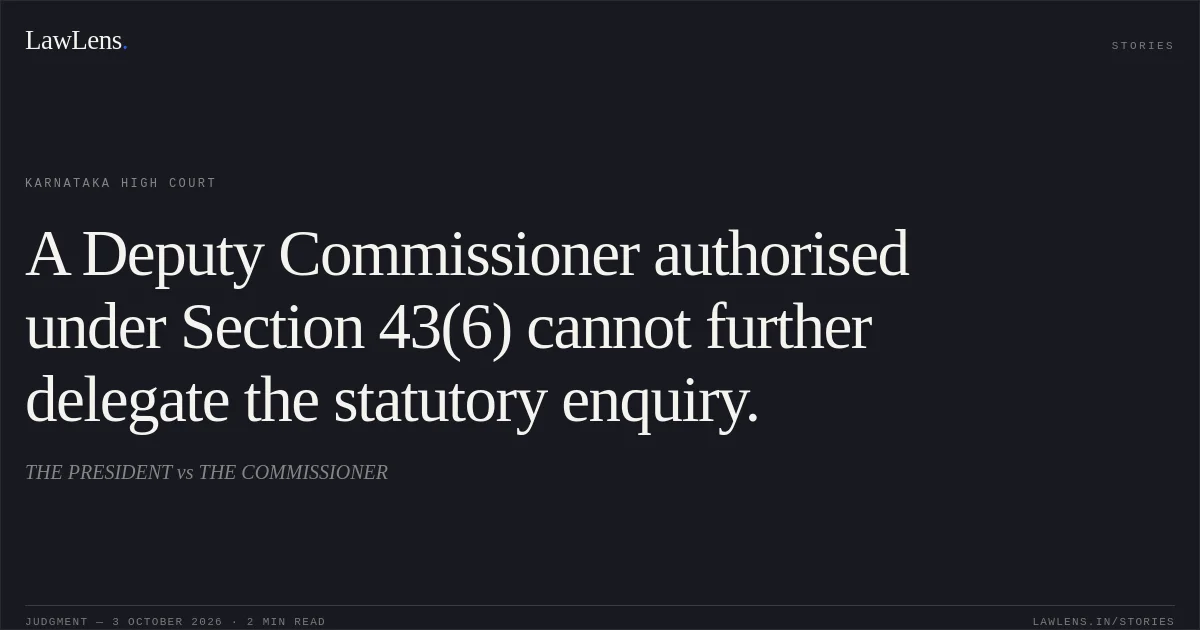
Source reference: para. 14–17Under Section 43(6), the Commissioner may authorise a subordinate officer to inquire into objections. The judgment held that an officer so authorised cannot further delegate the inquiry.
Source reference: para. 21, 23Reasoning
The show-cause notice identified material relevant to possible mismanagement, including the absence of official registration and audit, competing claims to manage the Temple, disagreements among office-bearers, and reported difficulty meeting daily expenses despite funds being available.
Source reference: para. 18–22That material had a nexus to the Commissioner’s belief, and the notice was preliminary; the Court therefore declined to interdict the Section 43 proceedings.
Source reference: para. 18–22However, the Commissioner had authorised the Deputy Commissioner to conduct the inquiry under Section 43(6), and the Deputy Commissioner’s instruction to the Assistant Commissioner to do so was an impermissible further delegation.
Source reference: para. 23Holding
The appeal was allowed in part.
The Court set aside the Single Judge’s order but did not disturb its setting aside of the Deputy Commissioner’s recommendation.
Source reference: para. 24–26It restored the matter to the Section 43(6) inquiry stage and directed the Deputy Commissioner to conduct a fresh inquiry and report to the Commissioner.
Source reference: para. 24–26The Commissioner must then decide whether to report to the State Government for a declaration under Chapter VIII; any such declaration is for the State Government by notification.
Source reference: para. 24–26Acts & Sections Cited
4 provisions across 2 statutes referred to in this judgment. Each provision opens on LawLens.
KARNATAKA HIGH COURT ACT, 19611
HINDU RELIGIOUS INSTITUTIONS AND CHARITABLE ENDOWMENTS ACT, 19973
Original Court PDF
THE PRESIDENTvsTHE COMMISSIONER
Click to open original judgment
Original judgment, available to read, download and summarize on LawLens.in