Facts
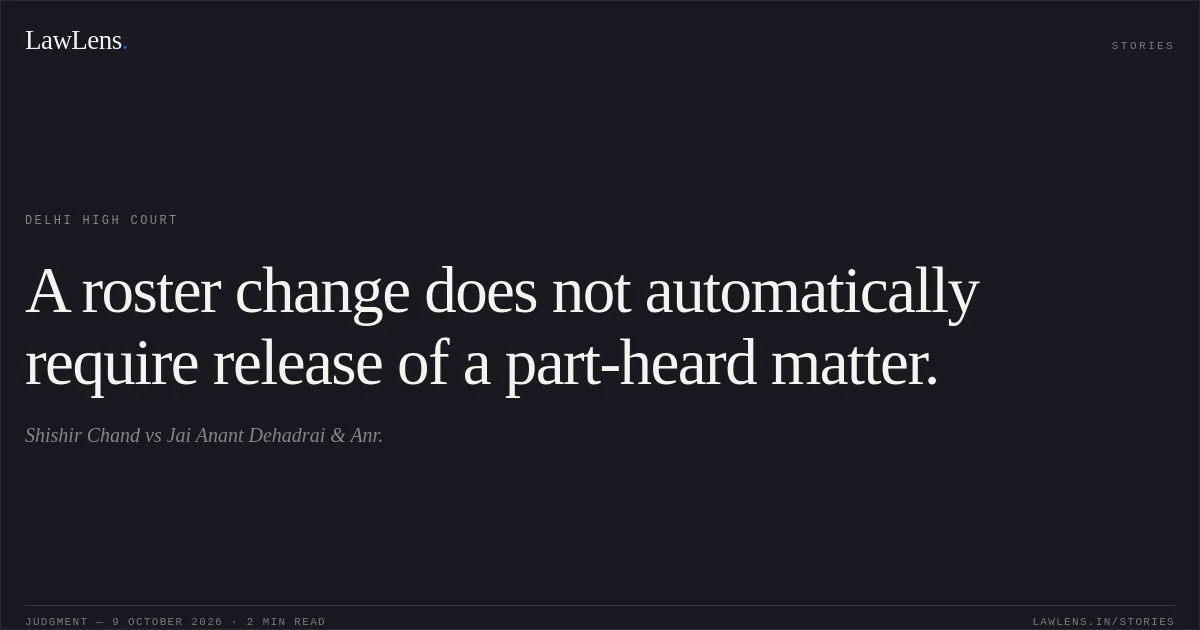
The petitioner sought release of CRL.M.C. 1780/2024 from the Bench hearing it, relying on a new roster effective from 1 July 2026 and the release of other matters by that Court.
Source reference: para. 1The matter had been heard and marked part-heard on 21 January 2026, and was heard again on 28 July 2026.
Source reference: paras. 4, 23Respondent no. 1 opposed release and sought to place additional documents—including social-media posts attributed to the petitioner—on record, as well as initiation of criminal-contempt proceedings.
Source reference: paras. 2, 11–17, 25The parties’ wider disputes and rival allegations were noted as background, but were not to be adjudicated in these applications.
Source reference: paras. 3, 30Issues
Whether a matter already heard part-heard should be released from the Bench after a change in roster, in light of the hearing already undertaken and the circumstances of the case.
Source reference: para. 19Whether the additional documents should be taken on record and criminal-contempt proceedings initiated against the petitioner.
Source reference: paras. 2, 16, 31–32Law Applied
The Court treated roster allocation as an administrative function within the prerogative of the Chief Justice, while holding that whether a part-heard matter should remain with the same Bench or be released must be determined in the circumstances of the case.
Source reference: paras. 20–22Relevant considerations include the extent of hearing, judicial time invested, stage of proceedings and applicable roster; neither retention nor release is governed by an inflexible rule.
Source reference: paras. 20–22The Court also stated that release of another matter does not create a right to identical treatment, and that litigants cannot choose the Bench before which their matter is heard.
Source reference: para. 24The Contempt of Courts Act, 1971 was invoked by respondent no. 1 in seeking action, but the Court made no finding that any post constituted criminal contempt.
Source reference: paras. 16, 32Reasoning
The Court rejected the petitioner’s contention that the release of other matters entitled him to release of this matter, noting that each matter’s procedural history and stage may differ and that seeking release cannot become a means of securing a preferred Bench.
Source reference: paras. 23–24It nevertheless considered the part-heard status, judicial time invested, subsequent hearing and new roster, alongside the circumstances of the case.
Source reference: para. 34Finding that the application sought release on the ground of roster change, that no specific allegation had been made against the Court, and that the Court had no interest in retaining the matter amid its new roster and demanding list, it considered release appropriate.
Source reference: para. 35As to the additional documents, the Court permitted them to be placed on record without expressing any view on their truth, authenticity, authorship or legal effect, and declined to initiate contempt proceedings at that stage.
Source reference: paras. 31–32Holding
The Court allowed the additional documents to be taken on record, without making findings about their contents, and declined to initiate contempt proceedings; respondent no. 1 remained at liberty to raise the matter in appropriate proceedings.
The Court released CRL.M.C. 1780/2024 from the part-heard category and directed that it be listed before the concerned Roster Bench, subject to the Chief Justice’s orders, on 14 October 2026.
Source reference: paras. 36–39It expressed no opinion on the merits of the petition or the parties’ rival allegations.
Source reference: para. 38Acts & Sections Cited
7 provisions across 3 statutes referred to in this judgment. Each provision opens on LawLens.
Indian Penal Code, 18601
Code of Criminal Procedure, 19732
Bharatiya Sakshya Adhiniyam, 20234
Original Court PDF
Shishir ChandvsJai Anant Dehadrai & Anr.
Click to open original judgment
Original judgment, available to read, download and summarize on LawLens.in