Facts
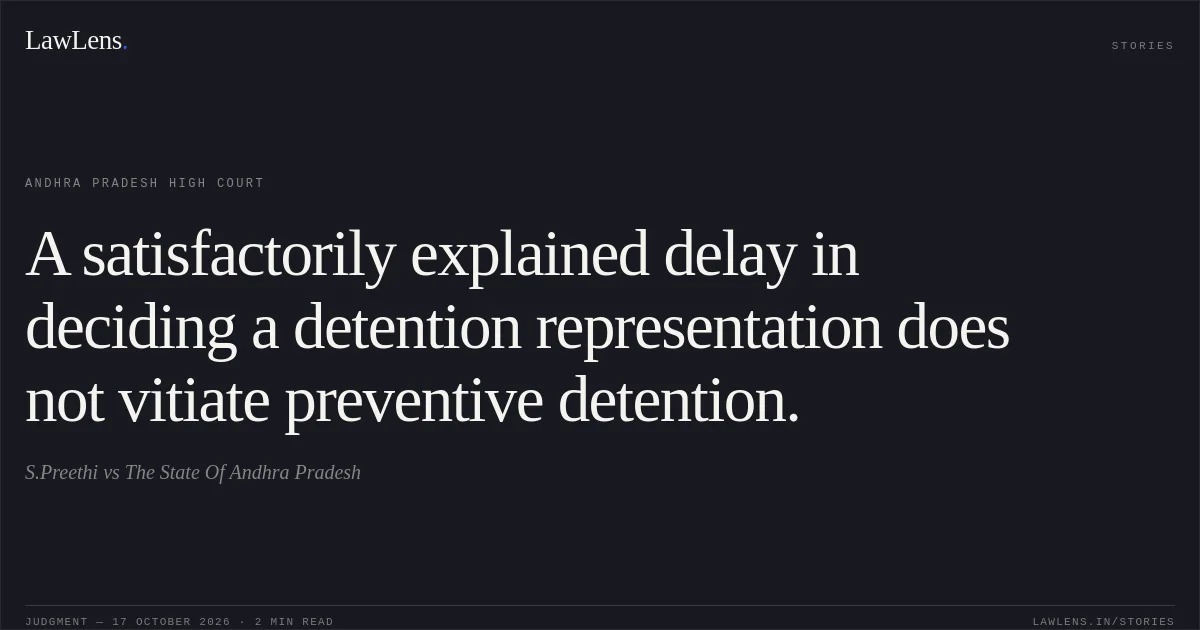
The petitioner, the detenu’s wife, challenged his preventive detention under Sections 3(1) and 3(2) of the Andhra Pradesh Prevention of Bootleggers, Dacoits, Drug Offenders, Goondas, Immoral Traffic Offenders and Land Grabbers Act, 1986 (“the 1986 Act”).
Source reference: para. 2–5The Collector and District Magistrate made the detention order on 12 February 2026, relying on six red-sanders-related criminal cases; the State confirmed detention for twelve months from 14 February 2026.
Source reference: para. 2–5The petitioner contended that the detaining authority had not considered the detenu’s anticipatory-bail application in one case and that there was an unexplained delay in deciding her representation. The representation, dated 17 April 2026, was rejected on 15 June 2026, after the Collector’s remarks were furnished on 1 June 2026.
Source reference: para. 6–8The respondents maintained that the bail order had been considered and explained the processing delay by reference to the steps taken to obtain remarks and official duties, including census-related work.
Source reference: para. 9–10, 18–19Issues
1. Whether the detaining authority’s failure to consider the detenu’s anticipatory-bail application vitiated the detention order
Source reference: para. 6, 14–162. Whether the delay in obtaining remarks on and deciding the petitioner’s representation was unexplained or inordinate so as to invalidate the detention
Source reference: para. 7–8, 18–213. Whether the detention order otherwise suffered from a legally recognised infirmity warranting judicial interference
Source reference: para. 22–27Law Applied
Sections 3(1) and 3(2) of the 1986 Act authorise preventive detention on the statutory grounds specified in the Act; the detaining authority classified the detenu as a “Goonda” under Section 2(g).
Source reference: para. 3, 22Under Article 226, judicial review of preventive detention is limited: the Court does not sit in appeal over the detaining authority’s subjective satisfaction, but may intervene where a recognised legal infirmity exists, including illegality, non-application of mind, or failure to consider relevant material.
Source reference: para. 25The Court relied on *Ameena Begum v. State of Telangana and Others*, (2023) 9 SCC 587, for the limited scope of judicial review in preventive-detention matters.
Source reference: para. 26Reasoning
The detention order expressly recorded that the detenu had obtained anticipatory bail in the relevant case. The Court therefore found that the bail order had been considered and held that the bail application itself was not relevant once the bail order was before the authority.
Source reference: para. 14–16As to the representation, the respondents described the steps taken to obtain case-specific remarks and attributed the time taken to the processing of the representation alongside census and other official duties. The Court accepted that explanation as satisfactory and found no unexplained or inordinate delay.
Source reference: para. 18–21Considering the material and the detaining authority’s recorded satisfaction regarding the detenu’s activities and their effect on public order, the Court found no recognised ground for intervention.
Source reference: para. 22–26Holding
The Court rejected the challenges based on non-consideration of the bail application and delay in deciding the representation, and found no illegality or other infirmity in the detention order warranting judicial review.
The writ petition was dismissed, with no order as to costs; pending miscellaneous petitions were closed.
Source reference: para. 28Acts & Sections Cited
20 provisions across 3 statutes referred to in this judgment. Each provision opens on LawLens.
Bharatiya Nyaya Sanhita, 2023
Indian Penal Code, 18607
Original Court PDF
S.PreethivsThe State Of Andhra Pradesh
Click to open original judgment
Original judgment, available to read, download and summarize on LawLens.in