Facts
The suit property (Khasra Nos. 273 and 363, Village Boharpur) originally belonged to Ramcharan Rawat, who died in 1960–61
Source reference: para 4(a)The Plaintiff (Jagmet), claiming as Ramcharan’s daughter, filed a suit for declaration of title, possession, and to nullify a sale deed executed by Defendant No. 1 (Chamru) in favor of Defendants No. 2 and 3
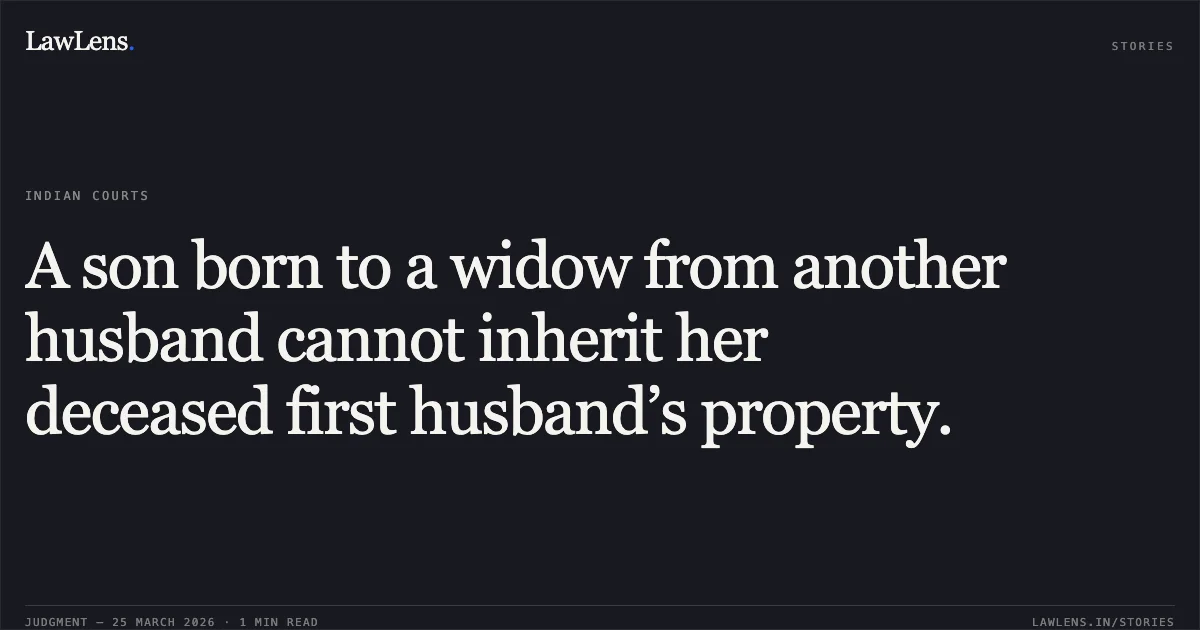
Source reference: para 4(a)While Chamru claimed to be the son of Ramcharan and Anjora (Ramcharan's widow), the Trial Court found he was actually the son of Anjora and one Gopal Rawat, thus having no direct right to inherit Ramcharan's estate
Source reference: para 7, 10Upon Ramcharan’s death, Anjora became the absolute owner; she later executed a registered Will dated 26.03.1993 in favor of Chamru
Source reference: para 7, 11However, the Trial Court determined the Will only bequeathed a 1/2 share to Chamru, leaving the remaining 1/2 to the Plaintiff under the Hindu Succession Act
Source reference: para 7, 11Both the Trial Court and the First Appellate Court dismissed the appeals, leading to this Second Appeal by Defendant No. 1
Source reference: para 3, 7Issues
1. Whether Defendant No. 1, being the son of Anjora but not Ramcharan, was entitled to inherit the property of Ramcharan
Source reference: para 102. Whether the Will executed by Anjora entitled Defendant No. 1 to the entire property or only a 1/2 share as held by the lower courts
Source reference: para 113. Whether the concurrent findings of fact regarding title and possession could be interfered with under Section 100 of the CPC
Source reference: para 13, 15Law Applied
The Court primarily applied Section 100 of the Code of Civil Procedure, 1908, which restricts the scope of a Second Appeal to cases involving a "substantial question of law" and precludes interference with concurrent findings of fact unless they are perverse
Source reference: para 1, 13It also considered Sections 3 and 15 of the Hindu Succession Act regarding the devolution of property of a female Hindu dying intestate for the remaining share not covered by the Will
Source reference: para 8, 11Furthermore, the Court relied on the precedent set in State of Rajasthan v. Shiv Dayal (2019) 8 SCC 637, which establishes that concurrent findings are binding unless recorded de hors the pleadings, based on misreading of evidence, or contrary to law
Source reference: para 17Reasoning
The High Court observed that the lower courts correctly identified the lineage of the parties; since Defendant No. 1 was not the biological son of Ramcharan, he could not claim ancestral rights through him
Source reference: para 10The Court noted that Anjora had become the absolute owner of the land, and while she had the right to dispose of it, the specific language of her Will only granted a 1/2 share to Defendant No. 1
Source reference: para 11The Court found that the Plaintiff, as the daughter, was the rightful legal heir to the remaining 1/2 share under the Hindu Succession Act
Source reference: para 11The Court emphasized that the findings regarding the validity of the Will, the extent of the bequest, and the status of the sale deed were pure findings of fact
Source reference: para 12Since the Appellant failed to demonstrate any perversity or misapplication of law in these findings, the Court held that no substantial question of law was raised
Source reference: para 15, 18Holding
The High Court dismissed the Second Appeal and upheld the concurrent judgments and decrees of the Trial Court and the First Appellate Court
It held that the Plaintiff is the owner of a 1/2 share of the suit property and entitled to possession, while the sale deed executed by Defendant No. 1 is valid only to the extent of his 1/2 share
Source reference: para 7, 12The Court concluded that in the absence of a substantial question of law, concurrent findings of fact are final and binding
Source reference: para 19Acts & Sections Cited
3 provisions across 2 statutes referred to in this judgment. Each provision opens on LawLens.
Hindu Succession Act, 19562
Code of Civil Procedure, 19081
Original Court PDF
ChamruvsMst. Jagmet and Ors.
Click to open original judgment
Original judgment, available to read, download and summarize on LawLens.in