Facts
Geeta, to whom the suit flat had been allotted, sued Ramesh for possession and related reliefs.
Source reference: para. 1–14, 21–30, 31–37She claimed he had been inducted as a tenant; Ramesh denied the tenancy and asserted ownership based on an Ikrarnama recording a ₹1 lakh transaction and delivery of the flat’s original allotment documents as security.
Source reference: para. 1–14, 21–30, 31–37The Trial Court dismissed the possession claim, but the First Appellate Court decreed possession and mandatory injunction upon Geeta’s repayment of ₹1 lakh.
Source reference: para. 1–14, 21–30, 31–37Ramesh appealed under Section 100 CPC.
Source reference: para. 1–14, 21–30, 31–37Issues
Whether the Ikrarnama or other evidence established an ownership right in Ramesh sufficient to defeat Geeta’s claim to possession.
Source reference: para. 38–52Whether Ramesh’s denial of the landlord–tenant relationship and assertion of an independent title resulted in forfeiture of any tenancy under Section 111(g) of the Transfer of Property Act, 1882, and prevented reliance on Section 50 of the Delhi Rent Control Act.
Source reference: para. 53–67Whether Section 23 of the Indian Contract Act, 1872, barred the relief sought because the underlying transaction was allegedly illegal.
Source reference: para. 68–72Whether the appeal raised a substantial question of law warranting interference under Section 100 CPC.
Source reference: para. 74Law Applied
Section 111(g)(2) of the Transfer of Property Act provides for forfeiture where a lessee renounces the tenancy by setting up title in a third person or claiming title in himself; the repudiation must be clear, unequivocal, and anterior to the notice determining the lease.
Source reference: para. 56–62The Court relied on Raja Mohd. Amir Ahmad Khan v. Municipal Board of Sitapur, 1964 SCC OnLine SC 246; Kundan Mal v. Gurudutta, (1989) 1 SCC 552; Majati Subbarao v. P.V.K. Krishna Rao, (1989) 4 SCC 732; and Guru Amarjit Singh v. Rattan Chand, (1993) 4 SCC 349.
Source reference: para. 56–62Section 50 of the Delhi Rent Control Act bars civil-court jurisdiction in matters within the Rent Controller’s jurisdiction, but the Court held that the bar did not apply once the defendant had repudiated his asserted tenancy.
Source reference: para. 67Section 23 of the Contract Act renders an agreement void where its consideration or object is unlawful; it does not confer a right to retain property where the claimant seeks possession on an independent title and does not seek enforcement of the allegedly unlawful agreement.
Source reference: para. 69–72Reasoning
Geeta’s allotment letter, proved through the official MCD record, established her rights in the flat.
Source reference: para. 38–52The Ikrarnama recorded a loan of ₹1 lakh and delivery of the original documents as security; it did not record a sale, transfer of ownership, or the alleged oral arrangement for a future sale.
Source reference: para. 38–52Ramesh therefore failed to establish title or an independent right to retain possession.
Source reference: para. 38–52Although Geeta alleged a tenancy, Ramesh unequivocally denied being a tenant and claimed possession under his own asserted ownership.
Source reference: para. 63–67The Court treated that position as renunciation of tenancy under Section 111(g), so he could not claim the protection of Section 50 of the DRC Act.
Source reference: para. 63–67Section 23 did not assist him because Geeta sought possession based on her allotment, not enforcement of the Ikrarnama.
Source reference: para. 70–72Holding
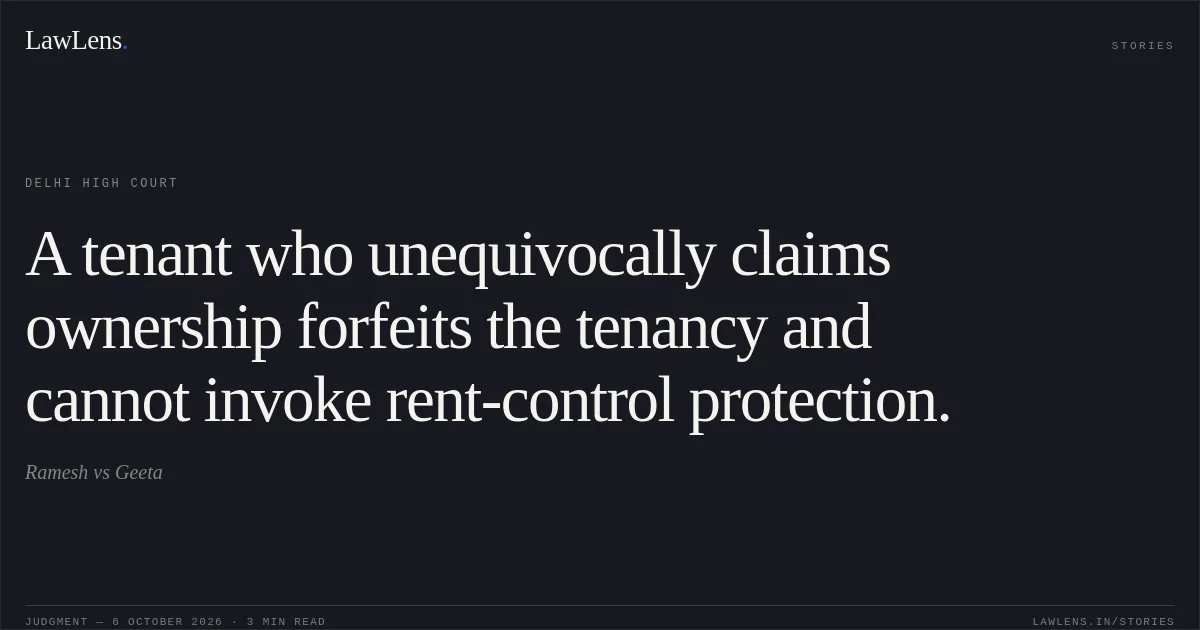
The Court held that Ramesh had established no ownership or other right to retain the flat; his clear denial of tenancy and claim of independent title forfeited any tenancy and did not attract the bar under Section 50 of the DRC Act.
The Court found no substantial question of law and dismissed the second appeal, leaving in place the decree for possession and mandatory injunction, conditional on Geeta paying Ramesh ₹1 lakh.
Source reference: para. 30, 73–75Acts & Sections Cited
5 provisions across 4 statutes referred to in this judgment. Each provision opens on LawLens.
Code of Civil Procedure, 19081
delhi rent control act, 19581
Indian Contract Act, 18721
Transfer of Property Act, 18822
Original Court PDF
RameshvsGeeta
Click to open original judgment
Original judgment, available to read, download and summarize on LawLens.in