01Facts
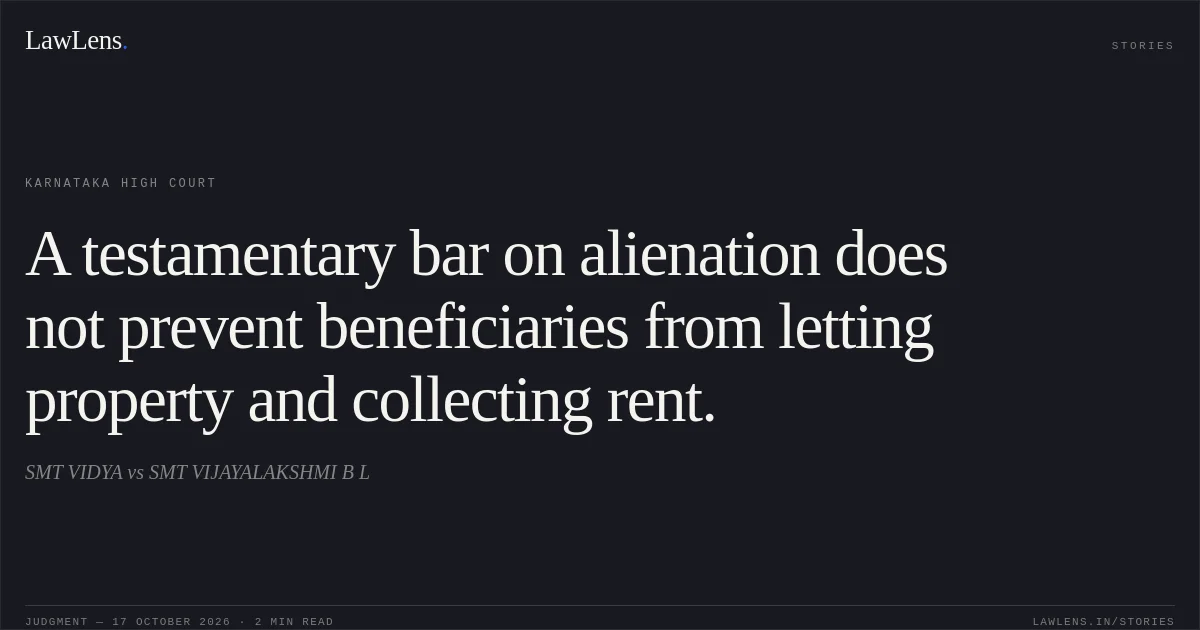
The plaintiff filed O.S. No. 4992/2024 seeking to have a 2020 gift deed and a 2022 rectification deed concerning the suit ‘B’ schedule property declared void.
pp. 3–4She also sought an interim injunction restraining the defendants from creating tenancy rights or entering agreements with third parties concerning that property. The trial court allowed the injunction application and dismissed the defendants’ application to vacate it. Defendants 1 and 3 appealed, seeking permission to let out the property while maintaining the restriction against alienation.
pp. 3–4, 1202Issues
i.1. Whether the trial court’s order granting the temporary injunction required appellate interference
p. 9 · ¶ 8ii.2. If so, what order should be made
p. 9 · ¶ 803Law Applied
The appeal was brought under Order XLIII Rule 1(r) of the Code of Civil Procedure, challenging an order on an application under Order XXXIX Rules 1 and 2 CPC; the defendants’ application to vacate the injunction had been made under Order XXXIX Rule 4 CPC.
p. 2The Court applied the terms of the registered Will as described in the judgment: the defendants could enjoy the property and its usufructs, but could not alienate it to a third party.
pp. 10–11Provisions in the judgment · 2 · Linked ones open on LawLens
Code of Civil Procedure, 1908 Section 151Section 39
04Reasoning
The Court noted that the Will permitted defendant 1 and her children to enjoy the property and its usufructs, while restricting alienation to third parties. It considered that receiving rent from a tenant was consistent with enjoyment of the property and did not, by itself, amount to the prohibited conveyance.
pp. 10–11The trial court’s blanket restraint on letting the property therefore required modification, while the restriction against alienation remained necessary pending the suit, which challenges the gift and rectification deeds.
pp. 10–1205Holding
The appeal was allowed in part and the trial court’s order was modified.
pp. 12–13The defendants were restrained from alienating the ‘B’ schedule property to third parties by way of conveyance, but could otherwise enjoy it, including by letting it to a tenant who would not conduct illegal or immoral activities there, and receive rent.
pp. 12–13The Court expressed no opinion on the merits of the gift or rectification deeds, and left the parties’ contentions open for trial.
pp. 12–13Original Court PDF
SMT VIDYAvsSMT VIJAYALAKSHMI B L
Click to open original judgment
Original judgment, available to read, download and summarize on LawLens.in