Facts
On April 14, 1999, at approximately 12:30 a.m., Susanta Ghosh (PW-9) and his son Gostha Ghosh were allegedly attacked by six respondents armed with sharp weapons while irrigating their jute field in Shyamnagar.
Source reference: p. 1-2Gostha Ghosh succumbed to his injuries thirteen days later, while PW-9 survived.
Source reference: p. 16, 22The prosecution relied on the testimony of the surviving victim (PW-9), an alleged eyewitness brother (PW-1), and oral dying declarations made to family members.
Source reference: p. 2-5The Trial Court acquitted the respondents on April 6, 2002, finding the prosecution failed to prove the charges beyond reasonable doubt.
Source reference: p. 1The State appealed this acquittal.
Source reference: p. 1Issues
1. Whether the prosecution established the identity of the assailants and their overt acts beyond a reasonable doubt given the conditions of low visibility and darkness.
Source reference: p. 27-282. Whether the testimony of the injured witness (PW-9) was sufficiently reliable to sustain a conviction despite material omissions in his previous statement to the police.
Source reference: p. 283. Whether there were fatal lapses in the investigation, specifically regarding the delay in examining witnesses and the absence of forensic evidence at the crime scene.
Source reference: p. 29-30Law Applied
The court applied Sections 148 (Rioting with deadly weapons), 326/34 (Voluntarily causing grievous hurt with common intention), and 304/34 (Culpable homicide not amounting to murder with common intention) of the Indian Penal Code.
Source reference: p. 1The evidentiary value of an injured witness stands on a high pedestal, yet their testimony must be consistent with contemporaneous materials.
Source reference: p. 28The standard of "proof beyond reasonable doubt" in appeals against acquittal emphasizes that if two views are reasonably possible, the one favoring the accused must prevail.
Source reference: p. 31Reasoning
The High Court observed that the occurrence took place in a remote field late at night with minimal lighting, casting doubt on the reliability of the identification by PW-1 and PW-9.
Source reference: p. 28The court noted that PW-7 (an independent witness) and PW-6 testified that the victims initially told villagers they could not recognize the attackers due to darkness.
Source reference: p. 28-29The court pointed out major improvements in PW-9’s testimony; his specific attributions of overt acts in court were absent from his Section 161 Cr.P.C. statement.
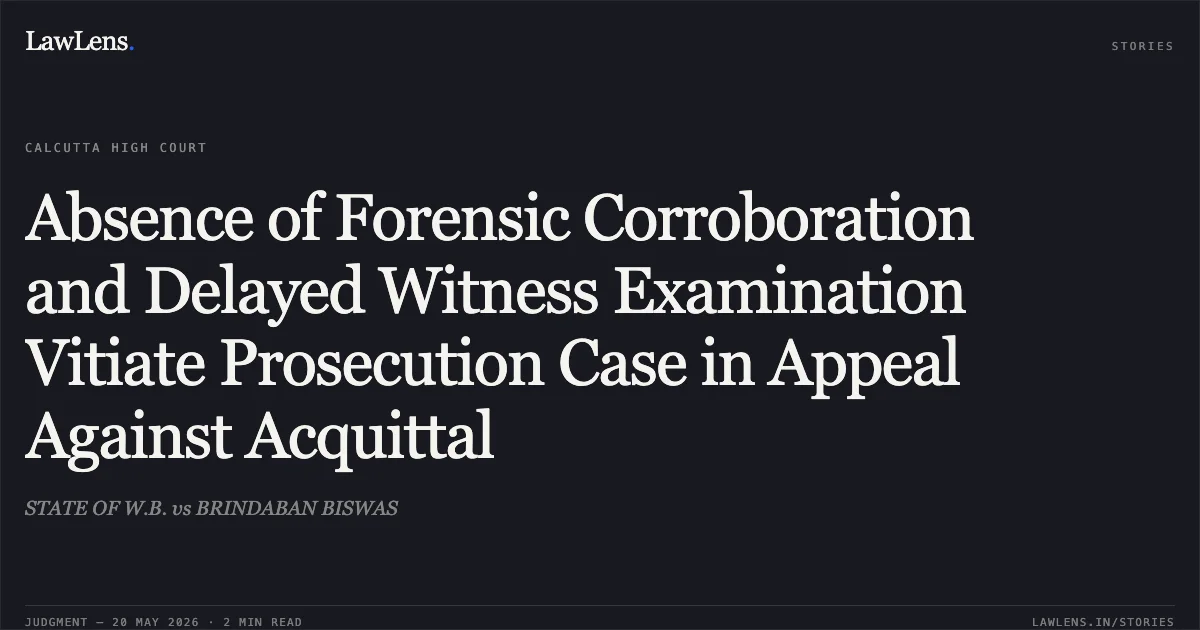
Source reference: p. 28The Investigating Officer (PW-15) failed to explain a nearly one-month delay in examining the injured witness and admitted that no bloodstains, weapons, or the torchlight used for identification were seized from the scene.
Source reference: p. 29-30The court found that the lack of forensic corroboration and the existing political enmity between the parties necessitated a cautious approach that the prosecution failed to satisfy.
Source reference: p. 29, 31Holding
The Court answered the issues in the negative, holding that the prosecution failed to bridge the gap between suspicion and legal proof.
The Court affirmed the Trial Court's judgment, ruling that the findings of the lower court were not perverse or unreasonable; the appeal was dismissed, and the order of acquittal for all respondents under Sections 148, 326/34, and 304/34 of the IPC was affirmed.
Source reference: p. 31, 32Acts & Sections Cited
8 provisions across 2 statutes referred to in this judgment. Each provision opens on LawLens.
Indian Penal Code, 18607
Code of Criminal Procedure, 19731
Original Court PDF
STATE OF W.B.vsBRINDABAN BISWAS
Click to open original judgment
Original judgment, available to read, download and summarize on LawLens.in