Facts
The appellant, Babu, was convicted under Section 302 of the IPC for the murder of his wife (Shashi) and two sons (Jay Kishan and Neeraj)
Source reference: para. 1The bodies were discovered on September 3, 2017, in their locked house in Mathura by the appellant's aunt (PW-1)
Source reference: para. 2The prosecution's case rested on circumstantial evidence: the appellant’s absence from the crime scene, the alleged recovery of blood-stained clothes from his person upon arrest in Delhi, and the recovery of a weapon (banka) at his pointing out
Source reference: paras. 7, 30-31The Trial Court sentenced the appellant to life imprisonment
Source reference: para. 1The appellant contended he was in Delhi during the occurrence, supported by testimony from his brother (DW-1) and a neighbor (PW-2)
Source reference: paras. 26-28, 43Issues
1. Whether the prosecution established a complete chain of circumstantial evidence consistent only with the guilt of the accused
Source reference: para. 172. Whether the recovery of the murder weapon and blood-stained clothes satisfied the requirements of Section 27 of the Evidence Act to be admissible
Source reference: paras. 37-383. Whether the absence of motive and the appellant's absence from the house were sufficient to sustain a conviction
Source reference: paras. 31, 41Law Applied
The Court applied the "Panchsheel" principles of circumstantial evidence established in Sharad Birdhichand Sarda v. State of Maharashtra, requiring a chain of evidence so complete as to exclude any hypothesis of innocence
Source reference: para. 17It strictly interpreted Section 27 of the Evidence Act regarding the admissibility of discovery of facts based on information from the accused, following the procedural mandates in Ramanand v. State of U.P.
Source reference: paras. 37-38The Court also considered Section 106 of the Evidence Act regarding facts specially within a person's knowledge, noting it does not relieve the prosecution of its primary burden under Section 101
Source reference: para. 30Principles regarding the relevance of motive in circumstantial cases were drawn from Subhash Aggarwal v. State (NCT of Delhi)
Source reference: para. 41Reasoning
The Court found the chain of circumstances incomplete. First, the recovery of blood-stained clothes was deemed unreliable because the recovery memo lacked the appellant's signature and independent witnesses, and it was implausible that a murderer would wear blood-stained clothes days
Source reference: no citationHolding
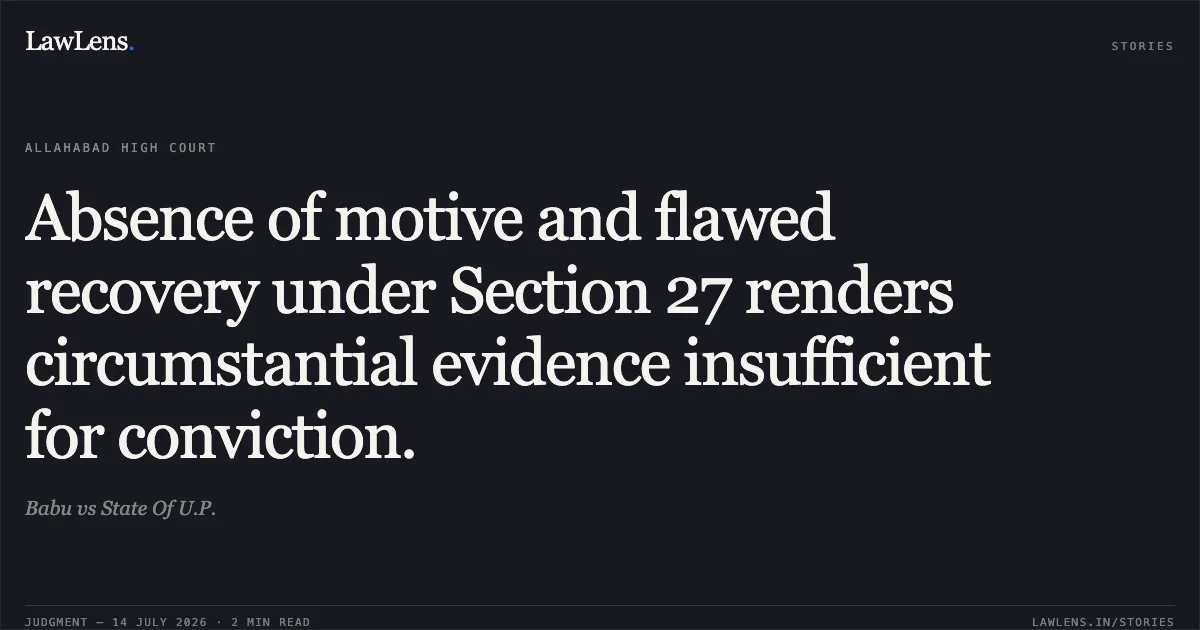
The Court found the recovery of the murder weapon and blood-stained clothes failed to satisfy Section 27 of the Evidence Act.
The Trial Court's judgment of conviction for life imprisonment was set aside due to an incomplete chain of circumstantial evidence and absence of motive.
Source reference: no citationActs & Sections Cited
7 provisions across 3 statutes referred to in this judgment. Each provision opens on LawLens.
Indian Penal Code, 18602
Code of Criminal Procedure, 19734
Bharatiya Nagarik Suraksha Sanhita, 20231
Original Court PDF
BabuvsState Of U.P.
Click to open original judgment
Original judgment, available to read, download and summarize on LawLens.in