01Facts
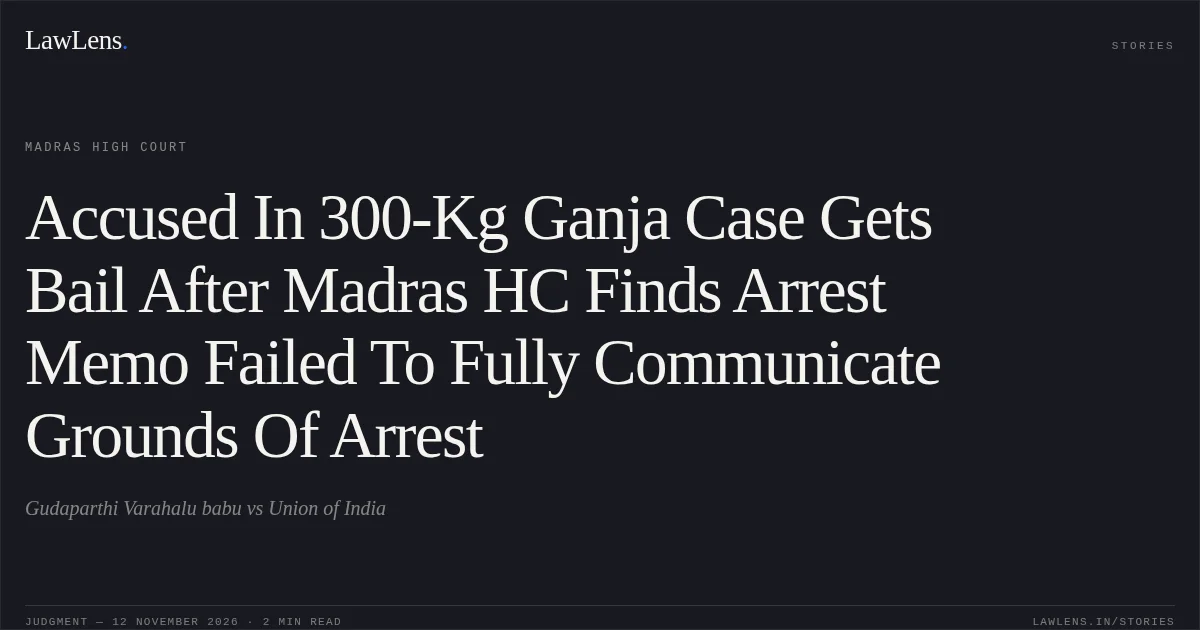
The petitioner, arrayed as A4 in an NCB case under Sections 8(c), 22(c), 28 and 29(1) of the NDPS Act, was arrested in connection with the alleged transport of approximately 300 kg of ganja and remanded to judicial custody on 20 February 2025.
p. 2He challenged the remand, contending that the grounds of arrest had not been adequately communicated to him.
p. 2The arrest memo referred to the alleged procurement, possession and transport of ganja, but the Court found that it did not set out, among other matters, the relevant search-and-seizure details, the petitioner’s statement under Section 67 of the NDPS Act, or the reasons for arrest
pp. 2–3, 7–802Issues
i.Whether the arrest memo effectively communicated the grounds of arrest to the petitioner as required by Article 22(1) of the Constitution
pp. 6–8ii.Whether failure to comply with Article 22(1) rendered the petitioner’s custody unlawful and justified release on bail
pp. 6–903Law Applied
Article 22(1) of the Constitution requires that an arrested person be informed of the grounds of arrest in a manner that effectively communicates sufficient knowledge of the basic facts, in a language the person understands.
pp. 3–7As explained in Vihaan Kumar v. State of Haryana, [2025 INSC 162], the burden of proving compliance rests on the investigating agency; non-compliance violates Articles 22(1) and 21, vitiates the arrest and subsequent remand orders, and requires the court to order release.
pp. 3–7Article 22(1) does not require communication in writing, but the mode of communication must achieve the constitutional safeguard’s purpose.
pp. 3–7The Court also referred to Prabir Purkayastha, Pankaj Bansal, Harikisan and Lallubhai Jogibhai Patel in considering the requirements of effective communication
pp. 3–7The petition was brought under Section 528 of the BNSS
p. 1Provisions in the judgment · 7 · Linked ones open on LawLens
Bharatiya Nagarik Suraksha Sanhita, 2023 Section 528
Narcotic Drugs and Psychotropic Substances Act, 1985 Section 8Section 22Section 28Section 29Section 67
Bharatiya Nyaya Sanhita, 2023 Section 269
04Reasoning
The Court considered whether the arrest memo gave the petitioner sufficient information to understand and challenge the basis of his arrest.
pp. 7–8Although it identified the alleged offence and the quantity of ganja, the Court found it abbreviated and lacking material particulars, including details of the search and seizure, the petitioner’s Section 67 statement and the reasons for arrest.
pp. 7–8In the Court’s view, the information was therefore insufficient to enable the petitioner to effectively contest the arrest or seek bail.
pp. 7–8Applying Vihaan Kumar, it held that Article 22(1) had not been complied with and that the resulting custody was unlawful
pp. 7–805Holding
The Court allowed the petition and ordered the petitioner’s release on bail, rather than expressly setting aside the remand order.
pp. 8–10Bail was subject to a bond of ₹25,000 with two sureties for the like sum, daily reporting to the trial court at 10:30 a.m. until further orders, and the other specified conditions
pp. 8–10Original Court PDF
Gudaparthi Varahalu babuvsUnion of India
Click to open original judgment
Original judgment, available to read, download and summarize on LawLens.in