Facts
On 11.10.2010, seven-year-old Mohammad Sahil went missing from school in Solan
Source reference: para. 2Ransom calls were allegedly received by the family between 27.10.2010 and November 2010 on various mobile numbers
Source reference: paras. 3, 26The police traced a mobile handset (IMEI ending 0290) to the respondent, Gulfam, via a chain of witnesses (PW4 and PW12) who allegedly used the device
Source reference: paras. 6-7Upon arrest, the respondent purportedly made disclosure statements leading to the identification of the kidnapping spot, a guest house where they stayed, and a canal where he allegedly threw the victim's body and school bag after throttling him on 15.10.2010
Source reference: paras. 10-15A notebook belonging to the victim was recovered near the canal 51 days later
Source reference: para. 15The Trial Court acquitted the respondent, and the State appealed
Source reference: para. 1Issues
1. Whether the prosecution established a conclusive link between the respondent and the mobile numbers/handset used to make ransom calls
Source reference: para. 24(A); para. 332. Whether the disclosure statements and subsequent recovery of the victim's notebook were sufficient to prove the respondent’s guilt under the Indian Evidence Act
Source reference: para. 11; para. 423. Whether the contradictions in witness testimonies regarding the timing of ransom calls and the condition of the victim (cries heard after alleged death) vitiated the prosecution story
Source reference: paras. 27-28Law Applied
The Court applied Sections 364A (kidnapping for ransom), 302 (murder), and 201 (causing disappearance of evidence) of the Indian Penal Code
Source reference: para. 22Regarding electronic evidence, the Court applied Section 65-B of the Indian Evidence Act, requiring a mandatory certificate for the admissibility of computer-generated records like Call Detail Records (CDRs)
Source reference: para. 30It further applied Section 27 of the Indian Evidence Act concerning the admissibility of information received from an accused in custody, stipulating that only the portion leading to a fresh "discovery of fact" is admissible
Source reference: para. 11Reasoning
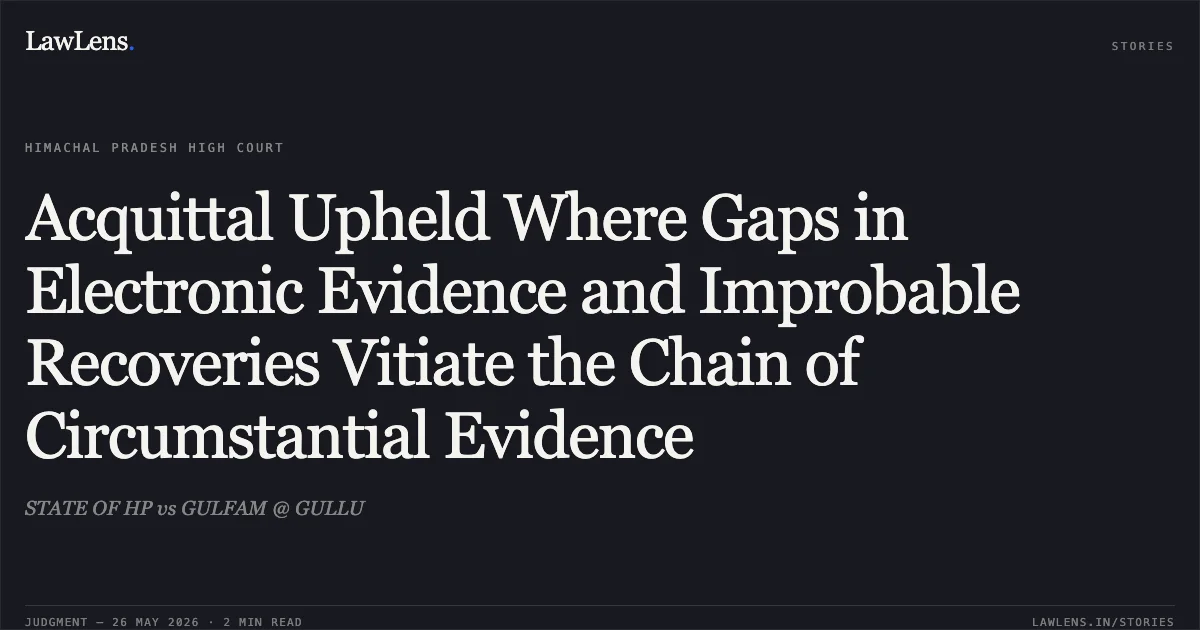
The CDRs relied upon to link the respondent to ransom calls were not proved in accordance with Section 65-B of the Indian Evidence Act, as they lacked the requisite certification and attestation
Source reference: para. 30A material contradiction emerged regarding the victim's status: while the prosecution alleged the child was murdered on 15.10.2010, the family claimed to have heard the child's cries during ransom calls in late October or November
Source reference: paras. 26-28The "link" witnesses (PW4 and PW12) regarding the mobile handset turned hostile, alleging police coercion
Source reference: paras. 34-35The Court expressed grave doubt over the recovery of the victim’s notebook; it remained in perfect condition despite allegedly lying in an open, rain-prone area for 51 days, suggesting the evidence was planted
Source reference: paras. 43-44The identification witnesses for the guest house and the Kurkure shop also failed to provide consistent or credible testimony
Source reference: paras. 39-40, 45Holding
The High Court held that the prosecution failed to provide "cogent, reliable and convincing evidence" to rebut the presumption of innocence
The appeal was dismissed, the judgment of acquittal passed by the Sessions Judge, Solan, was upheld, and the respondent’s bail bonds were discharged
Source reference: para. 46Acts & Sections Cited
6 provisions across 2 statutes referred to in this judgment. Each provision opens on LawLens.
Indian Penal Code, 18602
Code of Criminal Procedure, 19734
Original Court PDF
STATE OF HPvsGULFAM @ GULLU
Click to open original judgment
Original judgment, available to read, download and summarize on LawLens.in