Facts
G. Ravikumar, an Aero Modelling Instructor-cum-Store Keeper with the NCC, was charged under Rule 17(b)(i) of the Tamil Nadu Civil Services (Discipline and Appeal) Rules with five instances of misconduct, including collecting money from cadets, training outsiders, and using Government facilities for personal purposes.
Source reference: p. 3–8Following an enquiry, he was compulsorily retired; the appellate authority upheld the penalty.
Source reference: p. 3–4The Single Judge allowed his writ petition, finding the charges vague and the principles of natural justice violated.
Source reference: p. 4The Government appealed.
Source reference: no citationThe Division Bench considered Ravikumar’s recorded statements, in which he acknowledged, among other matters, receiving money from cadets and keeping personal models in Government stores.
Source reference: p. 9–11, 20Issues
Whether the writ court was justified in setting aside the compulsory-retirement order on grounds of vagueness and breach of natural justice, notwithstanding the employee’s recorded admissions and participation in the enquiry.
Source reference: p. 17–18, 22Whether the disciplinary proceedings and punishment could stand where the employee had admitted the charges and had been given an opportunity to participate in the enquiry.
Source reference: p. 17–19Law Applied
The disciplinary proceedings were governed by Rule 17(b)(i) of the Tamil Nadu Civil Services (Discipline and Appeal) Rules.
Source reference: p. 3The judgment also refers to the Tamil Nadu Government Servants Conduct Rules in connection with the alleged misconduct.
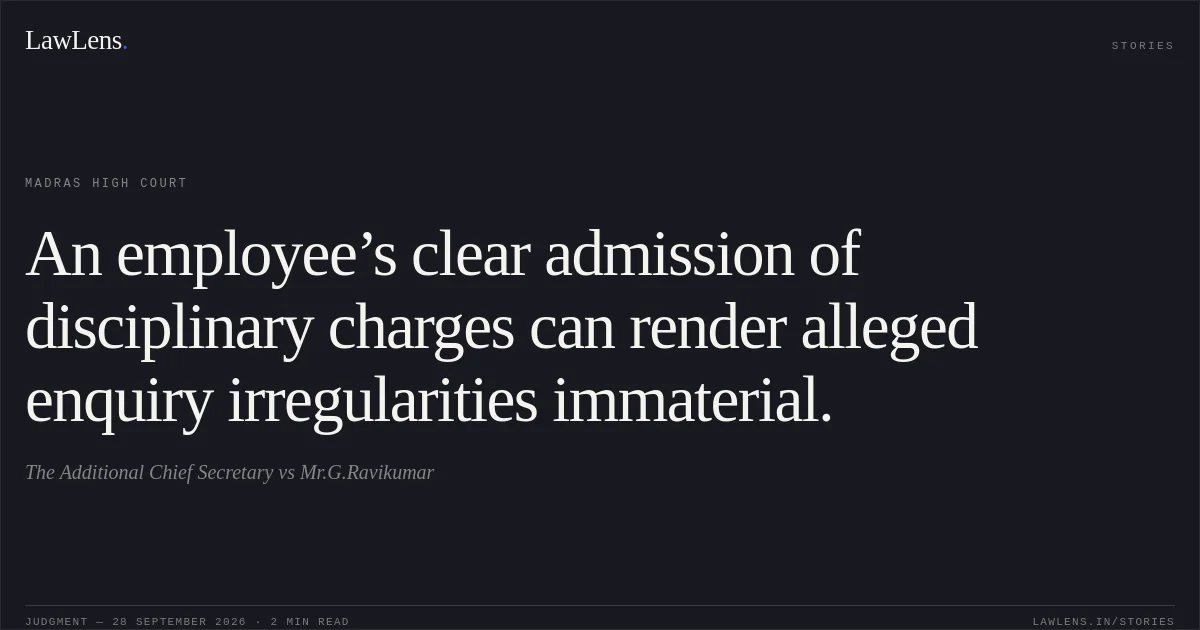
Source reference: p. 7–8The Court’s stated reasoning was that, in the circumstances of this case, the employee’s admissions and participation in the enquiry rendered his objections concerning natural justice and the use or non-production of documents immaterial; the Court cited no precedents for that conclusion.
Source reference: p. 17–18Reasoning
The Division Bench reviewed the employee’s signed statements and the enquiry record. It considered his acknowledgements—including that he had received money from cadets without informing the Commanding Officer—as admissions of the charges.
Source reference: p. 9–11, 20, 17Because he had participated in the proceedings and the Enquiry Officer had also examined the charges and his explanation, the Court held that a further detailed enquiry would have been futile and that the procedural objections did not affect the result.
Source reference: p. 17–18It therefore concluded that the Single Judge had failed to account for the admissions and had wrongly interfered with the disciplinary order.
Source reference: p. 22Holding
The Court held that the writ court’s interference with the punishment was legally unsustainable.
It set aside the order dated 28 April 2023 in W.P. No. 39189 of 2015, allowed the writ appeal, and closed the connected miscellaneous petition; no costs were awarded.
Source reference: p. 22Original Court PDF
The Additional Chief SecretaryvsMr.G.Ravikumar
Click to open original judgment
Original judgment, available to read, download and summarize on LawLens.in