Facts
The parties jointly produced the Hindi film Tu Hai Meri Kiran under a Co-Production Agreement effective 27 March 2024.
Source reference: pp. 16–17, paras. 18–20The Petitioner paid Rs.8.85 crore, comprising its Rs.7.5 crore investment contribution and GST.
Source reference: pp. 16–17, paras. 18–20Clause 5.3 required repayment of the investment within 13 months of the effective date or three weeks before the film’s first release, whichever was earlier; the Court identified 27 April 2025 as the applicable deadline.
Source reference: pp. 16–17, paras. 18–20A cheque for Rs.7.5 crore issued by Respondent No. 1 in January 2026 was dishonoured.
Source reference: pp. 17–18, paras. 22–23The Respondents announced a theatrical release for 23 October 2026.
Source reference: pp. 1–6, paras. 1–4The Petitioner sought interim protection under Section 9 of the Arbitration and Conciliation Act, 1996, alleging non-payment and threatened breaches of its joint-exploitation, consent, confirming-party and credit rights.
Source reference: pp. 1–6, paras. 1–4The Respondents relied, among other things, on the Petitioner’s participation in Instagram promotion of the film and offered to deposit future exploitation revenue.
Source reference: pp. 8–14, paras. 7–15Issues
1. Whether the Petitioner had established a prima facie basis to secure its investment claim under Section 9, having regard to the repayment terms and the dishonoured cheque.
Source reference: pp. 16–18, paras. 19–232. Whether the Petitioner’s participation in promoting the film amounted to waiver or acquiescence, defeating its claimed contractual rights or its request for interim relief.
Source reference: pp. 20–26, paras. 26–383. Whether interim protection should restrain the film’s release or exploitation, and what conditions would balance the parties’ interests.
Source reference: pp. 26–31, paras. 39–46Law Applied
Section 9 of the Arbitration and Conciliation Act, 1996 empowers the Court to grant interim measures to preserve or protect the subject matter and claims pending arbitration.
Source reference: no citationUnder Section 63 of the Indian Contract Act, 1872, a promisee may waive or dispense with performance, but waiver requires conduct demonstrating an intention to relinquish the particular right; waiver is not established merely by conduct inconsistent with a separate claim (Jagad Bandhu Chatterjee v. Nilima Rani, para. 5).
Source reference: pp. 21–23, paras. 28–30Subsequent conduct may assist in interpreting an ambiguous contractual term but cannot ordinarily alter a clear written term (Godhra Electricity Co. Ltd. v. State of Gujarat).
Source reference: pp. 22–24, paras. 31–32Acquiescence requires active assent and must be assessed in relation to the particular right and act; prejudice and any change of position are relevant (Chairman, SBI v. M.J. James; Brihan Karan Sugar Syndicate Pvt. Ltd. v. Yashwantrao Mohite Krushna Sahakari Sakhar Karkhana).
Source reference: pp. 23–25, paras. 33–35Interim injunctive relief also requires consideration of material facts, comparative inconvenience, irreparable harm and public interest (Minco India Pvt. Ltd. v. Minco India Flow Elements Pvt. Ltd.).
Source reference: pp. 25–26, paras. 36–38Reasoning
Clause 5.3’s “whichever is earlier” wording made repayment due by 27 April 2025, and the Respondents’ interpretation—that repayment depended on future exploitation revenue—would deprive that deadline of effect.
Source reference: pp. 16–18, paras. 20–23The dishonoured cheque, considered with the contractual deadline and receipt of the investment, supported a strong prima facie case for securing the claim, though it did not finally determine liability or establish Respondent No. 2’s personal repayment liability.
Source reference: pp. 16–18, paras. 20–23The Petitioner’s promotional activity showed acceptance of the relevant publicity and announced release date, but did not establish waiver of repayment rights or consent to exploitation agreements executed without its participation.
Source reference: pp. 20–26, paras. 27–38An unconditional restraint on release could impair the film’s commercial value, while a promise to deposit future revenue would not secure the already-due investment.
Source reference: pp. 26–30, paras. 39–45The Court therefore balanced the parties’ interests by conditioning release on security for the monetary claim and preserving the Petitioner’s separate contractual rights.
Source reference: pp. 26–30, paras. 39–45Holding
The Petition was allowed substantially.
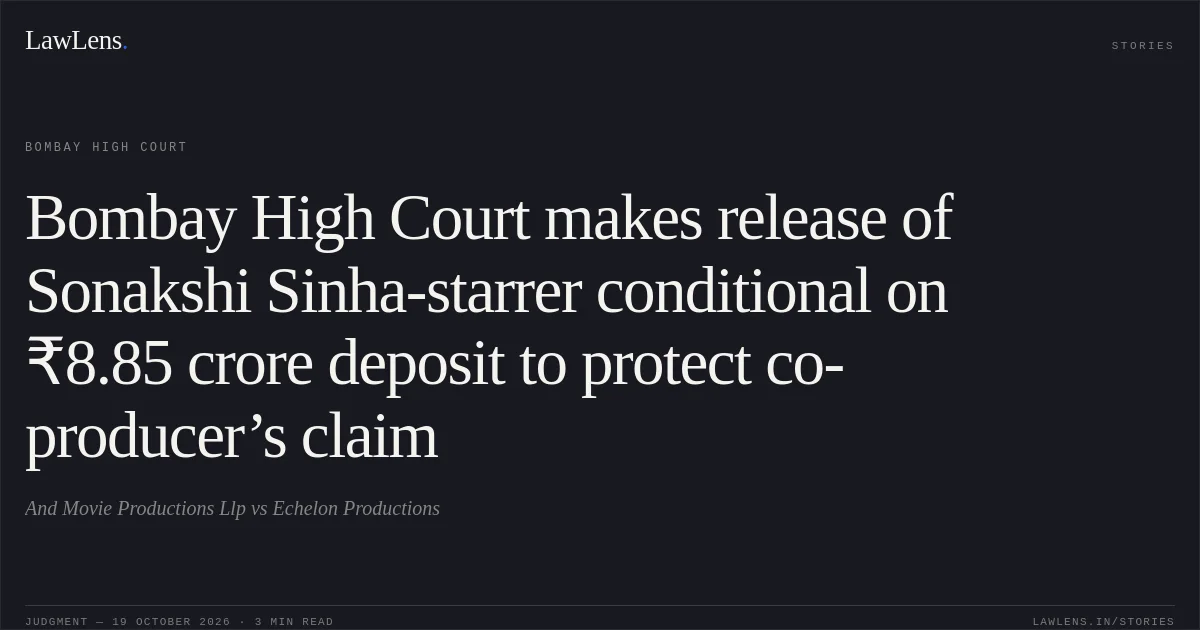
Respondent No. 1 was directed to deposit Rs.8.85 crore, with interest at 15% per annum from the respective payment dates until deposit, within three working days; the deposit is security and is not to be released without further order.
Source reference: p. 31, para. 46(b)Until deposit, the Respondents may not release or commercially exploit the film; after deposit, theatrical release may proceed subject to the Agreement and the Court’s directions.
Source reference: pp. 31–32, para. 46(c)–(d)The Respondents must disclose relevant agreements, offers and arrangements, comply with the Petitioner’s confirming-party and consent rights, account for exploitation revenue through a separate designated account, and ensure the agreed credits appear in publicity material.
Source reference: pp. 32–34, para. 46(e)–(h)No separate direction requiring Respondent No. 2 personally to deposit the investment was made; final questions of liability and the parties’ rights were left open for arbitration.
Source reference: p. 34, para. 46(i)–(j)The Respondents’ request for a stay was rejected.
Source reference: p. 35, para. 47Acts & Sections Cited
2 provisions across 2 statutes referred to in this judgment. Each provision opens on LawLens.
Arbitration and Conciliation Act, 19961
Indian Contract Act, 18721
Original Court PDF
And Movie Productions LlpvsEchelon Productions
Click to open original judgment
Original judgment, available to read, download and summarize on LawLens.in