Facts
The Petitioner, a pharmaceutical company, was awarded a tender by the Respondent (KSMSCL) for the supply of iron tablets
Source reference: para. 2Following delivery, the Drug Inspectorate tested samples and issued a "Not of Standard Quality" (NSQ) report
Source reference: para. 3The Respondent issued multiple replacement notices, which the Petitioner failed to comply with, citing non-receipt of the test report and statutory samples from the Drug Inspectorate
Source reference: paras. 4-5Consequently, the Respondent issued a show-cause notice and subsequently passed an order dated March 28, 2025, blacklisting the particular drug for three years
Source reference: paras. 6-9The Petitioner challenged this order under Article 226, alleging violation of the Karnataka Transparency in Public Procurements (KTPP) Rules and principles of natural justice
Source reference: para. 10Issues
1. Whether the blacklisting order was passed under Rule 26A of the KTPP Rules or in exercise of contractual powers under Clause 21.1(g) of the tender
Source reference: para. 13(i)2. Whether compliance with the procedure under Rule 26A, including a Debarment Committee and oral hearing, was mandatory
Source reference: para. 13(iii)3. Whether the Petitioner was denied an effective opportunity of hearing in violation of natural justice due to the non-furnishing of the test report
Source reference: para. 13(iv-v)4. Whether the three-year blacklisting was arbitrary or disproportionate
Source reference: para. 13(vi)Law Applied
Rule 26A of the KTPP Rules, 2000, which governs debarment for "corrupt or fraudulent practices"
Source reference: para. 10.7, 15.8Clause 21.1(g) of the tender conditions, which permits blacklisting for quality failure in laboratory tests
Source reference: para. 11.2, 15.9Erusian Equipment and Chemicals Ltd. v. State of West Bengal (obligation of objective satisfaction/fair play)
Source reference: para. 10.16Kulja Industries Ltd. v. BSNL (test of fairness and proportionality)
Source reference: para. 10.23Daffodils Pharmaceutics Ltd. v. State of UP (minimum opportunity of hearing)
Source reference: para. 10.32Isolators and Isolators v. MPMPKVV Co. Ltd. (requirement of particularised show-cause notice)
Source reference: para. 10.48Reasoning
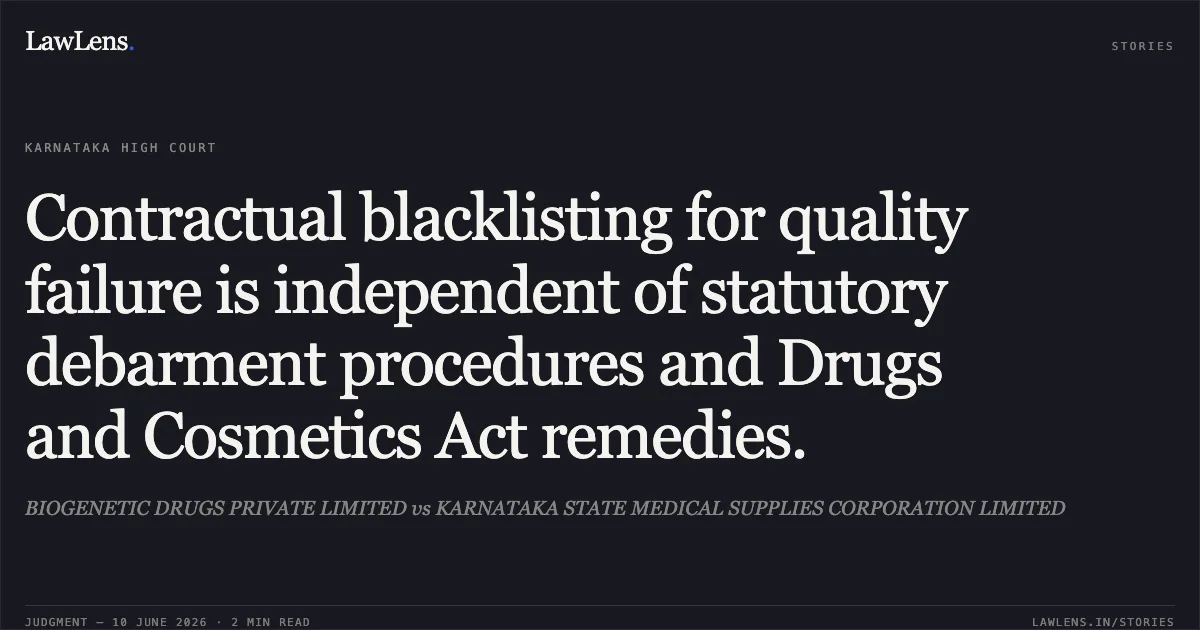
The Court determined that Rule 26A of the KTPP Rules and Clause 21.1(g) of the tender operate in distinct spheres; the former addresses fraudulent conduct, while the latter addresses technical quality failures
Source reference: para. 15.10Since the Respondent invoked the contractual clause, the specific statutory procedures of Rule 26A (Debarment Committee/Written Recommendations) were not mandatory
Source reference: paras. 15.13, 17.10On natural justice, the court reasoned that while the Petitioner did not receive the full report, they were notified of the NSQ status via multiple notices and a specific show-cause notice, and they submitted a detailed written reply
Source reference: paras. 18.22, 18.25The Court found that "fairness" does not always mandate an oral hearing in contractual matters if the party understands the case against them
Source reference: para. 18.26The non-furnishing of samples was deemed a grievance against the Drug Inspectorate, not the Respondent, who was entitled to rely on the statutory report until set aside
Source reference: paras. 19.9-19.10Finally, the three-year period was held proportionate as it was the contractually agreed minimum and served the legitimate aim of protecting public health
Source reference: paras. 20.11-20.12Holding
The Court answered all issues in favor of the Respondent, holding that the order was a valid exercise of contractual power and did not suffer from procedural impropriety or arbitrariness
The Writ Petition was dismissed. However, the Court clarified that the Petitioner remains at liberty to challenge the Government Analyst's report before the competent statutory authority under the Drugs and Cosmetics Act, 1940
Source reference: para. 21.2Original Court PDF
BIOGENETIC DRUGS PRIVATE LIMITEDvsKARNATAKA STATE MEDICAL SUPPLIES CORPORATION LIMITED
Click to open original judgment
Original judgment, available to read, download and summarize on LawLens.in