Facts
Vaishaliben died by suicide about nine months after marrying respondent No. 1.
Source reference: paras. 1–2; pp. 1–3Her brother alleged that the respondents had physically and mentally harassed her and demanded ₹1 lakh for purchasing a shop.
Source reference: paras. 1–2; pp. 1–3The Sessions Court acquitted the respondents of offences under Sections 306, 498A and 114 of the IPC.
Source reference: paras. 4–5; pp. 1–3The State appealed under Section 378 of the Code of Criminal Procedure, 1973.
Source reference: paras. 4–5; pp. 1–3Issues
1. Whether the trial Court was justified in acquitting the respondents
Source reference: para. 9; p. 52. Whether the trial Court correctly appreciated the prosecution evidence
Source reference: para. 9; p. 53. Whether the acquittal judgment disclosed any illegality, irregularity or perversity warranting appellate interference
Source reference: para. 9; p. 5Law Applied
Sections 306, 498A and 114 of the IPC require proof of the charged offences; for abetment under Section 306, the prosecution must establish the requisite abetment and cannot rely on the fact of suicide alone.
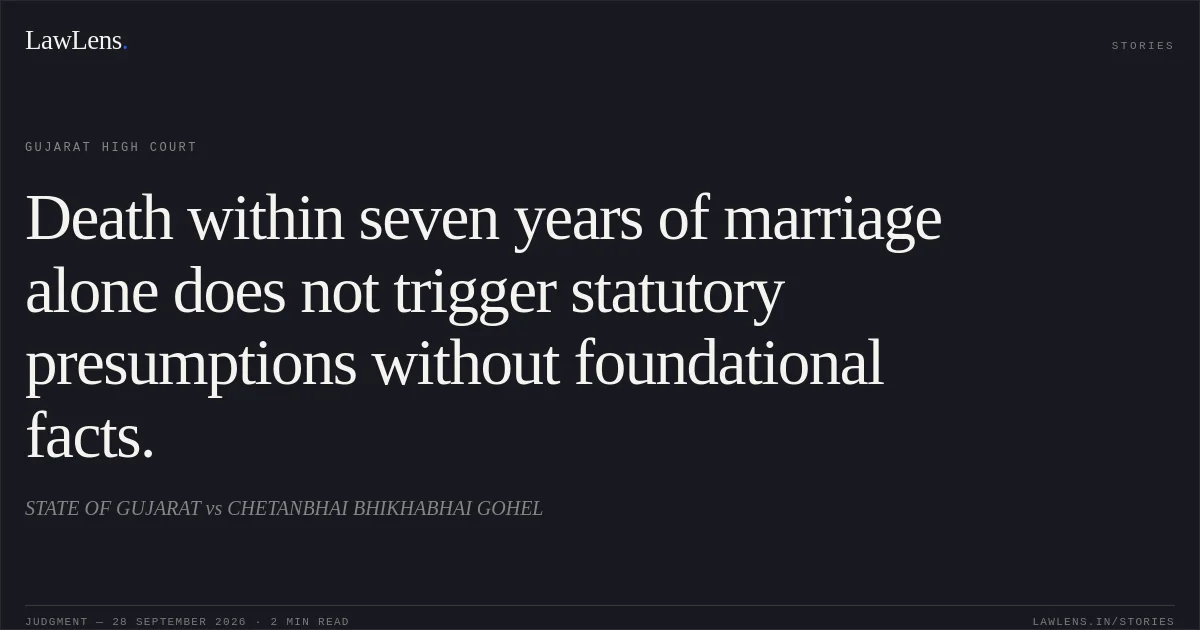
Source reference: para. 15; p. 9The Court considered the presumptions under Sections 113A and 113B of the Indian Evidence Act, holding that they could not be invoked absent foundational facts supporting their application.
Source reference: para. 15; p. 9On an appeal against acquittal, an appellate court may review and reappreciate the evidence, but the accused retain the double presumption of innocence; where two reasonable views are possible, the acquittal should not be disturbed.
Source reference: paras. 17–20; pp. 10–12The Court relied on Chandrappa v. State of Karnataka, (2007) 4 SCC 415; Rajesh Prasad v. State of Bihar, (2022) 3 SCC 471; Babu Sahebagouda Rudragoudar v. State of Karnataka, (2024) 8 SCC 149; and Ramesh v. State of Karnataka, (2024) 9 SCC 169.
Source reference: paras. 19–20; pp. 11–12Reasoning
The Court found that the deceased’s suicide note attributed her act to persistent headaches and did not implicate the respondents.
Source reference: para. 12; p. 7The father did not support the alleged demand or cruelty, and the complaint’s allegations were made about 15 days after the incident, without corroboration in the initial statements.
Source reference: paras. 11–13; pp. 6–7Independent witnesses did not support the prosecution, and call-detail records did not corroborate the alleged telephone calls concerning harassment.
Source reference: para. 14; p. 8In the absence of credible evidence proving cruelty, demand or abetment, the foundational basis for drawing the statutory presumptions was also lacking.
Source reference: para. 15; p. 9The trial Court’s view was therefore reasonable and disclosed no basis for appellate interference.
Source reference: paras. 16, 21–22; pp. 9, 13Holding
The Court held that the prosecution had not proved the charges beyond reasonable doubt and that the acquittal disclosed no error, perversity or infirmity warranting interference.
The State’s appeal was dismissed, the acquittal was confirmed, the bail bonds were cancelled, and the record and proceedings were directed to be returned to the trial Court.
Source reference: para. 23; p. 13Acts & Sections Cited
6 provisions across 2 statutes referred to in this judgment. Each provision opens on LawLens.
Code of Criminal Procedure, 19733
Indian Penal Code, 18603
Original Court PDF
STATE OF GUJARATvsCHETANBHAI BHIKHABHAI GOHEL
Click to open original judgment
Original judgment, available to read, download and summarize on LawLens.in