Facts
The Petitioner challenged the order dated April 15, 2026, passed by the Returning Officer (Respondent No. 1) accepting the nomination of Respondent No. 3 for a Gram Panchayat bye-election
Source reference: para. 4Respondent No. 3 had been elected for the 2022–2027 tenure but was subsequently disqualified on May 15, 2024, under Section 14(1)(h) of the Maharashtra Village Panchayats Act, 1959, for failure to pay property taxes
Source reference: para. 7(i)-(iii)This disqualification was upheld by the Additional Divisional Commissioner and the High Court in previous proceedings
Source reference: para. 7(iv)-(v)Following the vacancy, a bye-election was scheduled for April 28, 2026. Respondent No. 3 filed a nomination, claiming that since he had now cleared the tax arrears, he was eligible to contest
Source reference: para. 7(vii)The Returning Officer accepted the nomination, prompting this Writ Petition
Source reference: para. 7(vii)Issues
1. Whether a candidate disqualified under Section 14(1)(h) of the Maharashtra Village Panchayats Act, 1959, is eligible to contest a bye-election held for the same vacancy and tenure created by his own disqualification.
Source reference: para. 5, 82. Whether the removal of the cause of disqualification (payment of taxes) prior to the bye-election nomination allows the disqualified person to contest the remainder of the same term.
Source reference: para. 12, 16Law Applied
The court primarily applied Section 13 of the Maharashtra Village Panchayats Act, 1959, which defines qualifications for being elected "unless disqualified under this Act"
Source reference: para. 11Section 14(1)(h) regarding disqualification for failure to pay taxes
Source reference: para. 18Section 27, which defines the "term of office" as five years
Source reference: para. 8Janabai v. Additional Commissioner (2018) 18 SCC 196, which affirmed that disqualification applies to acts or misdeeds occurring during the continuance of a member's term
Source reference: para. 31Sandip Ganpatrao Bhadade v. Additional Commissioner, Amravati (2017) 1 Mh.L.J. 79, establishing that a person disqualified cannot continue for the remainder of the tenure
Source reference: para. 26, 31Gokul Chandanmal Sangvi v. State of Maharashtra (2018) 4 Mh.L.J. 911 regarding the vitiation of elections when a disqualified candidate is permitted to contest
Source reference: para. 13Reasoning
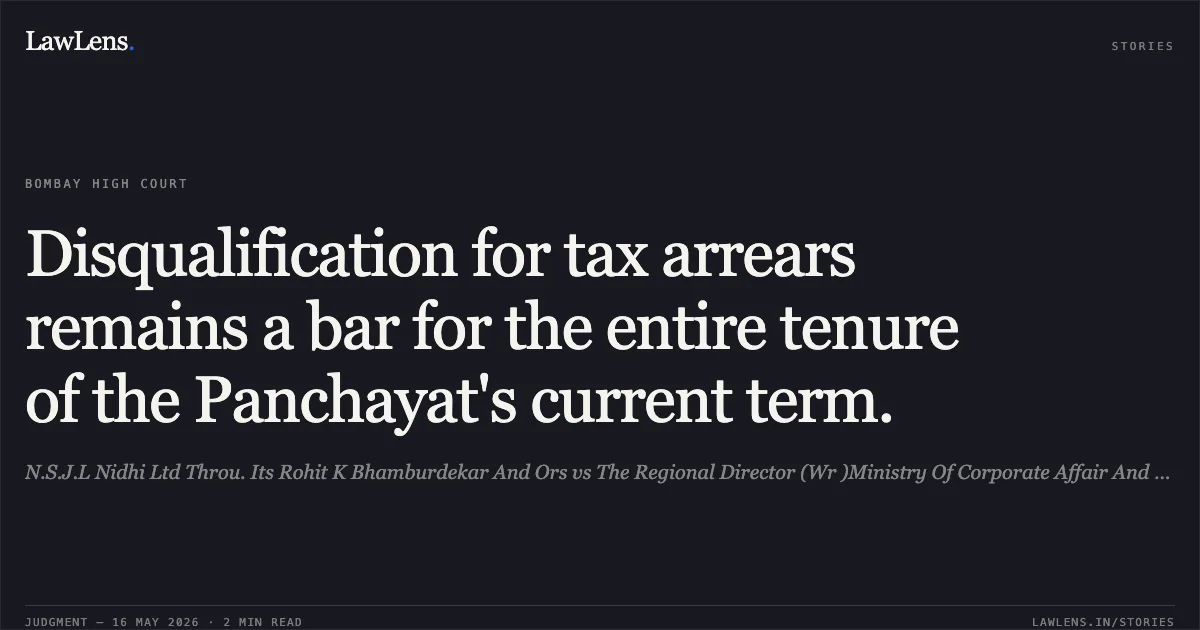
The Court rejected Respondent No. 3’s argument that clearing tax arrears per "Explanation 2" to Section 14(1)(h) restored his eligibility for the bye-election
Source reference: para. 23-24The Court reasoned that the "tenure" of the Panchayat (2022–2027) is a single block under Section 27; a disqualification incurred during this term prohibits the individual from holding office for that specific remains of the term
Source reference: para. 9-10, 32Allowing a disqualified member to contest the resulting bye-election simply by removing the cause of disqualification would defeat the statutory objective of ensuring "clean" representatives and would reward the disqualified party with a second chance for the same term
Source reference: para. 25, 29The Court emphasized that disqualifications not carrying a specific statutory time limit (unlike criminal convictions) naturally extend to the entire five-year "term of office"
Source reference: para. 30, 32Holding
The Court held that Respondent No. 3, having been disqualified for the 2022–2027 tenure, remained ineligible to contest any bye-election for that same term regardless of subsequent tax payments
The High Court quashed and set aside the Returning Officer’s order dated April 15, 2026. The Writ Petition was allowed.
Source reference: para. 33, 35The Court clarified that the Petitioner could not be declared the winner automatically, as the unlawful acceptance of a nomination vitiates the entire election process for that seat
Source reference: para. 33-34Acts & Sections Cited
15 provisions across 3 statutes referred to in this judgment. Each provision opens on LawLens.
Maharashtra Village Panchayats Act.
Maharashtra Village Police Act, 1967.1
Indian Penal Code, 18601
Original Court PDF
N.S.J.L Nidhi Ltd Throu. Its Rohit K Bhamburdekar And OrsvsThe Regional Director (Wr )Ministry Of Corporate Affair And Anr
Click to open original judgment
Original judgment, available to read, download and summarize on LawLens.in