Facts
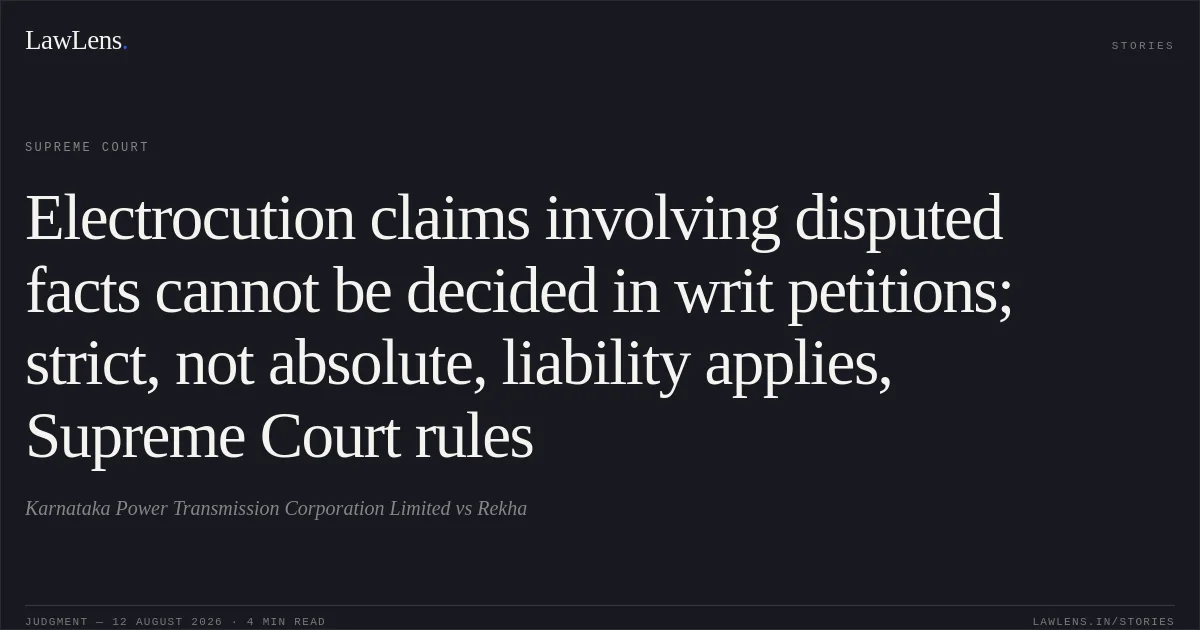
N. Subramanya died by electrocution on 22 February 2018 after an aluminium ladder allegedly came into contact with an 11 KV electrical line while he was working in a coffee plantation.
Source reference: no citationHis widow, Rekha, invoked Article 226 of the Constitution seeking compensation. The Single Judge of the Karnataka High Court entertained the writ petition, held Karnataka Power Transmission Corporation Limited (“KPTC”) liable, and awarded ₹25,52,500 with interest at 6% after three months from the date of judgment. The Division Bench affirmed the award.
Source reference: para. 3In the connected appeal, Muizz Ahmad Shariff suffered severe injuries after jumping onto the roof of a neighbouring building to retrieve a cricket ball and coming into contact with a 66 KV line. The High Court awarded him ₹44,32,050, which was affirmed in appeal.
Source reference: para. 4KPTC challenged the maintainability of the writ petitions, disputed negligence and liability, and objected to the use of the Motor Vehicles Act, 1988 multiplier method for calculating compensation.
Source reference: paras. 3–5Issues
Whether a writ petition under Article 226 of the Constitution seeking compensation for electrocution is maintainable where material and disputed questions of fact arise regarding negligence, causation, statutory responsibility and the conduct of the parties?
Source reference: paras. 5–9Whether liability for electrocution by an electricity transmission authority is absolute liability or strict liability, and whether the recognised exceptions to strict liability apply?
Source reference: paras. 10–14Whether the multiplier method under the Motor Vehicles Act, 1988 may be applied for determining compensation in electrocution cases?
Source reference: para. 15Law Applied
Article 226 confers broad discretionary jurisdiction, but ordinarily a writ petition should not be entertained where an efficacious alternative remedy exists, particularly when disputed questions of fact require evidentiary determination; the recognised exceptions include enforcement of fundamental rights, breach of natural justice, lack of jurisdiction and challenge to legislative validity, as stated in Radha Krishan Industries v. State of H.P.
Source reference: para. 6In electrocution cases involving disputed negligence and causation, the civil court or other appropriate forum is ordinarily the proper remedy, as held in Chairman, Grid Corporation of Orissa Ltd. v. Sukamani Das.
Source reference: para. 7Electricity transmission is an inherently dangerous activity, attracting the doctrine of strict liability under Rylands v. Fletcher, as applied to electricity in M.P. Electricity Board v. Shail Kumari and Union of India v. Prabhakaran Vijaya Kumar; however, the rule is subject to recognised exceptions, including the act of a stranger, statutory authority, act of God, the claimant’s own default and remoteness of consequences.
Source reference: paras. 12–14Absolute liability under M.C. Mehta v. Union of India is distinct and applies to enterprises engaged in hazardous or inherently dangerous industries, without exceptions.
Source reference: para. 11For compensation in electrocution cases, the multiplier method under the Motor Vehicles Act is not automatically applicable; compensation must instead be just, reasonable and fair, having regard to income and other relevant claims, as held in Raman v. Uttar Haryana Bijli Vitran Nigam Ltd.
Source reference: para. 15Reasoning
The Court found several material factual disputes requiring evidence: in Rekha’s case, whether use of the aluminium ladder amounted to negligence, whether the plantation owner was negligent, whether the backup relays were functioning satisfactorily, and which authority was responsible for maintaining the relevant line.
Source reference: para. 9(A)In Muizz Ahmad Shariff’s case, disputes concerned the statutory distance between the electrical line and the building, the effect of the building owner’s undertaking, and whether liability could be attributed to KPTC for providing the electrical connection.
Source reference: para. 9(B)These issues could not properly be resolved on affidavits under Article 226, notwithstanding the High Court’s reliance on absolute liability.
Source reference: paras. 8–10The Supreme Court clarified that electricity authorities are ordinarily subject to strict, not absolute, liability: they may be liable irrespective of negligence, but the applicability of recognised exceptions must still be examined.
Source reference: para. 14The High Court also erred in adopting the Motor Vehicles Act multiplier method, since compensation for electrocution must be assessed according to the overarching standard of just and reasonable compensation rather than mechanically applying that statutory framework.
Source reference: para. 15Holding
The writ petitions were held not maintainable because they involved substantial disputed questions of fact concerning negligence, causation and allocation of statutory responsibility.
The judgments of the Single Judge and Division Bench were quashed and set aside, and both appeals were allowed.
Source reference: paras. 16, 18The respondents were left free to pursue appropriate alternative remedies before the competent forum, where the claims were to be decided independently and expeditiously, uninfluenced by the Supreme Court’s observations.
Source reference: paras. 16–17The interim compensation of ₹5 lakh already paid to the respondents was not to be recovered and was not to prejudice or be adjusted against any compensation that might ultimately be awarded in appropriate proceedings.
Source reference: para. 16Parties were directed to bear their own costs.
Source reference: para. 18Acts & Sections Cited
1 provisions across 1 statute referred to in this judgment. Each provision opens on LawLens.
Electricity Act, 20031
Original Court PDF
Karnataka Power Transmission Corporation LimitedvsRekha
Click to open original judgment
Original judgment, available to read, download and summarize on LawLens.in