01Facts
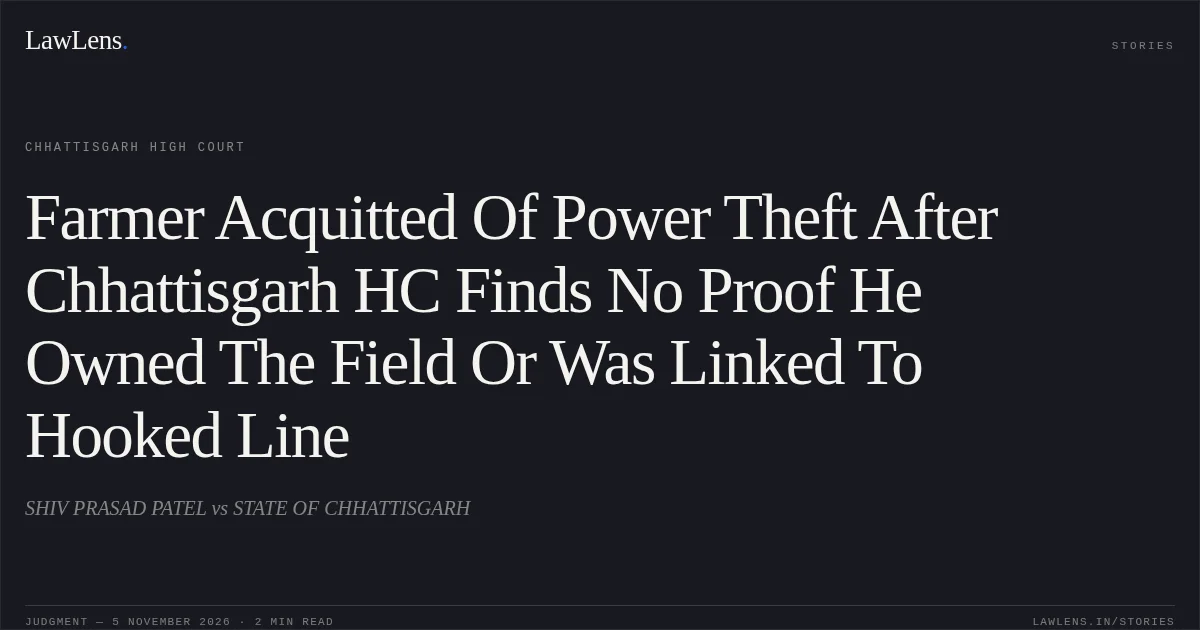
The prosecution alleged that, on 2 March 2016, the appellant used electricity by directly hooking into a low-tension line to operate a 5 HP agricultural pump and lights at a brick kiln.
¶ 2, 10The electricity department assessed a loss of ₹2,35,139 and submitted a complaint to the police
¶ 2, 10The Special Judge convicted the appellant under Section 135 of the Electricity Act, 2003, and imposed a fine of ₹7,05,417, with nine months’ simple imprisonment in default
¶ 1The appellant appealed under Section 374(2) of the CrPC, contending, among other things, that the evidence did not establish his connection to the premises or the alleged unauthorised use
¶ 1, 602Issues
i.1. Whether the prosecution proved beyond reasonable doubt that the appellant was responsible for the alleged unauthorised use of electricity under Section 135 of the Electricity Act
¶ 9, 16ii.2. Whether the trial court’s conviction and sentence should be set aside in light of the evidentiary deficiencies identified on appeal
¶ 14–1703Law Applied
Section 135 of the Electricity Act, 2003, criminalises theft of electricity, including unauthorised use of electricity as alleged in this case
¶ 1, 9The prosecution was required to establish the appellant’s responsibility for the alleged unauthorised use beyond reasonable doubt; where the evidence leaves material doubt about the accused’s connection to the alleged illegal use, the benefit of that doubt warrants acquittal
¶ 16The appeal was brought under Section 374(2) of the CrPC
¶ 1The judgment cites no precedents.
Provisions in the judgment · 4 · Linked ones open on LawLens
Code of Criminal Procedure, 1973 Section 374Section 313
Electricity Act, 2003 Section 135
Indian Penal Code, 1860 Section 379
04Reasoning
The Court found that the inspection evidence was not reliably corroborated: one member of the inspection team turned hostile, the investigating officer confirmed there were no independent witnesses, and the appellant’s alleged refusal to sign the inspection documents was not independently supported
¶ 12–14The prosecution also failed to establish that the field where the pump was allegedly operated belonged to or was possessed by the appellant, and only a three-metre length of wire—not the pump—was seized
¶ 14–15These deficiencies left the appellant’s connection to the alleged unauthorised use unproved beyond reasonable doubt, and the trial court had not properly assessed them
¶ 15–1605Holding
The Court answered the issues in the appellant’s favour, holding that the prosecution had not proved his responsibility for unauthorised use of electricity beyond reasonable doubt
¶ 16It allowed the appeal, set aside the conviction and sentence, and acquitted the appellant by extending the benefit of doubt
¶ 17The trial court record was directed to be returned with a copy of the judgment for compliance and necessary action
¶ 18Original Court PDF
SHIV PRASAD PATELvsSTATE OF CHHATTISGARH
Click to open original judgment
Original judgment, available to read, download and summarize on LawLens.in