Facts
The High Court was moved via Section 528 of the Bharatiya Nagarik Suraksha Sanhita, 2023 (BNSS) to quash two cross-FIRs arising from a family dispute
Source reference: p. 2The first, FIR No. 300/2025, involved allegations under Section 79 BNS and Section 67 IT Act regarding the dissemination of intimate photographs of a female complainant
Source reference: p. 3The second, FIR No. 204/2025, arose from a subsequent panchayat meeting intended to resolve the first dispute, which escalated into a physical altercation.
Source reference: p. 4-5The complainant in the second FIR sustained a head injury (MLC recorded a laceration requiring stitches), leading to charges under Sections 109, 110, and 3(5) of the BNS, with the prosecution seeking the addition of Section 307 IPC/109 BNS (Attempt to Murder)
Source reference: p. 4-5On July 28, 2025, the parties—who are closely related through matrimonial alliances—executed Memoranda of Understanding to amicably settle all disputes
Source reference: p. 5Issues
1. Whether the High Court should exercise its inherent power under Section 528 BNSS (erstwhile Section 482 CrPC) to quash criminal proceedings involving non-compoundable and serious offences (Section 307 IPC/109 BNS) based on a private settlement
Source reference: p. 5-10Law Applied
The Court primarily applied Section 528 of the BNSS regarding the inherent powers of the High Court to prevent abuse of process and secure the ends of justice
Source reference: p. 2It relied on the landmark principle from Gian Singh v. State of Punjab, which permits quashing of non-compoundable offences if they are predominantly of a personal/matrimonial nature and a settlement makes conviction unlikely
Source reference: p. 5-6Furthermore, it applied the specific guidelines for Section 307 IPC cases established in Narinder Singh v. State of Punjab and State of Madhya Pradesh v. Laxmi Narayan, which mandate examining the nature of the injury, the weapon used, and whether the incorporation of the serious charge is substantiated by evidence or merely incidental to a private feud
Source reference: p. 7-9Reasoning
The Court observed that the disputes were rooted in "personal and familial discord" between branches of an extended family where matrimonial ties remain intact
Source reference: p. 9-10Regarding the serious charge under Section 109 BNS (Attempt to Murder), the Court noted that the injury resulted from a "sudden altercation" during a panchayat meeting without the use of firearms or sharp-edged weapons
Source reference: p. 10Relying on the Narinder Singh framework, the Court noted that the settlement was reached quickly (within months of the incident) and the victim confirmed the injuries had no lasting consequences
Source reference: p. 10The Court reasoned that because the conflict was essentially a private family matter and the parties desired peace to maintain their relationships, the possibility of conviction was "remote and bleak," making further trial an exercise in futility
Source reference: p. 10Holding
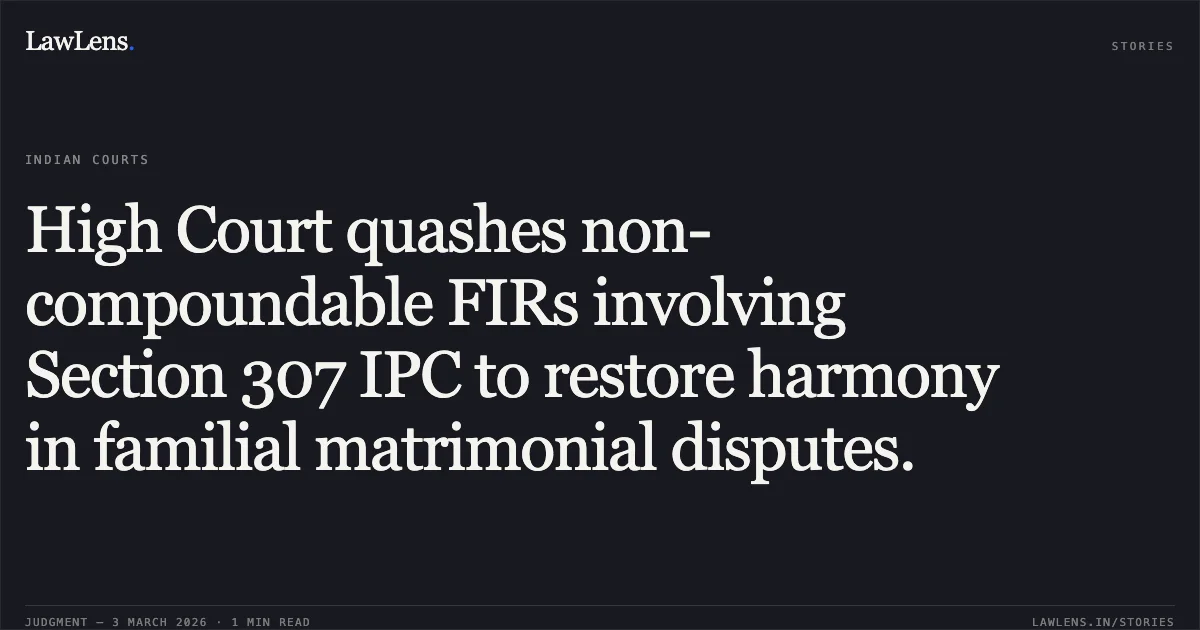
The Court answered the issue in the affirmative, holding that quashing the proceedings would serve the ends of justice and restore family harmony
The Court allowed the petitions and quashed FIR No. 300/2025 (P.S. Shahbad Dairy) and FIR No. 204/2025 (P.S. Paschim Vihar), along with all consequential proceedings
Source reference: p. 11Consequently, the related bail applications were disposed of as infructuous
Source reference: p. 11Acts & Sections Cited
8 provisions across 5 statutes referred to in this judgment. Each provision opens on LawLens.
Indian Penal Code, 18601
Bharatiya Nyaya Sanhita, 20234
Code of Criminal Procedure, 19731
Information Technology Act, 20001
Bharatiya Nagarik Suraksha Sanhita, 20231
Original Court PDF
Chhote Singhvs.The State NCT of Delhi (and connected matters), BAIL APPL. 3605/2025
Click to open original judgment
Original judgment, available to read, download and summarize on LawLens.in