Facts
M/s Fashion Dezire filed four complaints under Section 138 of the Negotiable Instruments Act, 1881, against M/s Priknit Retails Ltd. and its directors, including the petitioners, alleging dishonour of cheques issued towards discharge of liability
Source reference: para. 3.1, p. 3During the defence-evidence stage, the petitioners sought summons to a bank official. The Trial Court declined, finding no ground to call the witness; the Sessions Court dismissed the petitioners’ revisions as barred because the order was interlocutory, and also considered the request on its merits
Source reference: paras. 3.2–3.5, pp. 3–4; paras. 6–8, p. 4The petitioners then invoked Section 528 of the Bharatiya Nagarik Suraksha Sanhita, 2023 (BNSS), stating that the drawer company had gone into liquidation and that the bank was their only source of relevant records
Source reference: paras. 1, 4, 10, pp. 2–4Issues
1. Whether the Trial Court’s decision to drop the bank official as a defence witness warranted interference under Section 528 BNSS
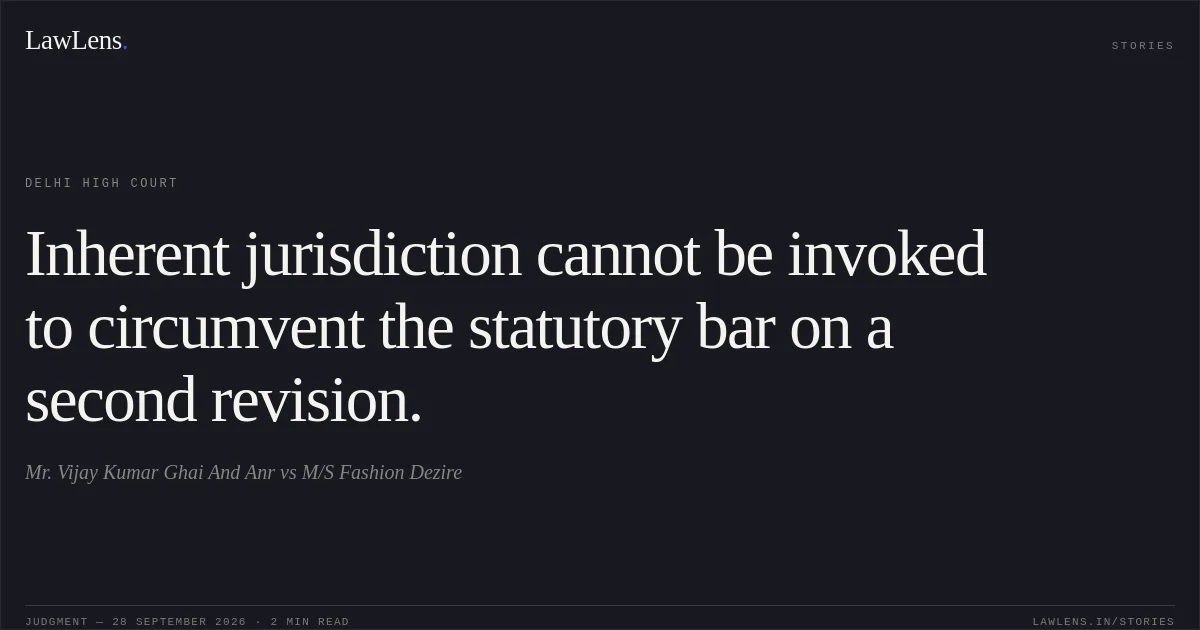
Source reference: paras. 5, 9–12, pp. 3–42. Whether the petitioners could invoke the High Court’s inherent jurisdiction to challenge an interlocutory order despite the statutory bar on a second revision
Source reference: paras. 6, 13–15, pp. 4–5Law Applied
Section 138 of the Negotiable Instruments Act, 1881, governs the complaints alleging cheque dishonour
Source reference: para. 3.1, p. 3The Court referred to the statutory presumption applicable to the bank documents, as noted by the Sessions Court
Source reference: para. 7, p. 4Under Section 397(2) CrPC / Section 438(2) BNSS, as cited in the judgment, an interlocutory order is not revisable; the bar on a second revision cannot be circumvented by invoking the High Court’s inherent powers under Section 528 BNSS
Source reference: para. 14, p. 5The Court relied on Rajan Kumar Manchanda v. State of Karnataka, 1990 SCC (Cri) 537, in support of that principle
Source reference: para. 14, p. 5The High Court’s inherent jurisdiction is also limited where two courts below have reached concurrent findings, and interference requires grounds showing legal error or infirmity
Source reference: para. 15, p. 5Reasoning
The Court found that the cheques and return memos were already on record, and the petitioners could lead any other evidence permissible in law, including evidence concerning the chronology of the cheque series
Source reference: para. 11, p. 4It therefore found no infirmity in the lower courts’ refusal to summon the bank official, particularly given the statutory presumption concerning the bank documents
Source reference: paras. 7, 12, pp. 4–5The order was interlocutory, and the petitioners could not use Section 528 BNSS to overcome the bar on a second revision. The Court also noted the nearly ten-month delay in approaching it and the concurrent findings of the courts below
Source reference: paras. 13–15, pp. 4–5Holding
The High Court dismissed all four petitions, holding that no ground was made out to interfere under Section 528 BNSS with the concurrent decisions declining to summon the bank official
Pending applications were disposed of
Source reference: para. 17, p. 5Acts & Sections Cited
4 provisions across 3 statutes referred to in this judgment. Each provision opens on LawLens.
Bharatiya Nagarik Suraksha Sanhita, 20232
Negotiable Instruments Act, 18811
Code of Criminal Procedure, 19731
Original Court PDF
Mr. Vijay Kumar Ghai And AnrvsM/S Fashion Dezire
Click to open original judgment
Original judgment, available to read, download and summarize on LawLens.in