Facts
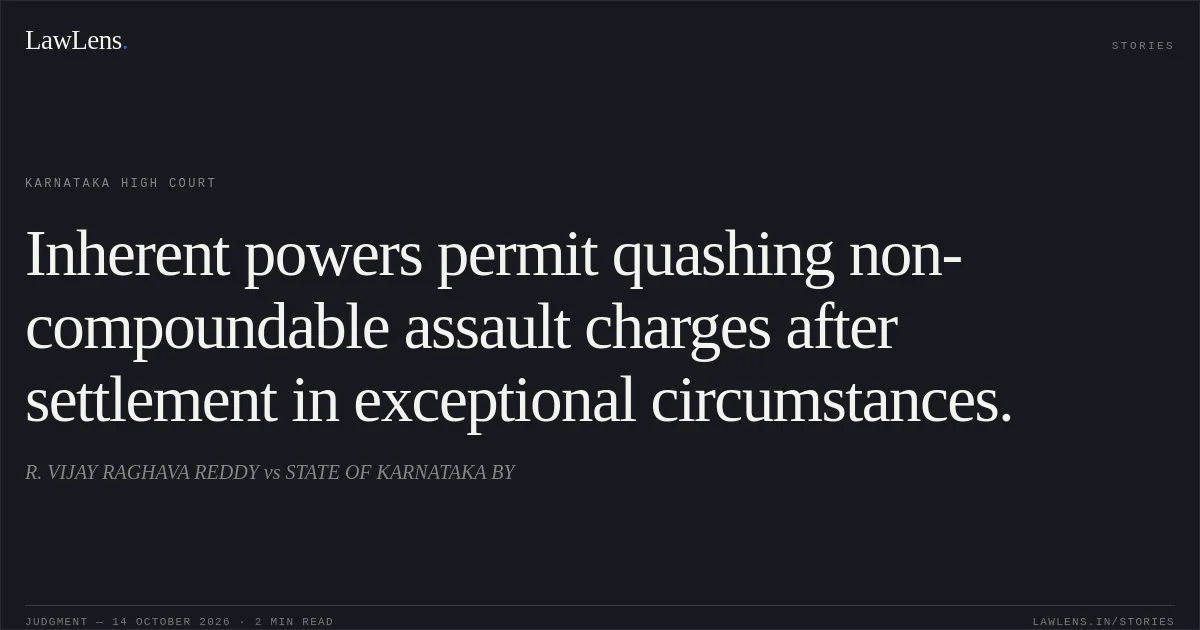
Respondent No. 2 lodged a complaint alleging that the petitioners assaulted him in connection with a property-related document dispute.
Source reference: para. 2Mahadevapura Police registered Crime No. 272/2025; after investigation, a charge-sheet was filed in C.C. No. 65788/2025 for offences under Sections 115(2), 118(1), 126(2), 3(5), 351(2), 351(3) and 352 of the Bharatiya Nyaya Sanhita, 2023 (BNS).
Source reference: para. 4During the petition under Section 528 of the Bharatiya Nagarik Suraksha Sanhita, 2023 (BNSS), the petitioners sought permission to compound the compoundable offences and quashing of the remaining proceedings.
Source reference: para. 3Respondent No. 2 appeared personally, confirmed the settlement, and stated that he did not wish to pursue the prosecution.
Source reference: paras. 3–5Issues
Whether the offences under Sections 115(2), 126(2), 351(2), 351(3) and 352 of the BNS could be compounded under Section 359 of the BNSS in light of the parties’ settlement.
Source reference: paras. 6–7Whether the proceedings for the offence under Section 118(1) of the BNS, which was not compounded, should be quashed under the High Court’s inherent jurisdiction under Section 528 of the BNSS.
Source reference: paras. 8–11Law Applied
Section 359 of the BNSS permits the compounding of offences specified as compoundable, subject to its terms.
Source reference: para. 6Section 528 of the BNSS preserves the High Court’s inherent power to make orders necessary to give effect to the BNSS, prevent abuse of the process of any court, or secure the ends of justice.
Source reference: para. 8The Court identified Sections 115(2), 126(2), 351(2), 351(3) and 352 of the BNS as compoundable, while treating Section 118(1) as not compoundable under Section 359.
Source reference: paras. 6, 8, 11No precedent was cited.
Source reference: no citationReasoning
The Court accepted respondent No. 2’s voluntary and unequivocal statement that the parties had resolved the property-related dispute and that he would neither pursue the case nor support the prosecution at trial.
Source reference: paras. 5, 9It therefore permitted the specified compoundable offences to be compounded under Section 359.
Source reference: paras. 6–7As to Section 118(1), the Court considered that the prosecution arose from the resolved dispute and that, in the particular circumstances, continuing it would not advance the interests of justice.
Source reference: para. 10It exercised Section 528 to quash that part of the proceedings, expressly limiting its decision to the facts of the case and clarifying that Section 118(1) was not thereby made compoundable as a matter of course.
Source reference: para. 11Holding
The Court allowed I.A. No. 2/2026 and permitted the offences under Sections 115(2), 126(2), 351(2), 351(3) and 352 of the BNS to be compounded under Section 359 of the BNSS.
In exercise of its inherent jurisdiction under Section 528 of the BNSS, it quashed the proceedings in C.C. No. 65788/2025 against the petitioners insofar as the offence under Section 118(1) of the BNS was concerned.
Source reference: paras. 12–14Acts & Sections Cited
10 provisions across 3 statutes referred to in this judgment. Each provision opens on LawLens.
Code of Criminal Procedure, 19731
Bharatiya Nagarik Suraksha Sanhita, 20232
Bharatiya Nyaya Sanhita, 20237
Original Court PDF
R. VIJAY RAGHAVA REDDYvsSTATE OF KARNATAKA BY
Click to open original judgment
Original judgment, available to read, download and summarize on LawLens.in