Facts
Sadashiva K.S.’s marriage to Shrilatha was dissolved by a decree of divorce, but that decree was later set aside following Shrilatha’s appeal.
Source reference: p. 2–5, paras. 2–5, 9Shrilatha predeceased Sadashiva, who died on 17 April 2025.
Source reference: p. 2–5, paras. 2–5, 9Gayathri claimed to be Sadashiva’s wife; their relationship and the existence of three minor daughters were not disputed, and Gayathri was named as nominee in Sadashiva’s service records.
Source reference: p. 2–5, paras. 2–5, 9A son from Sadashiva and Shrilatha’s marriage, aged about 19, asserted a competing claim to family pension.
Source reference: p. 2–5, paras. 2–5, 9The authorities directed Gayathri to obtain a succession certificate, and she challenged the resulting endorsements.
Source reference: p. 2–5, paras. 2–5, 9At the hearing, she filed a memo consenting to the children named in it being considered for family pension.
Source reference: p. 2–5, paras. 2–5, 9Issues
1. Whether the authorities could require Gayathri to obtain a succession certificate before considering the family-pension claim of the children
Source reference: p. 4, para. 52. Whether the three minor daughters named in Gayathri’s memo were entitled to family pension under Rule 8(C) of the Karnataka Government Servants Family Pension Rules, 2002, notwithstanding the dispute concerning the marriage
Source reference: p. 5–6, paras. 6–103. Whether the competing son’s claim affected the pension order, including if he was still a minor
Source reference: p. 6, paras. 10, 12Law Applied
Section 16 of the Hindu Marriage Act provides legitimacy to children born from a marriage that is void or voidable, as applicable; the Court invoked it in considering the status of Gayathri and Sadashiva’s children
Source reference: p. 5, para. 6Rule 8(C) of the Karnataka Government Servants Family Pension Rules, 2002, provides for family pension to minor children
Source reference: p. 5, para. 7The Court’s direction was made without a conclusive adjudication of competing rights, leaving any aggrieved party at liberty to seek appropriate relief before a Civil Court
Source reference: p. 6, para. 10Reasoning
The Court treated the daughters’ claim as one made by children, rather than determining Gayathri’s own entitlement as a spouse or nominee.
Source reference: p. 5, paras. 6–7It held that the daughters’ status for this purpose was not defeated by the dispute over the marriage, referring to Section 16 of the Hindu Marriage Act, and applied Rule 8(C) to their claim as minor children.
Source reference: p. 5, paras. 6–7Since the son from the first marriage was stated to be about 19, the Court directed pension for the three named daughters, while preserving equal distribution among all the children if the son was found to be a minor.
Source reference: p. 5–6, paras. 8–12The order did not finally determine the parties’ rights, which remained open to adjudication in civil proceedings.
Source reference: p. 6, para. 10Holding
The petition was disposed of, and the challenged endorsements were set aside.
Respondent No. 3 was directed to grant family pension to the three daughters named in Gayathri’s memo and to release it within one month of receiving the order.
Source reference: p. 6–7, paras. 10–14If the son from the first marriage was found to be a minor, the respondents were directed to distribute the pension equally among all the children.
Source reference: p. 6–7, paras. 10–14The directions were without prejudice to any party’s right to seek relief before the Civil Court; the claim concerning compassionate appointment was left open.
Source reference: p. 6–7, paras. 10–14Acts & Sections Cited
1 provisions across 1 statute referred to in this judgment. Each provision opens on LawLens.
Hindu Marriage Act, 19551
Original Court PDF
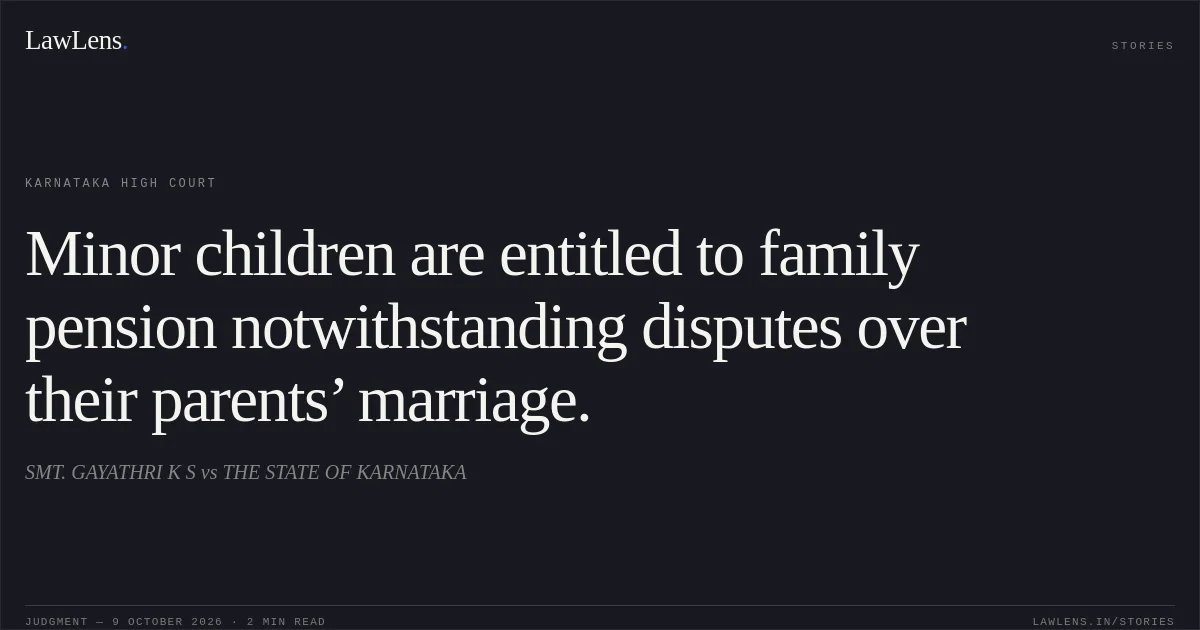
SMT. GAYATHRI K SvsTHE STATE OF KARNATAKA
Click to open original judgment
Original judgment, available to read, download and summarize on LawLens.in