Facts
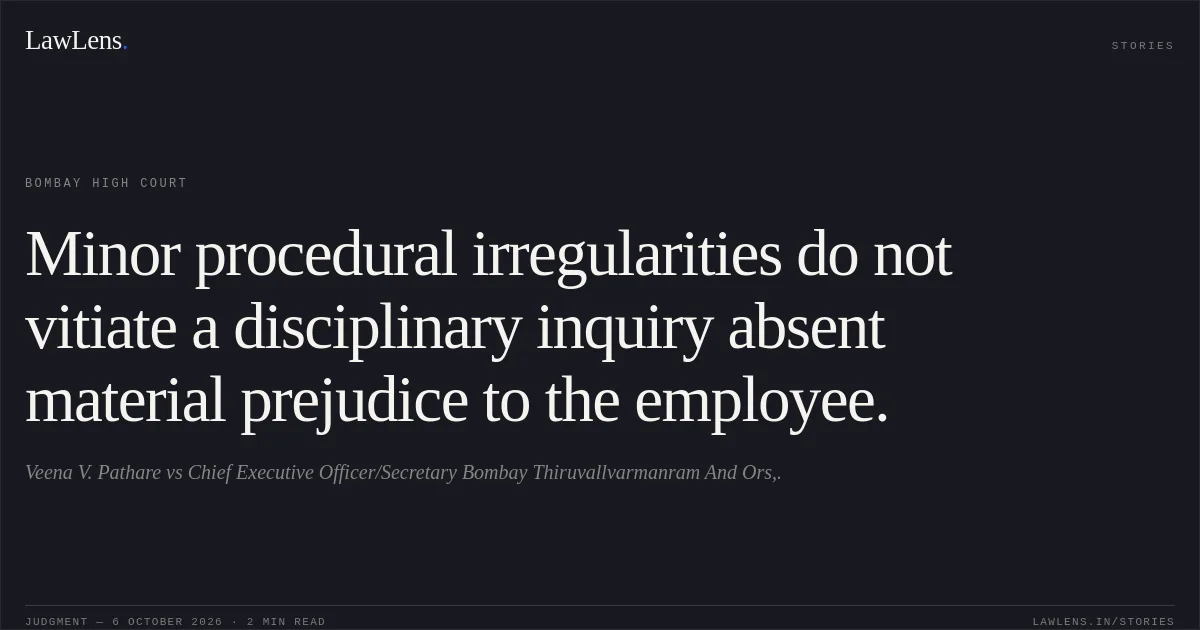
The petitioner, employed as a Clerk-cum-Translator at the respondent school from 3 August 1992, challenged her termination with immediate effect on 27 September 2003.
Source reference: paras. 3–5, pp. 3–4The management had conducted a disciplinary inquiry into nine charges, including negligence, unauthorised absence, embezzlement, insubordination, threats and physical assault.
Source reference: paras. 3–5, pp. 3–4The School Tribunal dismissed her appeal on 29 January 2008, finding that she had received a fair opportunity to participate in the inquiry and defend herself.
Source reference: paras. 3–5, pp. 3–4, 6–7The petitioner then invoked Articles 226 and 227, alleging procedural breaches and challenging the Tribunal’s findings.
Source reference: paras. 6–8, pp. 4–5During the writ proceedings, she also placed on record her acquittal in a criminal case under IPC Sections 499, 500 and 506.
Source reference: paras. 6–8, pp. 4–5Issues
1. Whether alleged procedural irregularities in the disciplinary inquiry—including breaches concerning permission, suspension, pre-inquiry procedure and cross-examination—caused material prejudice warranting interference with the Tribunal’s decision
Source reference: paras. 8, 11, 19–21, pp. 4–5, 82. Whether the petitioner’s acquittal under IPC Sections 499, 500 and 506 materially affected the disciplinary findings on the broader set of charges
Source reference: paras. 16–18, p. 73. Whether the Tribunal’s decision disclosed perversity or another basis for writ-court interference
Source reference: paras. 9, 22, pp. 5, 8Law Applied
The Court applied the Maharashtra Employees of Private Schools (Conditions of Service) Regulation Act, 1977 and the Rules, 1981, including Rules 33, 35, 36 and 37, in considering the petitioner’s objections to the inquiry procedure.
Source reference: paras. 2, 8, 20–21, pp. 2, 4, 8It held that procedural irregularities do not vitiate an inquiry unless they cause material and real prejudice to the employee.
Source reference: para. 11, p. 5Relying on Indra Bhanu Gaur v. Committee of Management of M.M. Degree College, (2004) 1 SCC 281, the Court stated that a person who does not avail opportunities provided in the inquiry cannot ordinarily complain of their denial.
Source reference: para. 12, p. 5In exercising review under Articles 226 and 227, the Court would not reappreciate evidence merely to substitute its view for a probable view reached by the Tribunal.
Source reference: paras. 1, 22, pp. 2, 8Reasoning
The Court found that the petitioner and her nominee attended the inquiry proceedings, that the petitioner questioned witnesses, and that she received the inquiry records and sufficient opportunity to defend herself; she also chose not to lead evidence.
Source reference: paras. 12, 14, 20, pp. 5–6, 8The Tribunal had accepted the explanation for the absence of a key witness, Mr. Dominic Xavier, and other witnesses—including the Principal and school employees—were examined and cross-examined.
Source reference: para. 15, p. 6The alleged breaches of Rules 33(1) and 35(1) had not been specifically raised before the Tribunal, and the management had therefore lacked an opportunity to address them; in the circumstances, the Court found no resulting prejudice sufficient to invalidate the inquiry.
Source reference: para. 21, p. 8The later acquittal concerned defamation and criminal intimidation, whereas the disciplinary inquiry covered nine distinct charges, so the acquittal did not materially affect the inquiry outcome.
Source reference: paras. 16–18, p. 7The Court also found no perversity in the Tribunal’s assessment warranting writ interference.
Source reference: para. 22, p. 8Holding
The Court held that the petitioner had not established material prejudice from the alleged procedural irregularities, that her criminal acquittal did not undermine the disciplinary findings, and that the Tribunal’s decision disclosed no perversity warranting interference.
The writ petition was dismissed, the Rule discharged, and no order as to costs was made; the pending interim application was also disposed of.
Source reference: paras. 22–24, pp. 8–9Acts & Sections Cited
3 provisions across 1 statute referred to in this judgment. Each provision opens on LawLens.
Indian Penal Code, 18603
Original Court PDF
Veena V. PatharevsChief Executive Officer/Secretary Bombay Thiruvallvarmanram And Ors,.
Click to open original judgment
Original judgment, available to read, download and summarize on LawLens.in