Facts
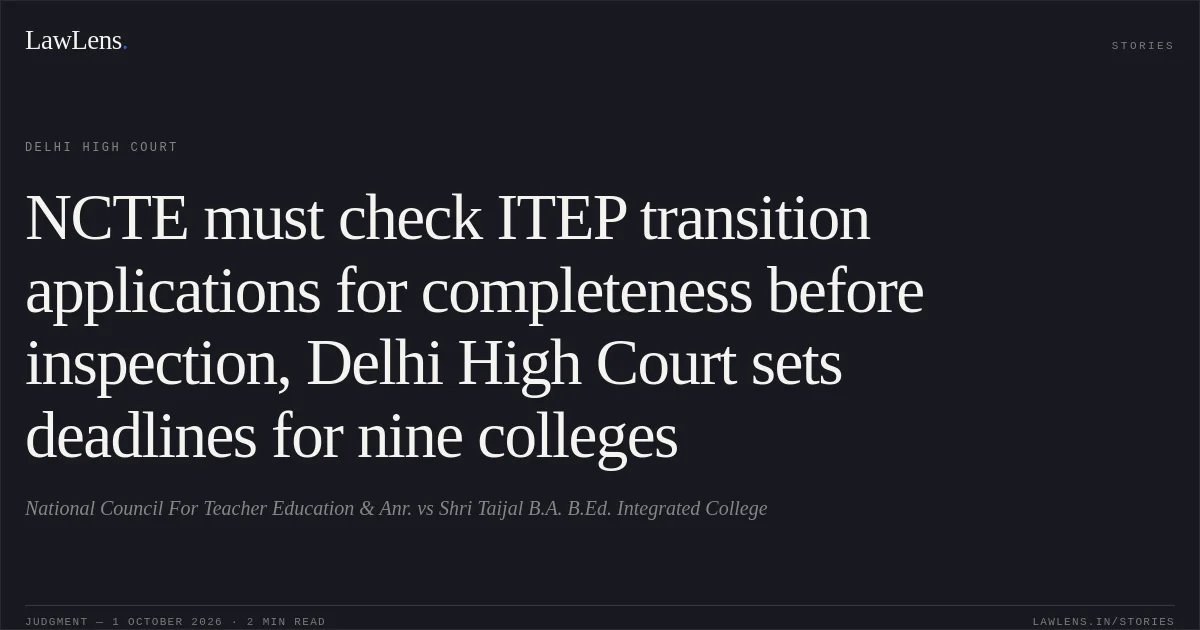
The respondent institutions, recognised to conduct integrated B.A. B.Ed./B.Sc. B.Ed. programmes, applied to transition to the Integrated Teacher Education Programme (ITEP) for the 2026–27 academic session.
Source reference: paras. 2–11, pp. 5–7After scrutiny and show-cause proceedings, the Western Regional Committee (WRC) refused their applications. The institutions challenged those refusals by writ petitions. The Single Judge set aside the refusal orders and directed inspections; the NCTE appealed, arguing that the applications first required scrutiny under Regulation 7(1) and did not automatically proceed to inspection under Regulation 7(7).
Source reference: paras. 2–11, pp. 5–7; paras. 12.3–12.5, pp. 8–9Issues
Whether an application for transition to ITEP must undergo scrutiny under Regulation 7(1) before proceeding to inspection under Regulation 7(7).
Source reference: para. 15, p. 13Whether the Single Judge’s direction to inspect the respondent institutions required modification where the applications could first be examined for completeness and requisite documents.
Source reference: paras. 20–21, pp. 14–15Law Applied
Regulation 7(1) of the NCTE (Recognition Norms and Procedure) Regulations, 2014 provides for rejection of an application that is incomplete or unaccompanied by the requisite documents; Regulation 7(7) contemplates inspection, where applicable, to assess an institution’s preparedness to commence the course.
Source reference: paras. 16–18, pp. 13–14These provisions operate at distinct stages: an application must first satisfy the completeness and document requirements under Regulation 7(1), and only then may it proceed through the further process under Regulation 7, including inspection under Regulation 7(7), where applicable.
Source reference: paras. 16–18, pp. 13–14The Court considered Vision College of Teachers Training v. NCTE, 2026:DHC:5050, but clarified that its inspection direction did not dispense with the independent scrutiny required under Regulation 7(1).
Source reference: para. 20, p. 14Reasoning
The Court found that the show-cause notices and refusal orders relied on different kinds of deficiencies: some concerned documents required to establish eligibility, while others related to infrastructure and preparedness that might require verification by inspection.
Source reference: para. 19, p. 14Treating all applications as automatically entitled to inspection would bypass Regulation 7(1) and render its scrutiny otiose.
Source reference: paras. 17, 20–21, pp. 14–15Accordingly, setting aside refusals based on deficiencies requiring inspection did not entitle the institutions to proceed directly to that stage; the WRC had first to determine whether each application was complete and accompanied by the requisite documents.
Source reference: paras. 17, 20–21, pp. 14–15The Court also required a reasonable opportunity to rectify document deficiencies and to respond to any adverse ground not previously communicated.
Source reference: paras. 22–23, p. 15Holding
The Court modified the impugned orders insofar as they directed inspection, and directed the WRC to process the applications through the prescribed stages and timetable, beginning with Regulation 7(1) scrutiny.
The WRC was to communicate document deficiencies and allow an opportunity to rectify them; complete applications were then to be processed under the Regulations, including inspection where applicable.
Source reference: paras. 22–27, pp. 15–17No fresh application fee was payable. The appeals were disposed of, with no order as to costs.
Source reference: paras. 22–27, pp. 15–17Original Court PDF
National Council For Teacher Education & Anr.vsShri Taijal B.A. B.Ed. Integrated College
Click to open original judgment
Original judgment, available to read, download and summarize on LawLens.in