Facts
GAIL sought a twelve-month extension of the mandate of the sole arbitrator, appointed by the Court, to complete arbitration arising from contractual arrangements for underground pipeline works in Ranchi.
Source reference: p. 2, paras. 1–4The arbitration commenced in April 2024 and had reached the evidence and cross-examination stage, but the award had not been completed within the prescribed period.
Source reference: p. 2, paras. 1–4Taurant opposed the extension, alleging procedural irregularities, including denial of an effective opportunity to lead evidence and cross-examine witnesses, refusal to admit additional documents, and failure to frame issues.
Source reference: p. 2, paras. 5–6Taurant separately sought termination of the arbitrator’s mandate or, alternatively, substitution of the arbitrator under Sections 14(1)(a) and 14(2) of the Arbitration and Conciliation Act, 1996.
Source reference: p. 3, para. 7Issues
Whether sufficient cause existed to extend the sole arbitrator’s mandate for completion of the proceedings and delivery of the award.
Source reference: p. 3, paras. 8–9Whether the alleged procedural irregularities and disputes concerning the scope of the arbitration agreement warranted termination of the arbitrator’s mandate or substitution.
Source reference: pp. 3–4, paras. 10–13Law Applied
Section 29A(4), read with Section 29A(5), of the Arbitration and Conciliation Act, 1996, provides the statutory basis for a court to extend an arbitrator’s mandate.
Source reference: p. 3, paras. 8–9Sections 14(1)(a) and 14(2) concern termination of an arbitrator’s mandate and the court’s role in deciding a controversy concerning termination.
Source reference: p. 3, paras. 10–13The Court’s stated approach was to assess whether sufficient cause justified extending the mandate and whether the grounds raised warranted termination; it left procedural objections and objections to the existence, scope, and applicability of the arbitration agreement open for consideration by the tribunal.
Source reference: pp. 3–4, paras. 9–13Reasoning
The arbitration had progressed to evidence and cross-examination, but further evidence, final arguments, and the award remained outstanding.
Source reference: p. 3, para. 9Considering the stage and nature of the proceedings and the need to bring the arbitration to a conclusion, the Court found sufficient cause to extend the mandate by twelve months.
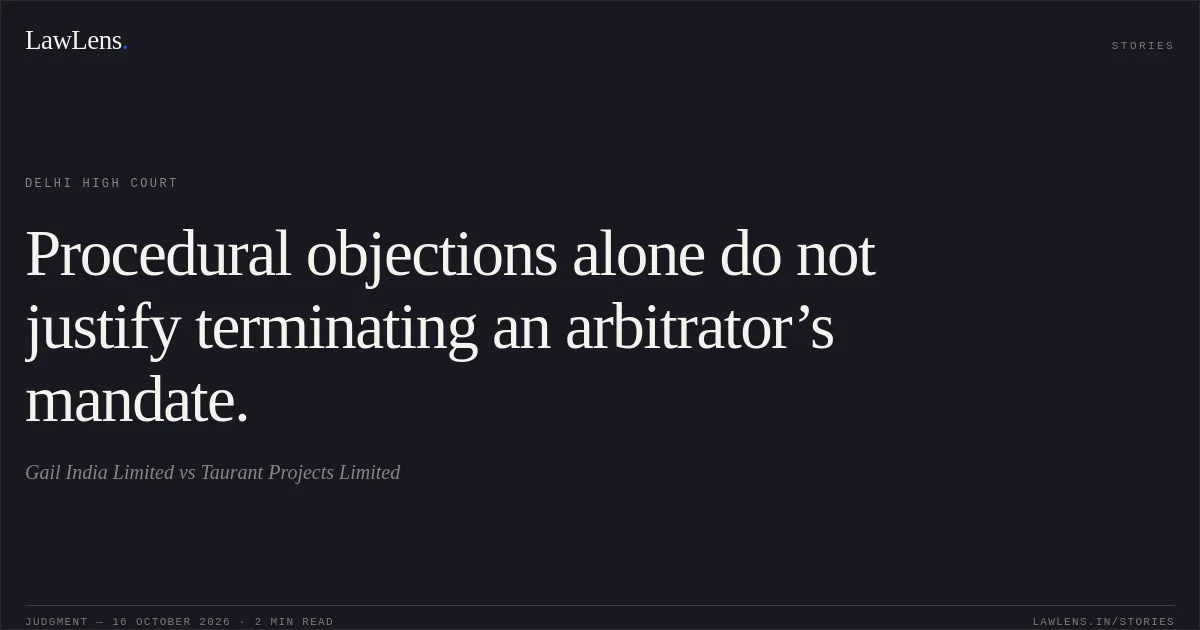
Source reference: p. 3, para. 9; p. 4, para. 12It held that Taurant’s allegations, on their own, did not justify terminating the arbitrator’s mandate.
Source reference: p. 3, paras. 10–11Rather than determine the procedural and jurisdictional objections in these petitions, the Court directed that they could be raised before the arbitrator in accordance with law, without prejudice to either party’s rights and contentions.
Source reference: p. 3, paras. 10–11; p. 4, para. 13Holding
The Court allowed GAIL’s petition and extended the sole arbitrator’s mandate for twelve months to complete the proceedings and render the award.
It disposed of Taurant’s petition seeking termination or substitution, directing the parties to raise their available disputes and objections before the arbitrator in accordance with law.
Source reference: p. 4, para. 13The Court clarified that its observations did not prejudice adjudication of the merits and directed the parties to cooperate in completing the arbitration within the extended period.
Source reference: p. 4, paras. 14–16Acts & Sections Cited
1 provisions across 1 statute referred to in this judgment. Each provision opens on LawLens.
Arbitration and Conciliation Act, 19961
Original Court PDF
Gail India LimitedvsTaurant Projects Limited
Click to open original judgment
Original judgment, available to read, download and summarize on LawLens.in