Facts
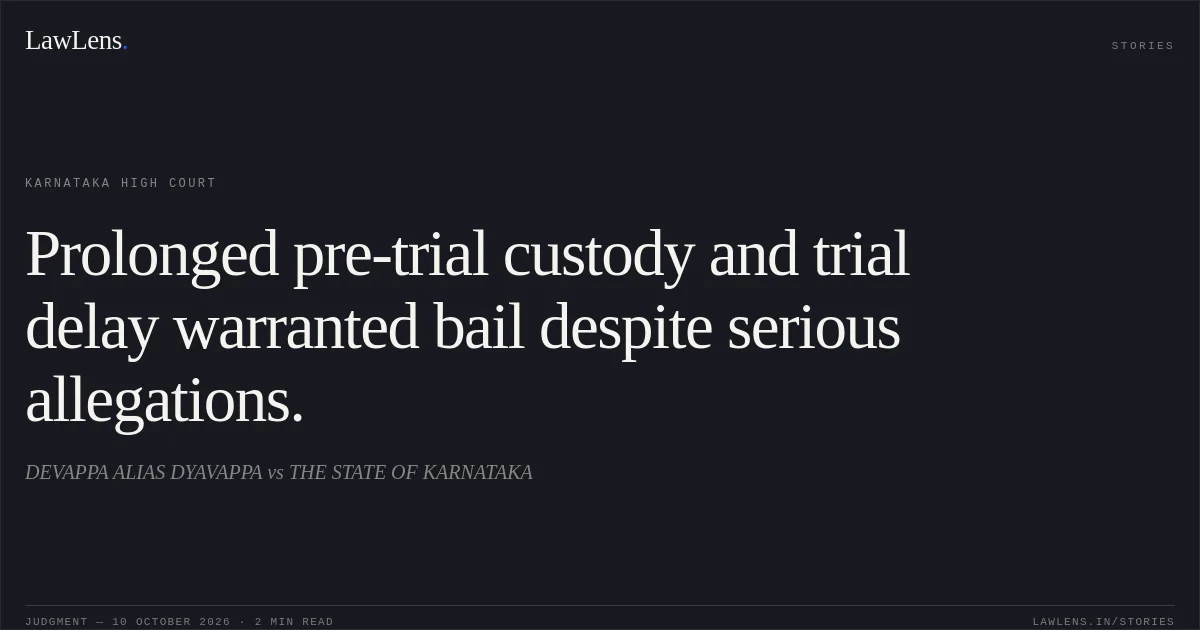
The petitioner, Accused No. 1, sought bail under Section 483 of the Bharatiya Nagarik Suraksha Sanhita, 2023 (“BNSS”), in a case alleging offences under Sections 64(2)(m), 64(2)(k), 115(2), 352 and 351(2), read with Section 3(5) of the Bharatiya Nyaya Sanhita, 2023 (“BNS”).
Source reference: para. 2The complaint alleged that the petitioner had repeatedly subjected the victim to forcible sexual intercourse, resulting in pregnancy; the victim’s mother lodged the complaint on 28 June 2025.
Source reference: paras. 2, 4–5After an earlier bail petition was dismissed with liberty to renew the application upon production of the DNA report, the petitioner applied to the trial court, which rejected bail on 12 August 2026.
Source reference: para. 7The DNA report stated that the petitioner was excluded as the biological father of the baby.
Source reference: para. 8By the time of this petition, the petitioner had been in custody since 29 June 2025, the investigation was complete and the charge sheet had been filed; although charges had been framed on 18 March 2026, no prosecution witness had been examined.
Source reference: paras. 11–12Issues
1. Whether the petitioner should be enlarged on bail under Section 483 BNSS in light of the DNA report, the completion of investigation and the period of custody.
Source reference: paras. 8–142. Whether the prosecution’s concerns about witness tampering and interference with the proceedings could be adequately addressed through bail conditions.
Source reference: paras. 3, 14Law Applied
Section 483 BNSS provides the basis for the High Court’s consideration of the bail application.
Source reference: para. 2The alleged offences were those specified in Sections 64(2)(m), 64(2)(k), 115(2), 352 and 351(2), read with Section 3(5) BNS.
Source reference: para. 2The Court applied the principle that “bail is rule and jail is an exception” and considered relevant bail factors, including the stage of investigation, duration of custody, progress of trial, and whether risks to the proceedings could be controlled by conditions.
Source reference: paras. 11–14No judicial precedent was cited.
Source reference: no citationReasoning
The Court did not treat the DNA report as conclusive proof that no sexual intercourse had occurred, and it declined to determine the petitioner’s innocence at the bail stage.
Source reference: paras. 9, 11It nevertheless considered the report in the overall bail assessment, alongside the petitioner’s custody of approximately one year and three months, the completed investigation and filed charge sheet, and the absence of any prosecution-witness examination for more than six months after charges were framed.
Source reference: paras. 8, 11–13Given the prospect of delay in trial and the petitioner’s residence within the trial court’s jurisdiction, the Court found that the prosecution’s concerns could be addressed by imposing conditions requiring attendance, non-interference and good conduct.
Source reference: paras. 12, 14Holding
The Court allowed the petition and ordered the petitioner’s release on bail in S.C. No. 5295/2025, on execution of a personal bond of ₹2,00,000 with two sureties for the like sum.
Bail was subject to conditions requiring the petitioner to attend and assist the trial court, refrain from tampering with witnesses or hampering the proceedings, and commit no similar or other offence during the case; breach would result in cancellation of bail.
Source reference: para. 15Acts & Sections Cited
6 provisions across 2 statutes referred to in this judgment. Each provision opens on LawLens.
Bharatiya Nagarik Suraksha Sanhita, 20231
Bharatiya Nyaya Sanhita, 20235
Original Court PDF
DEVAPPA ALIAS DYAVAPPAvsTHE STATE OF KARNATAKA
Click to open original judgment
Original judgment, available to read, download and summarize on LawLens.in