Facts
Based on secret information received by P.S.I. M.R. Sharma regarding the illegal sale of Cannabis (Ganja), a raid was conducted at the respondent’s residence in Vatva, Ahmedabad
Source reference: para 2The prosecution alleged that 4.875 kgs of Ganja were recovered from the respondent’s conscious possession
Source reference: para 2Following an investigation, the respondent was charged under Section 8(C) read with Section 20(b) of the Narcotic Drugs and Psychotropic Substances (NDPS) Act, 1985
Source reference: para 1On 21.04.2008, the Additional Sessions Judge, Ahmedabad City, acquitted the respondent, leading the State to prefer this appeal under Section 378 of the Code of Criminal Procedure (CrPC)
Source reference: para 1Issues
1. Whether the prosecution established the ownership and exclusive possession of the premises from which the contraband was seized
Source reference: para 8.72. Whether the mandatory procedural requirements under Sections 42 and 57 of the NDPS Act were strictly complied with
Source reference: para 8.6, 8.93. Whether the contradictions in the testimonies of the raiding party and the hostility of independent witnesses vitiated the prosecution's case
Source reference: para 8.1, 8.84. Whether the High Court may interfere with an order of acquittal in the absence of patent perversity
Source reference: para 14, 16Law Applied
The Court primarily applied Section 8(C) and Section 20(b) of the NDPS Act, 1985, which prohibit the possession and sale of cannabis
Source reference: para 1It strictly scrutinized compliance with mandatory procedural safeguards, specifically Section 42 (recording and communicating secret information) and Section 57 (reporting arrest and seizure to superiors within 48 hours) of the NDPS Act
Source reference: para 8.6, 8.9Regarding the appellate scope for acquittals under Section 378 of the CrPC, the Court relied on the principles in Chandrappa v. State of Karnataka, which held that if two reasonable conclusions are possible, the appellate court should not disturb an acquittal
Source reference: para 15It further cited Constable 907 Surendra Singh v. State of Uttarakhand, affirming that interference is only warranted if the judgment suffers from patent perversity or misreading of evidence
Source reference: para 16Reasoning
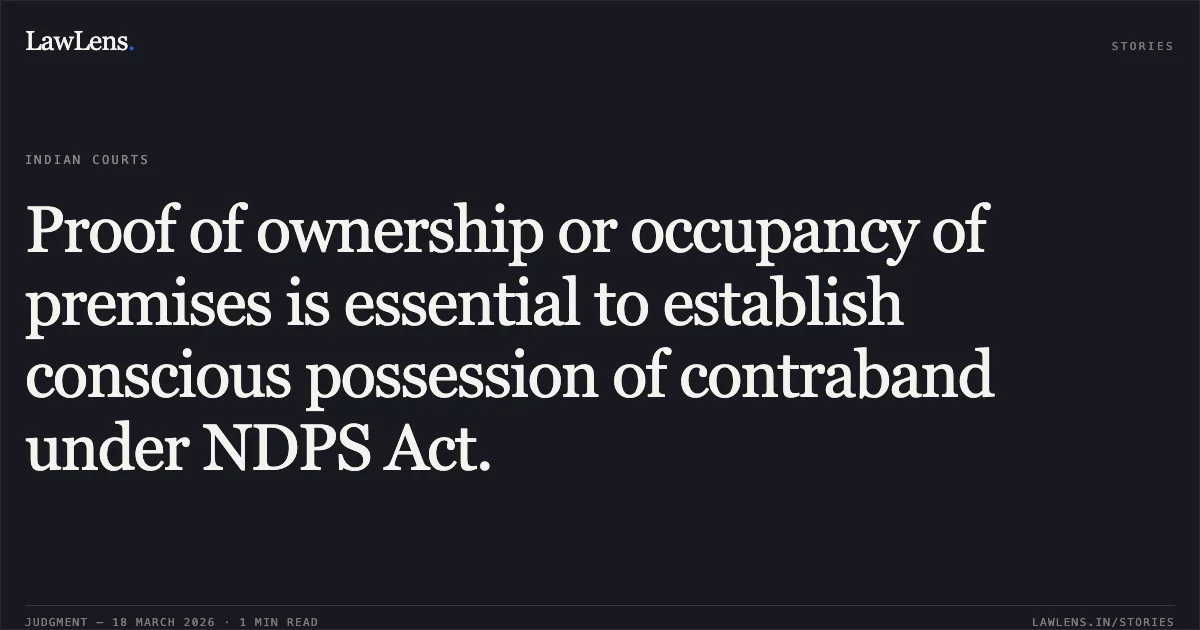
The Court found the prosecution's case fundamentally flawed due to a lack of evidence connecting the accused to the raided premises.
Source reference: para 8.7It noted that the prosecution failed to produce property documents or examine neighbors to prove that the house was owned or occupied by the accused, rendering the allegation of "conscious possession" unsustainable
Source reference: para 8.7Procedurally, the prosecution failed to demonstrate compliance with Section 42(2) as the intimation to higher officers lacked official inward/outward numbers
Source reference: para 8.6Furthermore, the Raiding Officer (PW4) admitted he did not inform his superiors in writing after the raid, violating Section 57
Source reference: para 8.9The Court highlighted that both independent panch witnesses (PW1 and PW2) and the weighing operator (PW6) turned hostile, leaving only the testimonies of police witnesses, which contained material contradictions regarding the type of weighing machine used
Source reference: para 8.1, 8.4, 8.8Significant discrepancies in the dates of muddammal (seized property) receipts further undermined the integrity of the evidence
Source reference: para 8.10Holding
The High Court dismissed the appeal and confirmed the judgment of acquittal
It held that the prosecution miserably failed to prove the case beyond a reasonable doubt due to the hostility of independent witnesses and fatal procedural lapses under the NDPS Act
Source reference: para 8.7, 18The Court concluded that the trial court's view was a possible and reasonable one, and in the absence of perversity, the double presumption of innocence in favor of the accused must prevail
Source reference: para 15, 18The Record and Proceedings were ordered to be remitted to the trial court
Source reference: para 19Acts & Sections Cited
7 provisions across 2 statutes referred to in this judgment. Each provision opens on LawLens.
Code of Criminal Procedure, 19732
Narcotic Drugs and Psychotropic Substances Act, 19855
Original Court PDF
STATE OF GUJARATvsASLAM ANWARKHAN PATHAN
Click to open original judgment
Original judgment, available to read, download and summarize on LawLens.in