Facts
The applicant, initially appointed as a Junior Clerk in 1983, was promoted through various ranks to Chief Office Superintendent
Source reference: p. 2Following a judgment by the Hon’ble Delhi High Court in a previous litigation regarding seniority and promotion, the respondents refixed his pay in 2009
Source reference: p. 2However, on 06.11.2012, the respondents unilaterally revised his pay downwards by two stages and initiated recovery of alleged excess payments (totaling approximately ₹20,795 for May and June 2013)
Source reference: p. 3The respondents contended that the applicant had exercised an "incorrect option" for pay fixation during an ad hoc promotion, which was discovered during a later audit
Source reference: p. 3-4The applicant challenged this reduction and recovery on the grounds of violation of natural justice and absence of fraud on his part
Source reference: p. 4Issues
1. Whether the respondents could legally reduce the applicant’s pay and recover alleged overpayments without issuing a show-cause notice or providing an opportunity for a hearing
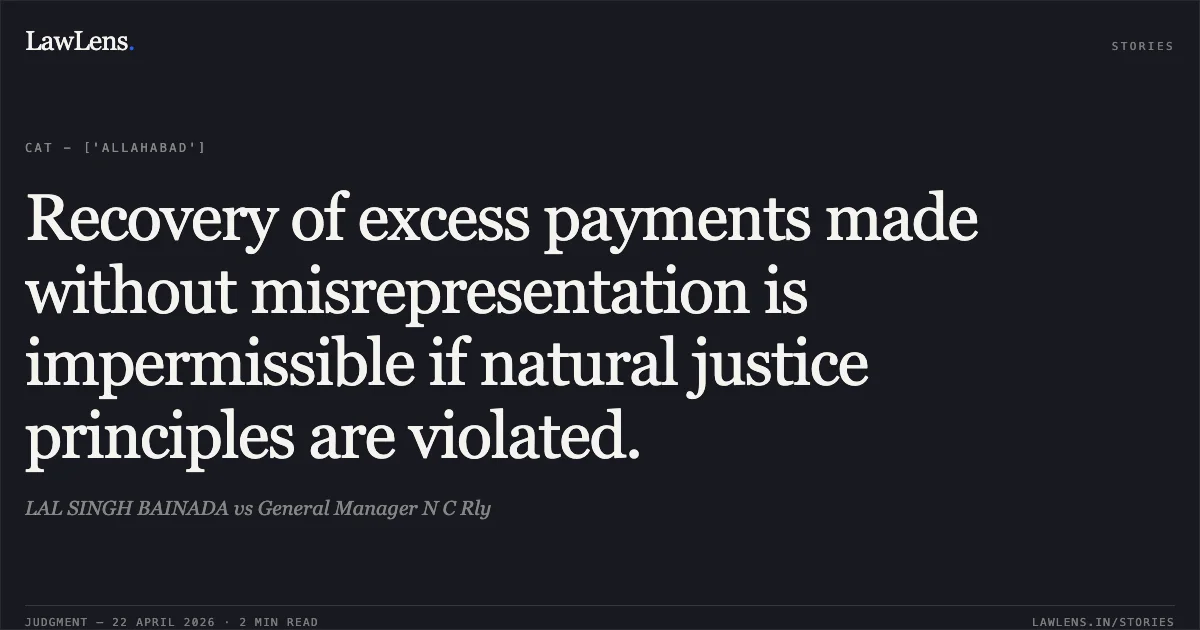
Source reference: p. 4, para. 62. Whether the recovery of excess pay is permissible in law when the error in fixation was committed by the department and not due to any misrepresentation by the employee
Source reference: p. 6, para. 9Law Applied
The court primarily applied the principles of natural justice and the specific guidelines regarding recovery of excess payments established by the Hon’ble Supreme Court in State of Punjab v. Rafiq Masih (White Washer) [(2015) 2 SCC (L&S) 33], which prohibits recovery from employees where it would be "iniquitous or harsh," particularly when payments were made for over five years or without employee fraud
Source reference: p. 6-7, para. 10It also referenced Chandi Prasad Uniyal v. State of Uttarakhand [(2012) 8 SCC 417] regarding the right to correct irregular pay
Source reference: p. 7, para. 11Davinder Singh v. State of Punjab [(2010) 13 SCC 88] emphasizing the mandatory nature of the opportunity of hearing before passing adverse orders
Source reference: p. 7, para. 12Reasoning
The Tribunal found that the reduction of pay and subsequent recovery were executed unilaterally without following the audi alteram partem rule
Source reference: p. 6, para. 9Applying the Rafiq Masih criteria, the court noted that the excess payment resulted from the department's own fixation and not from any fraud or misrepresentation by the applicant
Source reference: p. 6, para. 9While the court acknowledged that the employer has an inherent right to correct a bona fide mistake in pay fixation (per Chandi Prasad Uniyal), such correction cannot bypass due process or result in harsh recovery from an employee who was not at fault
Source reference: p. 7, para. 14The action was deemed arbitrary as the respondents failed to consider the applicant's representations or provide a show-cause notice before altering his financial status
Source reference: p. 7, para. 15Holding
The Tribunal allowed the Original Application, quashing the impugned order dated 06.11.2012
The respondents were directed to refund the entire amount recovered from the applicant with interest at the GPF rate within three months
Source reference: p. 8, para. 16(ii)Regarding the refixation of pay, the Tribunal granted the respondents liberty to undertake a fresh exercise strictly according to law, provided they issue a proper show-cause notice and afford the applicant a reasonable opportunity to be heard before passing any adverse order
Source reference: p. 8, para. 16(iii)Acts & Sections Cited
1 provisions across 1 statute referred to in this judgment. Each provision opens on LawLens.
Administrative Tribunals Act, 19851
Original Court PDF
LAL SINGH BAINADAvsGeneral Manager N C Rly
Click to open original judgment
Original judgment, available to read, download and summarize on LawLens.in