Facts
On September 25, 1999, the petitioner, driving a DTC bus (DL-1PA-XXX), collided with a scooter near Lal Kuan Red Light, M.B. Road, resulting in the death of the rider (Shiv Raj) and injuries to the pillion rider (Kamal)
Source reference: p. 2The petitioner was convicted by the Metropolitan Magistrate under Sections 279, 337, and 304-A of the IPC on May 4, 2013, and sentenced to two years of simple imprisonment
Source reference: p. 4-5This conviction and sentence were upheld by the Sessions Court on October 21, 2014
Source reference: p. 5-7The petitioner approached the High Court via revision petition, notably restricting his challenge only to the quantum of sentence and seeking the benefit of probation, having already undergone approximately five months of incarceration
Source reference: p. 7-10Issues
1. Whether the petitioner is entitled to the benefit of probation under Sections 3 and 4 of the Probation of Offenders Act, 1958, given the nature of the offense and the prolonged duration of the proceedings
Source reference: p. 9, para. 18Law Applied
Sections 279 (rash driving), 337 (causing hurt), and 304-A (causing death by negligence) of the IPC
Source reference: p. 2Sections 3 and 4 of the Probation of Offenders Act, 1958, which empower courts to release convicts on probation based on conduct and antecedents
Source reference: p. 10Paul George v. State of NCT of Delhi (2008), which established that probation can be granted in Section 304-A cases involving long-standing litigation and unblemished records
Source reference: p. 11-12Lakhvir Singh v. State of Punjab (2021) regarding the reformative object of the Act
Source reference: p. 11Rajendra Pralhadrao Wasnik v. State of Maharashtra (2019) concerning the criteria for judicial discretion in rehabilitation
Source reference: p. 10-11Reasoning
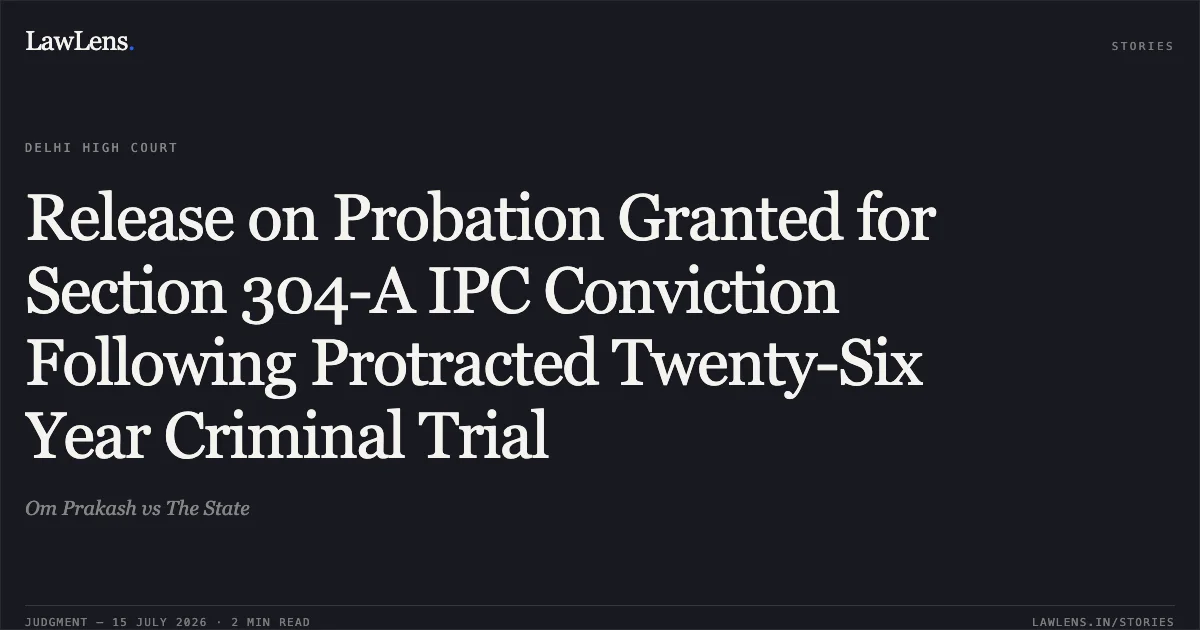
The Court observed that while the offense resulted in a fatality, the petitioner had endured a protracted legal ordeal for over 26 years (1999–2025/26)
Source reference: p. 7, 12Upon reviewing the nominal roll, the Court found that the petitioner had already served 4 months and 28 days of his sentence, maintained "satisfactory" conduct in jail, and had no prior criminal record or pending cases
Source reference: p. 10The Court reasoned that the primary objective of the Probation of Offenders Act is reformation rather than mere retribution. Applying the logic from Paul George, the Court determined that since the petitioner was a law-abiding citizen who had already been incarcerated for a significant period and whose family would suffer immense hardship, the ends of justice would be better served by a reformative approach rather than further imprisonment
Source reference: p. 12-13Holding
The High Court upheld the conviction under Sections 279, 337, and 304-A IPC but set aside the substantive sentence of imprisonment
The Court ordered the petitioner to be released on probation of good conduct under Section 4 of the Probation of Offenders Act for a period of two years upon furnishing a personal bond of Rs. 10,000
Source reference: p. 13The petitioner was placed under the supervision of a Probation Officer for two years, with the condition that any breach of conduct would result in the restoration of the original substantive sentence
Source reference: p. 13-14Acts & Sections Cited
8 provisions across 3 statutes referred to in this judgment. Each provision opens on LawLens.
Indian Penal Code, 18602
Code of Criminal Procedure, 19734
Original Court PDF
Om PrakashvsThe State
Click to open original judgment
Original judgment, available to read, download and summarize on LawLens.in