Facts
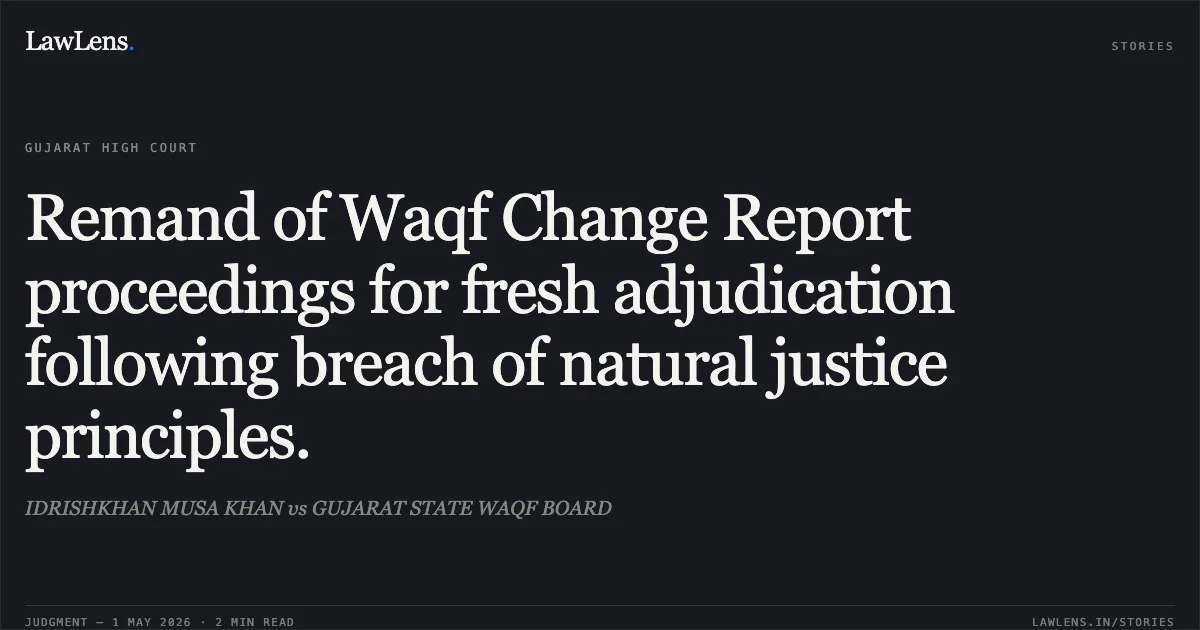
The petitioners challenged two orders: one dated 20/08/2025 by the CEO of the Gujarat State Waqf Board rejecting Change Report Nos. 403/2018 and 512/2020 on alleged consensus, and another dated 09/10/2025 by the Office Superintendent allowing Change Report No. 881/2025 as uncontested.
Source reference: p. 4-5The dispute involved the management of "Sunni Muslim Masjid" (later renamed), which was originally registered under the Bombay Public Trust Act and deemed registered under Section 43 of the Waqf Act, 1995.
Source reference: p. 2The petitioners alleged that the Waqf Board passed these orders without issuing notice or providing a hearing to the beneficiaries and interested parties, effectively converting a community trust into a family-run waqf through clandestine meetings and fabricated signatures.
Source reference: p. 4-5Issues
1. Whether the impugned orders passed by the Gujarat State Waqf Board violated the principles of natural justice and the procedural requirements of the Waqf Act, 1995.
Source reference: p. 52. Whether the matter should be remanded for fresh adjudication following the respondent's concession to re-hear the parties.
Source reference: p. 6Law Applied
Articles 226 and 227 of the Constitution of India regarding the High Court’s power of judicial review and supervisory jurisdiction over quasi-judicial bodies.
Source reference: p. 1The court applied the fundamental Principle of Natural Justice (audi alteram pertam), which requires that no person be judged unheard, especially within the statutory framework of the Waqf Act, 1995, and the Rules framed thereunder regarding the modification of schemes and appointment of Mutawallis.
Source reference: p. 5Reasoning
The petitioners contended that the Waqf Board's actions were clandestine and lacked jurisdiction, specifically noting that Change Report No. 881/2025 was allowed within two days without notice to the local Muslim community or the petitioners.
Source reference: p. 4-5During the proceedings, the counsel for the Gujarat State Waqf Board did not defend the merits of the impugned orders but instead offered an assurance that the Board would re-hear the petitioners and take a fresh decision in accordance with the law.
Source reference: p. 6The court, relying on this concession, found it unnecessary to delve into the factual disputes of fabrication and focused on restoring the procedural rights of the parties to ensure a fair hearing.
Source reference: p. 6Holding
The Court disposed of the petition by remitting the matter back to the Gujarat State Waqf Board.
It directed the Board to re-hear the application for the change report afresh and decide the matter in accordance with the law after providing a reasonable and proper opportunity of hearing to the petitioners. The Rule was discharged with no order as to costs.
Source reference: p. 6Acts & Sections Cited
2 provisions across 1 statute referred to in this judgment. Linked provisions open on LawLens.
Waqf (Amendment) Act, 20252
Original Court PDF
IDRISHKHAN MUSA KHANvsGUJARAT STATE WAQF BOARD
Click to open original judgment
Original judgment, available to read, download and summarize on LawLens.in