Facts
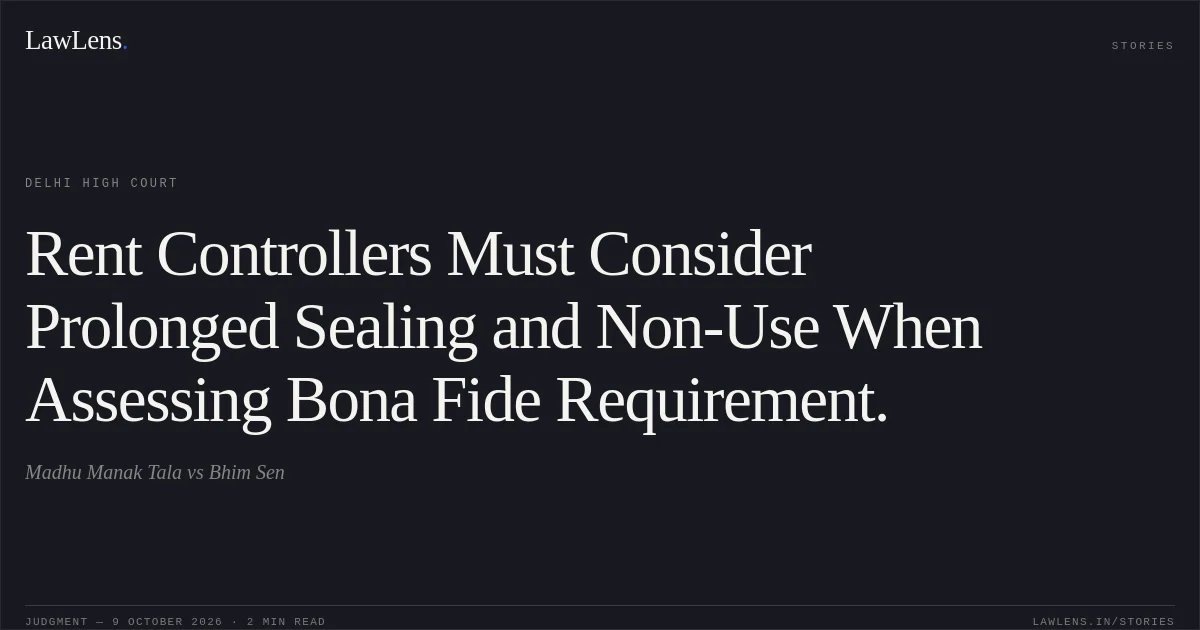
The petitioner sought eviction of the respondent from Private Shop No. 2, Property No. B-106, Malviya Nagar, on the ground of bona fide requirement.
Source reference: paras. 1–2, p. 1The Additional Rent Controller (ARC) dismissed the petition, principally relying on the petitioner’s access to other portions of the property and her failure to explain why the subject premises were necessary.
Source reference: paras. 1–2, p. 1The premises had remained sealed by the MCD since 2010, a fact admitted by both parties; the respondent alleged that the petitioner had caused the sealing, while the petitioner relied on the premises’ prolonged non-use and the absence of rent payments.
Source reference: paras. 3–8, pp. 2–4; para. 17, p. 6The petitioner challenged the ARC’s decision under Section 25B(8) of the Delhi Rent Control Act, 1958 (DRC Act).
Source reference: no citationIssues
1. Whether the ARC’s failure to consider the admitted fact that the premises had remained sealed and unused since 2010, along with the parties’ competing accounts of the sealing and use of the premises, amounted to a material omission warranting interference in revision
Source reference: paras. 17–22, pp. 6–82. Whether the High Court could determine the merits of the petitioner’s bona fide requirement in revision, or whether the appropriate course was to remit the matter for reconsideration by the ARC
Source reference: paras. 15–16, p. 6; paras. 24–25, p. 9Law Applied
Section 25B(8) of the DRC Act confers supervisory and revisional, not appellate, jurisdiction: the High Court generally cannot reappraise the evidence or substitute its view for that of the Rent Controller, but may intervene for jurisdictional error, manifest illegality, material irregularity, perversity, or failure to consider a material plea.
Source reference: paras. 10–16, pp. 4–6The Court relied on Sarla Ahuja v. United India Insurance Co. Ltd., (1998) 8 SCC 119; Hindustan Petroleum Corporation Ltd. v. Dilbahar Singh, (2014) 9 SCC 78; and Abid-Ul-Islam v. Inder Sain Dua, (2022) 6 SCC 30, as well as Pankaj Pahwa v. Prem Wati & Ors., 2024:DHC:9322, and Sanjeev Hiranandani v. Sunny Grover, 2025:DHC:11285, for the limits of that jurisdiction.
Source reference: paras. 11–14, pp. 4–6The bona fide-requirement inquiry arises under Section 14(1)(e) of the DRC Act.
Source reference: paras. 15, 19, pp. 6–7Reasoning
The prolonged sealing of the premises was undisputed and directly relevant to their availability and use, the competing claims about commercial use and the circumstances of sealing, and the petitioner’s asserted residential requirement.
Source reference: paras. 17–22, pp. 6–8The ARC had considered the availability of other portions but had not meaningfully addressed these material circumstances, including the petitioner’s assertion that no rent had been received while the premises remained sealed.
Source reference: paras. 17–22, pp. 6–8This was an omission in the decision-making process, not merely a disagreement over evidentiary weight, and therefore fell within the limited revisional grounds.
Source reference: paras. 23–24, p. 9Because determining the statutory requirements would require an initial assessment by the ARC, the High Court did not decide the merits itself.
Source reference: paras. 23–24, p. 9Holding
The High Court set aside the ARC’s judgment and remanded the matter for de novo consideration on the existing record, directing the ARC to consider the identified circumstances and the parties’ rival submissions.
It expressed no opinion on the merits of the eviction petition and disposed of the revision petition and pending applications accordingly.
Source reference: paras. 27–28, pp. 9–10Acts & Sections Cited
1 provisions across 1 statute referred to in this judgment. Each provision opens on LawLens.
delhi rent control act, 19581
Original Court PDF
Madhu Manak TalavsBhim Sen
Click to open original judgment
Original judgment, available to read, download and summarize on LawLens.in