Facts
The petitioners, members of the Venus Group, were subjected to a search under Section 132 of the Income Tax Act, 1961 on 10 March 2015. Assessments were thereafter framed under Sections 143(3) read with 153A/153C, resulting in additions, including alleged unaccounted cash payments relating to land transactions. In the lead matter, the additions totalled ₹1,32,10,000 for Assessment Year 2014–15.
Source reference: paras. 3, 6.1; pp. 2, 9The assessees challenged the assessments before the Commissioner of Income Tax (Appeals), who examined the matters on both merits and technical grounds and granted limited relief concerning duplication of additions.
Source reference: paras. 3, 6.3–6.4; pp. 2, 9–10The Income Tax Appellate Tribunal subsequently allowed the assessees’ appeals on technical grounds and dismissed the Revenue’s appeals, without adjudicating the merits, treating the merits-related grounds as infructuous.
Source reference: paras. 3.1, 6.5; pp. 3, 10The Revenue’s rectification applications were dismissed, and its writ petitions challenging those orders were also dismissed in Principal Commissioner of Income Tax (Central) v. Hitesh Ashok Vaswani. Revenue tax appeals against the Tribunal’s order remained pending before the High Court.
Source reference: paras. 3.2, 6.6–6.7; pp. 3, 10–12During this period, the Revenue initiated reassessment proceedings under Sections 147/148. Following the Supreme Court’s decisions in Union of India v. Ashish Agarwal and Union of India v. Rajeev Bansal, the proceedings under Sections 148A and 148 were continued. The Revenue ultimately passed assessment orders under Section 143(3) read with Section 147, making additions identical in amount and substance to those made in the original assessments under Sections 153A/153C.
Source reference: paras. 3.3–3.4, 6.2, 7–8; pp. 3–4, 9, 12Issues
1. Whether the Revenue could reopen the assessments under Sections 147/148 by relying on the principle stated in Krishna Developers & Company v. Deputy Commissioner of Income Tax, when the original assessments, the appellate order of the CIT(Appeals), and the identical additions were already subject to pending tax appeals before the High Court?
Source reference: paras. 9–11; pp. 13–152. Whether reassessment proceedings could be sustained when the subsequent assessment under Section 147 reproduced the very same additions made in the original assessment under Sections 153A/153C?
Source reference: paras. 6.2, 8, 11; pp. 9, 12, 153. Whether the impugned notice under Section 148 and the consequential assessment orders under Section 143(3) read with Section 147 were liable to be quashed as impermissible parallel proceedings?
Source reference: paras. 11–12; pp. 15–16Law Applied
The Court applied Sections 147, 148, 148A, 153A/153C, 254(2) and 260A of the Income Tax Act, 1961. Section 147 permits reassessment only where the statutory conditions for reopening are satisfied, while the principle of merger limits reopening in respect of matters already examined and decided in appellate proceedings.
Source reference: paras. 3.3, 6.6, 9–11; pp. 3–4, 10–15The Court considered Krishna Developers & Company v. Deputy Commissioner of Income Tax, which permits reopening where the appellate authority has annulled an assessment solely on a technical ground without examining the merits; however, that principle does not apply where the appellate authority has adjudicated the merits.
Source reference: paras. 9–11; pp. 13–15The Court also relied on Principal Commissioner of Income Tax (Central) v. Hitesh Ashok Vaswani, which recognised that issues already pending in tax appeals should be pursued in those appeals, and referred to Union of India v. Ashish Agarwal and Union of India v. Rajeev Bansal in relation to the procedural history and revival of reassessment proceedings under Sections 148A/148.
Source reference: paras. 3.3, 6.6, 9–11; pp. 3–4, 10–15Reasoning
The Court distinguished Krishna Developers on its facts. In that case, the CIT(Appeals) had invalidated the assessment solely for want of service of notice and had not examined the merits; therefore, reopening was held permissible. In the present case, however, the CIT(Appeals) had considered both the technical objections and the merits of the additions.
Source reference: paras. 9–10; pp. 13–15The Tribunal’s subsequent decision to allow the assessees’ appeals on technical grounds did not erase the fact that the original appellate proceedings had involved examination of the merits.
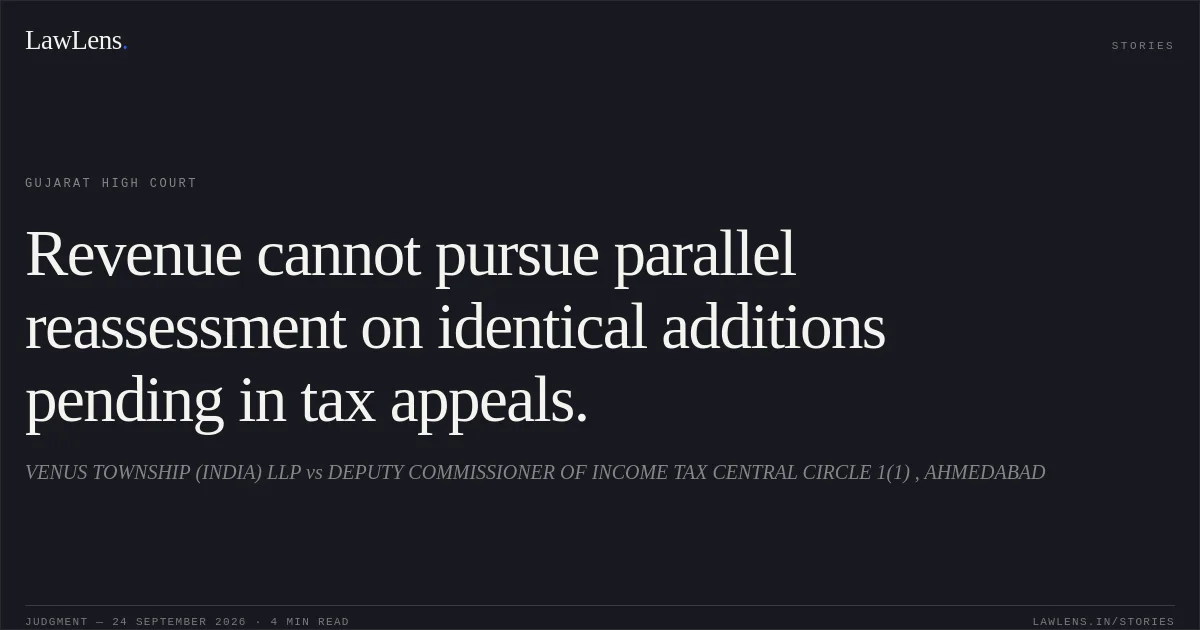
Source reference: paras. 9–10; pp. 13–15The Court further found that the additions in the reassessment orders were identical to those in the original assessments—there was no difference even of a single rupee or paise. Since the original assessments and the appellate orders were already under examination in pending tax appeals, reopening the assessments on the same factual basis created parallel proceedings and could directly affect the outcome of those appeals.
Source reference: paras. 6.2, 8, 11; pp. 9, 12, 15The Revenue’s attempt to maintain a separate reassessment route was therefore impermissible, particularly as the reassessment was founded exclusively on a misplaced reliance upon Krishna Developers.
Source reference: paras. 6.2, 8, 11; pp. 9, 12, 15Holding
The Court answered the issues in favour of the petitioners. It held that the Revenue could not reopen the assessments under Sections 147/148 on the basis of Krishna Developers, because the CIT(Appeals) had examined the original assessments on merits as well as on technical grounds, and the identical additions were already the subject matter of pending tax appeals.
The notices issued under Section 148 and the consequential assessment orders passed under Section 143(3) read with Section 147 were accordingly quashed and set aside.
Source reference: para. 12; p. 16The Court expressly clarified that it had expressed no opinion on the merits of the additions or on the validity of the orders under Sections 153A/153C, which remained subject to adjudication in the pending tax appeals.
Source reference: para. 12; p. 16Acts & Sections Cited
16 provisions across 2 statutes referred to in this judgment. Linked provisions open on LawLens.
Income Tax Act, 1961
Income Tax Act, 19601
Original Court PDF
VENUS TOWNSHIP (INDIA) LLPvsDEPUTY COMMISSIONER OF INCOME TAX CENTRAL CIRCLE 1(1) , AHMEDABAD
Click to open original judgment
Original judgment, available to read, download and summarize on LawLens.in