01Facts
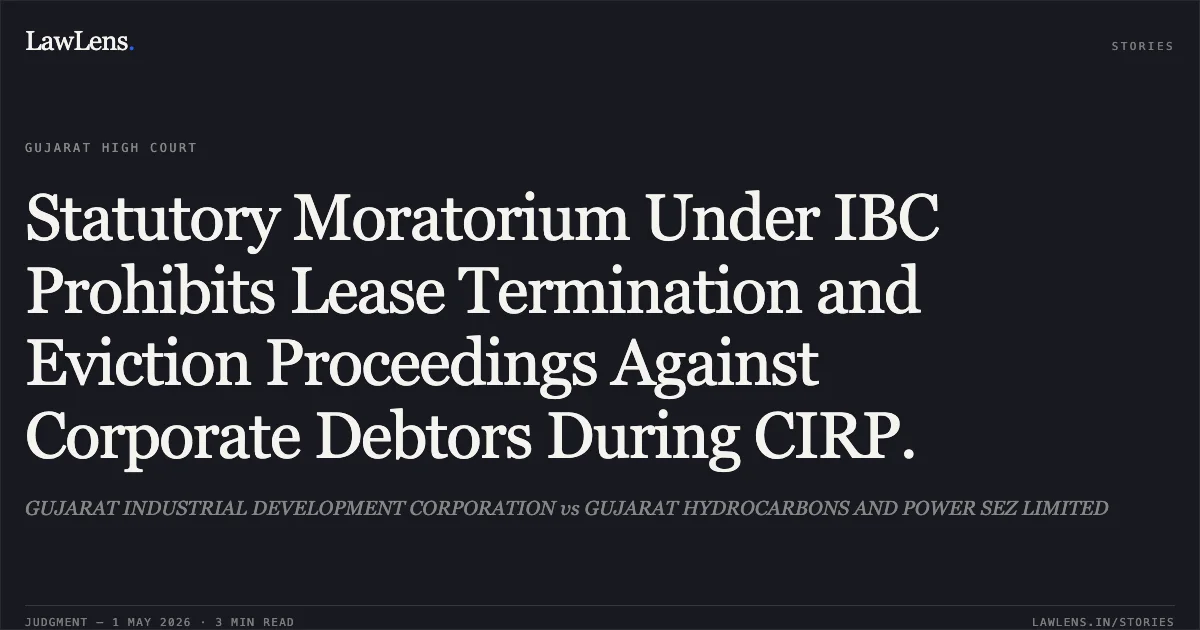
The Gujarat Industrial Development Corporation (GIDC) leased land to the Corporate Debtor (CD), Gujarat Hydrocarbons Power SEZ Ltd., in 2008 for a 99-year term to develop an SEZ
p. 17On 18.11.2020, the NCLT initiated the Corporate Insolvency Resolution Process (CIRP) against the CD and declared a moratorium under Section 14 of the IBC
p. 5, 33Despite the moratorium, GIDC issued an order terminating the lease on 13.12.2021 and subsequently passed an eviction order on 10.03.2022 under the Gujarat Public Premises (Eviction of Unauthorized Occupants) Act, 1972
p. 2, 27GIDC contended that the termination was due to pre-existing breaches of lease conditions (non-payment of rent and non-utilization) rather than insolvency
pp. 18-19A Resolution Plan was later approved by the NCLT, which GIDC challenged
p. 28The CD filed a writ petition challenging the termination and eviction as violations of the statutory moratorium
p. 202Issues
i.1. Whether the GIDC, as a lessor and operational creditor, was justified in terminating the lease and passing eviction orders during the subsistence of a moratorium under Section 14 of the IBC
p. 2, 3ii.2. Whether the Explanation to Section 14(1) of the IBC allows for the termination of a lease or recovery of property during moratorium if the termination is based on grounds other than insolvency
p. 21, 53iii.3. Whether the provisions of the IBC override the Gujarat Public Premises Act, 1972, by virtue of Section 238
p. 4, 1103Law Applied
Section 14 of the Insolvency and Bankruptcy Code (IBC), 2016, which mandates a moratorium on the institution/continuation of proceedings and prohibits the recovery of property in the possession of the CD
pp. 31-33Definition of "property" under Section 3(27) of the IBC, which includes leasehold interests
p. 3, 46"Non-obstante" clause in Section 238 of the IBC, ensuring the Code prevails over inconsistent laws like the Public Premises Act
p. 4, 11, 51Interpretation of "proceedings" using the precedent P. Mohanraj v. Shah Bros. Ispat (P) Ltd., holding that the term includes quasi-judicial actions that deplete the CD's assets
p. 22, 38, 42Reliance on Gujarat Urja Vikas Nigam Ltd. v. Amit Gupta regarding the legislative intent of the 2020 Explanation to Section 14(1) to keep the CD as a "going concern"
p. 30, 43, 49Provisions in the judgment · 16 · Linked ones open on LawLens
Insolvency and Bankruptcy Code, 2016. 12 provisions
Section 3Section 7Section 14Section 25Section 30Section 31Section 33Section 36Section 60Section 81Section 85Section 238Gujarat Public Premises (Eviction of Unauthorised Occupants) Act, 1972 Section 4Section 5
Negotiable Instruments Act, 1881 Section 138Section 141
04Reasoning
The court reasoned that the land in question constituted the primary asset (property) of the CD, and its recovery by GIDC was expressly prohibited under Section 14(1)(d)
pp. 52-54It rejected GIDC’s argument that the Explanation to Section 14(1) permitted termination for non-payment of rent, clarifying that the Explanation is meant to prevent the cancellation of vital government grants/licenses and cannot be used to negate the primary shield of the moratorium
pp. 53-54The court observed that the termination was effectively triggered by the insolvency, as GIDC’s own order noted the NCLT proceedings as a factor in the "impairment of asset"
p. 55The court held that "proceedings" under the Public Premises Act qualify as prohibited actions under Section 14(1)(a) because they result in the depletion of the CD's estate, thereby hindering the resolution process
p. 57The court emphasized that the moratorium provides "breathing space" to rehabilitate the CD, and any breach of this statutory status quo would satisfy the "ipso facto" concerns addressed by the IBC
p. 48, 5705Holding
The High Court dismissed the appeal, affirming the Single Judge's decision to quash the termination and eviction orders
p. 58The court held that the orders passed by GIDC during the moratorium were non est and illegal under Section 14 of the IBC
p. 6, 58Section 238 of the IBC grants the Code overriding effect over the Gujarat Public Premises Act
p. 11, 51The court directed that once a moratorium is in effect, a lessor cannot recover property in the CD's possession, regardless of whether the breach was for rent or insolvency, to ensure the CD remains a going concern
p. 57Operation of the judgment was not stayed
p. 59Original Court PDF
GUJARAT INDUSTRIAL DEVELOPMENT CORPORATIONvsGUJARAT HYDROCARBONS AND POWER SEZ LIMITED
Click to open original judgment
Original judgment, available to read, download and summarize on LawLens.in