Facts
On April 6, 2002, a police team including Head Constable (HC) Suresh Kumar intercepted a vehicle and deflated its tyres by gunfire to apprehend suspects; while one Rakesh @ Rahul was caught, the Appellant, Ajay @ Shantu, allegedly escaped
Source reference: para. 1On April 8, 2002, while HC Suresh was returning home, the Appellant and his associates accosted him, and the Appellant stabbed him in the abdomen and thigh with a knife
Source reference: para. 2-3During the assault, the Appellant allegedly identified himself as "Shantu" and expressed anger over the previous shooting incident
Source reference: para. 3The assailants also robbed the victim of his personal belongings
Source reference: para. 4Following a Test Identification Parade (TIP) where the victim identified the Appellant, a chargesheet was filed
Source reference: para. 5The Trial Court convicted the Appellant under Sections 307, 392, 394, and 397 of the IPC, sentencing him to various terms, the maximum being seven years RI
Source reference: para. 7The Appellant appealed, alleging false implication and improper identification
Source reference: para. 8-9Issues
1. Whether the prosecution established the identity of the Appellant beyond a reasonable doubt, specifically regarding the validity of the Test Identification Parade (TIP)
Source reference: para. 9, 122. Whether the testimony of the injured witness (HC Suresh Kumar) was sufficient to sustain a conviction despite allegations of police fabrication
Source reference: para. 13, 153. Whether the nature of the injuries and the circumstances of the assault satisfied the ingredients of "attempt to murder" under Section 307 IPC
Source reference: para. 21-224. Whether the Appellant was entitled to a reduction in sentence based on clean antecedents and family responsibilities
Source reference: para. 24-26Law Applied
The Court applied Sections 307, 392, 394, and 397 of the Indian Penal Code (IPC) regarding attempt to murder and aggravated robbery
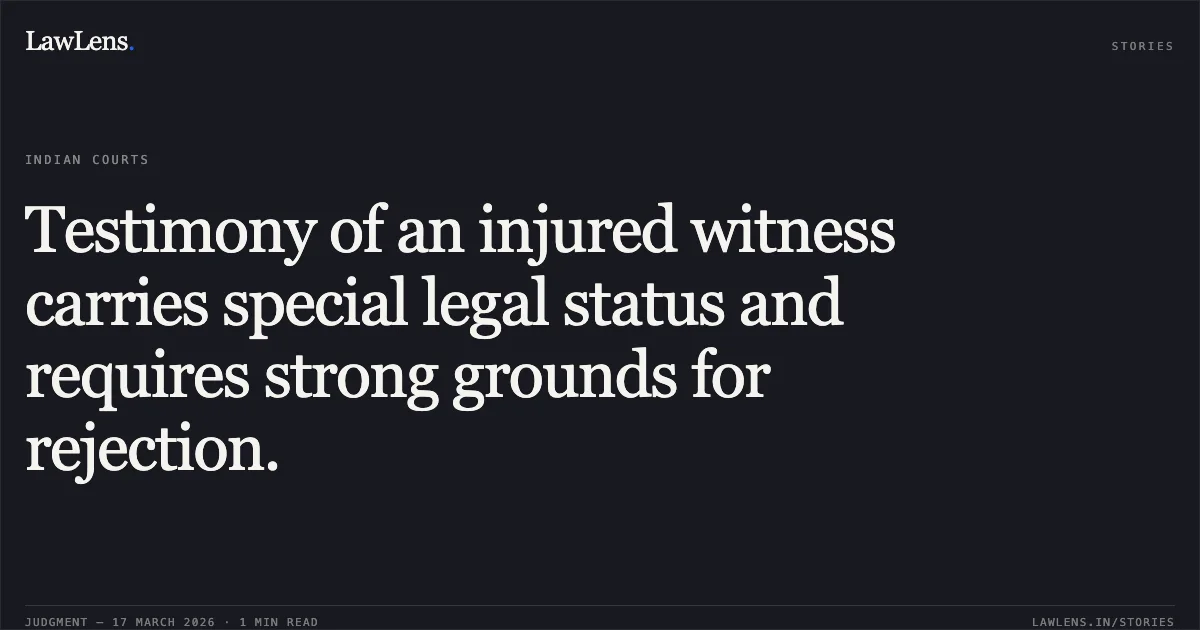
Source reference: para. 4-7It relied on State of U.P. v. Naresh & Ors. (2011) and Abdul Sayeed v. State of Madhya Pradesh (2010), which establish that the testimony of an injured witness is accorded special status and is generally considered reliable as they are unlikely to spare the actual assailant
Source reference: para. 15-16Regarding Section 307, the Court applied Hari Singh v. Sukhbir Singh (1988) and Kesar Singh v. State of Haryana (2008) to determine that "intention" is gathered from the weapon used, the body part targeted, and the severity of the blow, regardless of whether death occurred
Source reference: para. 21Reasoning
The Court rejected the plea of false implication, noting that the Appellant was identified both in a judicially supervised TIP and in open court, with no evidence of impropriety in the proceedings
Source reference: para. 12The Court emphasized the "built-in guarantee" of the injured witness's presence at the scene, finding no reason for the victim to self-inflict serious abdominal and thigh wounds merely to frame the Appellant
Source reference: para. 13, 16The medical evidence, showing incised wounds from a sharp weapon, corroborated the victim's account of the stabbing
Source reference: para. 14On the issue of intent under Section 307, the Court found that the Appellant’s utterances—specifically referencing the previous law enforcement action—and the use of a knife on vital body parts clearly manifested a murderous intent
Source reference: para. 19, 21-22Regarding sentencing, the Court observed that the Appellant's aggressive behavior in prison and prior criminal involvement outweighed mitigating factors like family responsibilities
Source reference: para. 25-26Holding
The Court upheld the conviction and the sentences awarded by the Trial Court for all offenses
It held that the prosecution successfully proved the Appellant's identity and intent through the reliable testimony of the injured victim and corroborating medical evidence
Source reference: para. 22The appeal was dismissed, and the Appellant was ordered to surrender forthwith to serve the remainder of his sentence
Source reference: para. 27-28Acts & Sections Cited
5 provisions across 1 statute referred to in this judgment. Each provision opens on LawLens.
Indian Penal Code, 18605
Original Court PDF
Ajay @ ShantuvsState (Nct Of Delhi)
Click to open original judgment
Original judgment, available to read, download and summarize on LawLens.in