Facts
M/s DR Developers authorised respondent No. 2 to pursue a BESCOM/KPTCL no-objection certificate (NOC).
Source reference: pp. 3–5, 10–11; paras 2.1–2.3, 7The complaint alleged that the petitioner, an Executive Engineer in the Energy Minister’s office, demanded ₹1 lakh, later indicating ₹50,000, in connection with the NOC.
Source reference: pp. 3–5, 10–11; paras 2.1–2.3, 7Respondent No. 2 lodged a complaint with the Lokayukta, and a trap resulted in accused No. 2—not the petitioner—being apprehended while accepting ₹50,000.
Source reference: pp. 3–5, 10–11; paras 2.1–2.3, 7The petitioner was arrayed as accused No. 1, and Section 7A of the Prevention of Corruption Act, 1988 was also invoked during investigation.
Source reference: pp. 3–5, 10–11; paras 2.1–2.3, 7He sought to quash the FIR and proceedings insofar as they concerned him
Source reference: pp. 3–5, 10–11; paras 2.1–2.3, 7Issues
1. Whether the material in the complaint and investigation disclosed a prima facie basis to proceed against the petitioner for offences under Sections 7(a) and 7A of the Prevention of Corruption Act, where the alleged bribe was accepted by another person
Source reference: pp. 10–11, 42–43; paras 7, 12–132. Whether the proceedings against the petitioner should be quashed at the investigation stage, or whether the allegations concerning demand and acceptance through a third party should be left for trial
Source reference: pp. 6–7, 32–33, 42–43; paras 5, 10, 13Law Applied
Section 7(a) of the Prevention of Corruption Act requires proof of the foundational facts of demand and acceptance or obtainment of an undue advantage; under Neeraj Dutta v. State (Govt. of NCT of Delhi, those facts may be proved by direct or circumstantial evidence, but the Section 20 presumption arises only after the foundational facts are established
Source reference: pp. 21–29; para 8.4B. Jayaraj v. State of Andhra Pradesh, N. Vijayakumar v. State of Tamil Nadu, K. Shanthamma v. State of Telangana and Soundarajan v. State reiterate that recovery or acceptance alone does not establish the offence without the requisite proof of demand
Source reference: pp. 12–20, 29–31; paras 8.1–8.5The Court also considered State of Karnataka v. Mahesh P.S., which recognises that alleged acceptance through a third party may be a matter for trial and that undue advantage may be obtained indirectly, and Bharat Raj Meena v. CBI, which requires reliable evidence connecting the intermediary’s conduct and the demand to the accused; mere receipt by a third party is insufficient
Source reference: pp. 32–42; paras 10–11Reasoning
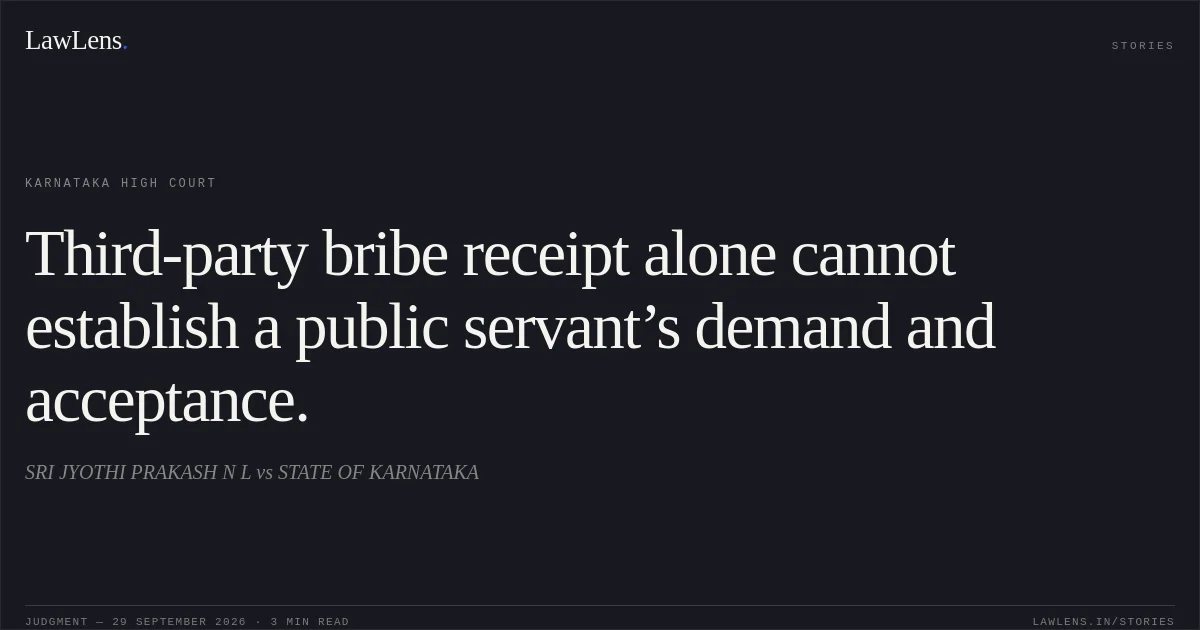
The Court noted that the trap and recovery concerned accused No. 2, while no trap was laid against the petitioner and no money was recovered from him
Source reference: pp. 10–11, 42; paras 7, 12Although the complaint alleged that the petitioner demanded money, the Court found the material—including the telephone conversation relied on by the prosecution—did not indicate that the petitioner demanded or accepted the alleged amount.
Source reference: pp. 10–11, 42–43; paras 7, 12–13It further found that the NOC file had proceeded through the relevant hierarchy and was not placed before the petitioner for approval
Source reference: pp. 10–11, 42–43; paras 7, 12–13Applying the principles on third-party acceptance, the Court concluded that the evidence did not establish a sufficient link between the petitioner and accused No. 2’s acceptance, or otherwise provide the necessary foundation to attribute demand and acceptance to the petitioner.
Source reference: pp. 32–42, 42–43; paras 10–13It therefore held that continuing the investigation against him would amount to an abuse of process
Source reference: pp. 32–42, 42–43; paras 10–13Holding
The Court answered the issues in the petitioner’s favour, allowed the writ petition, and quashed the proceedings in Crime No. 49 of 2025 pending before the XXIII Additional City Civil and Sessions Judge and Special Judge under the Prevention of Corruption Act, Bengaluru, insofar as they concerned the petitioner
Acts & Sections Cited
7 provisions across 3 statutes referred to in this judgment. Each provision opens on LawLens.
Bharatiya Nagarik Suraksha Sanhita, 20231
Prevention of Corruption Act, 19884
Code of Criminal Procedure, 19732
Original Court PDF
SRI JYOTHI PRAKASH N LvsSTATE OF KARNATAKA
Click to open original judgment
Original judgment, available to read, download and summarize on LawLens.in