Facts
The petitioner, Abdul Hameed Parray, was placed under preventive detention by the District Magistrate, Bandipora, vide Order No. 01/DMB/PSA of 2025 dated May 1, 2025, to maintain public order
Source reference: para 1Previously, the petitioner had been detained under a 2018 order which was quashed by the High Court in December 2018
Source reference: para 2The current detention was based on allegations that the petitioner, following his prior release, re-established contact with terrorist organizations like Lashkar-e-Toiba (LeT) to carry out secessionist activities and provide logistical support
Source reference: para 6The petitioner challenged the order, contending that the grounds were identical to the previous quashed order and that the fresh allegations were too vague to allow for an effective representation
Source reference: para 2The State argued that all statutory and constitutional requirements were met and that the petitioner's activities posed a serious threat to public order
Source reference: para 3Issues
1. Whether the grounds of detention were sufficiently specific to allow the detenue to exercise his constitutional right to make an effective representation
Source reference: para 52. Whether the lack of material particulars in the grounds of detention constitutes a violation of Article 22(5) of the Constitution of India
Source reference: para 7Law Applied
The Court primarily applied Article 22(5) of the Constitution of India, which mandates that the detaining authority must communicate the grounds of detention to the detenue to afford them the earliest opportunity of making a representation against the order
Source reference: para 7The Court relied on established precedents including Jahangirkhan Fazal Khan Pathan v. Police Commissioner, Ahmadabad, Abdul Razak Nanekhan Pathan v. Police Commissioner, Mohd. Yousuf Rather v. State of J&K, and Piyush Kantilal Mehta v. Commissioner of Police, which collectively establish that vague or cryptic grounds of detention invalidate the detention as they prevent the detenue from making an effective representation
Source reference: para 7Reasoning
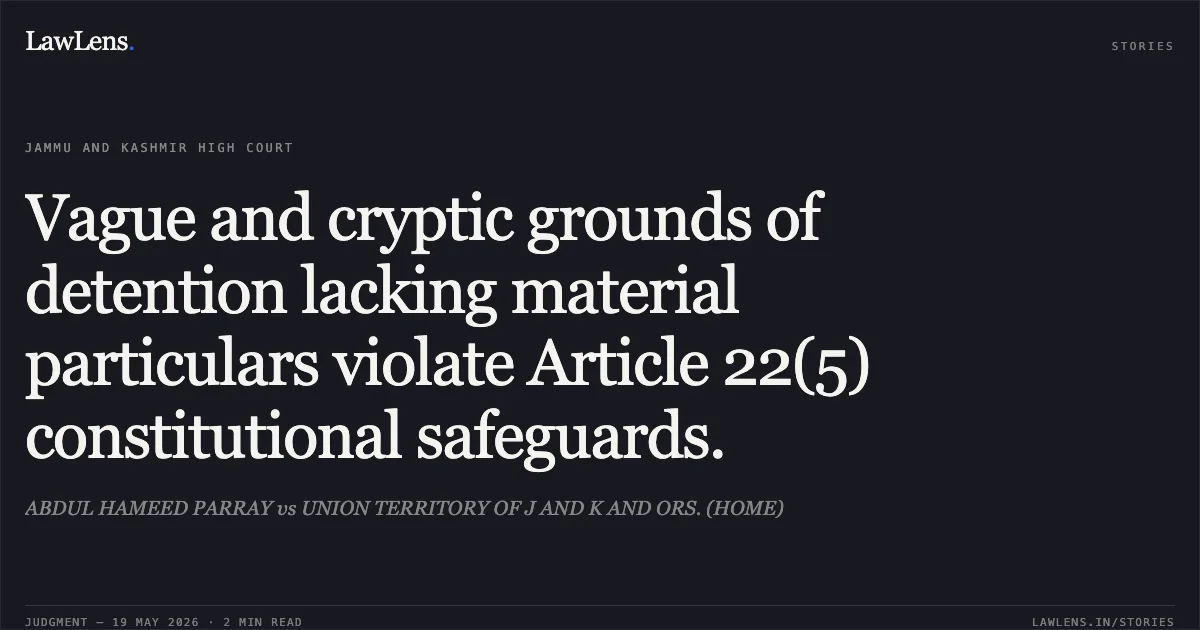
The Court examined the detention record and found the grounds of detention to be "vague and cryptic"
Source reference: para 6Although the detaining authority alleged that the petitioner was in contact with LeT handlers and provided logistical support, the grounds failed to mention specific dates, locations, or the identities of the terrorists or handlers involved
Source reference: para 7The Court reasoned that without these material particulars, the petitioner could not meaningfully refute the allegations
Source reference: para 7Consequently, the Court determined that the failure to provide specific details deprived the petitioner of his right to make an effective representation, thereby violating the constitutional guarantees provided under Article 22(5)
Source reference: para 7The Court concluded that the detention was therefore illegal and unsustainable regardless of the other grounds raised
Source reference: para 7Holding
The Court answered the issues in the affirmative, holding that the vagueness of the grounds of detention violated Article 22(5) of the Constitution
The petition was allowed, and the detention order No. 01/DMB/PSA of 2025 was quashed
Source reference: para 8The Court directed the immediate release of Abdul Hameed Parray from preventive custody, provided he is not required in any other case
Source reference: para 8Acts & Sections Cited
1 provisions across 1 statute referred to in this judgment. Linked provisions open on LawLens.
Jammu And Kashmir Public Safety Act, 19781
Original Court PDF
ABDUL HAMEED PARRAYvsUNION TERRITORY OF J AND K AND ORS. (HOME)
Click to open original judgment
Original judgment, available to read, download and summarize on LawLens.in


